D. W. Griffith and Mary Pickford, along with Charlie Chaplin and Douglas Fairbanks, founded United Artists on February 5, 1919, as a studio where actors could control their own interests instead of being beholden to commercial studios. It is now a subsidiary of MGM and Annapurna Pictures and, as of February 5, 2019 (its 100th anniversary), it was rebranded as United Artists Releasing.
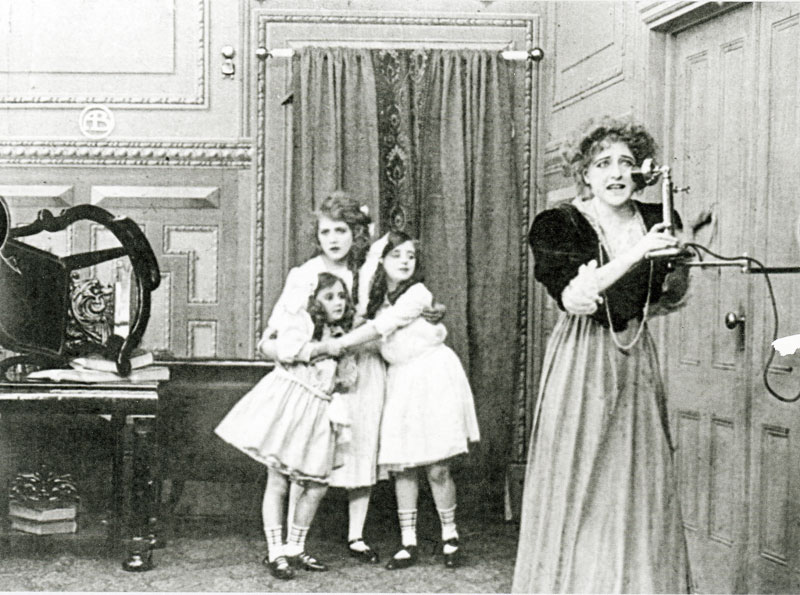
A gang of thieves lure a man out of his home so that they can rob it and, threaten his wife and children. The family barricade themselves in an interior room but, the criminals are well-equipped for breaking in. When the father finds out what is happening, he must race against time to get back home.
Trivia Bit
♦ During the shot of the father leaving the hotel, a dip can be seen in the road in the background. Today, that is currently the exit for the George Washington Bridge and the location of the hotel is now an apartment complex.
Going back fifteen years, this is a shot of Buddy, interrupting an exercise routine. This was during my Texas years. He was such a sweet baby and I still miss him. ~Vic
A while back, I asked Mani @ Think & Explore to draw Alan Watts. He is a gifted artist and this is a perfect example. Go visit and see how he drew it. Thanks, Mani! ~Vic
Hi all, I am back with a new pencil sketch today! 😃 There’s a specialty for this one. Some time back, this picture (of Alan Watts) was requested by blogger The Hinoeuma (blog Cosmic Observation) as a suggestion to my next to draw list. I took the suggestion and worked on the sketch recently. […]
This is really hard to see but, it says “Seek Love”.
Riverwalk path.
05-26-2019How to sell soul to a soulless people who sold their souls?
06-09-2017Love More
06-01-2019Nothing is easy, especially high voltage.
06-09-2017One-eyed smile?
06-01-2019Storm cloud over the soulless people.
How apropos…
06-01-2019Smiley scribbled in the window.
This is the shed next to the house from the first post.
05-19-2019Remember the winter tree with the red heart, love, pain and voodoo?
It’s gone. New canvas for new art.
05-17-2019
A McKinley by the lamp post at the First Baptist Church.
The web was enormous.
09-02-2017An Orb Weaver off the corner of the front porch.
09-22-2017I guess she was enjoying the flowers.
10-02-2017She posed for me.
What a ham.Slug on the front porch.
10-18-2017It took me a while to find this one.
Google “black bug, yellow dots” and you will get tons of pix.
This is an Asian lady beetle larva.
10-28-2017Larger slug on the side of the house.
06-16-2018Moth on the kitchen window.
04-03-2019
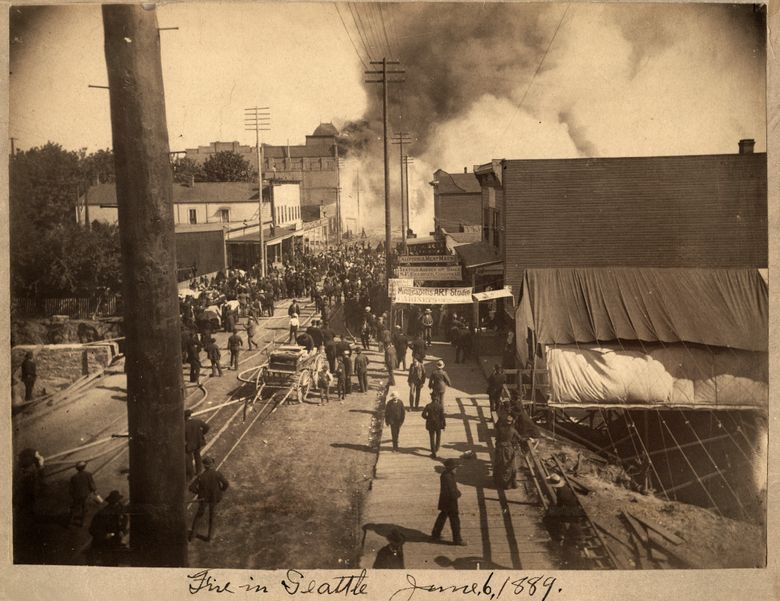
While the whole world discusses the Allied Invasion of Normandy, best known as D-Day, on this same date, fifty-five years prior, the Great Seattle Fire destroyed 29 city blocks, nearly all of its wharves and its railroad terminals. Because of the devastation, downtown Seattle is 20 feet above its original street level. The state of Washington suffered a trifecta of fires that summer as July 4th brought the Great Ellensburg Fire and August 4 brought the Great Spokane Fire, with a fourth fire occurring April 18 in Cheney, Washington.
At approximately 2:30 pm on June 6, 1889, an accidentally overturned glue pot in a carpentry shop started the most destructive fire in the history of Seattle. The next day, the Seattle Post-Intelligencer, operating out of temporary facilities in the wake of the fire, reported, incorrectly, that the incident began in “Jim McGough’s paint shop, under Smith’s Boot and Shoe Store, at the corner of Front and Madison streets, in what was known as the Denny block.” [A] correction two weeks later said that it “actually started in the Clairmont and Company cabinet shop, below McGough’s shop in the basement of the Pontius building.” but, the original error was often repeated, including in Murray Morgan‘s bestselling Seattle history book Skid Road (1951).
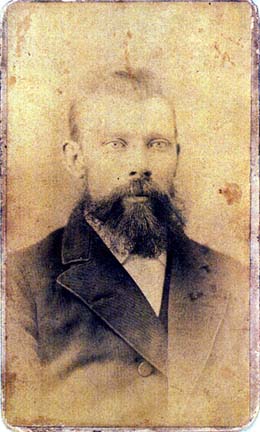
[…] a man named John E. Back, inadvertently, started a fire in the basement of a downtown building at the southwest corner of Madison Street and Front Street (later renamed 1st Avenue). Five men were working in the cabinet shop including […] Back, age 24, described as a “short, thick-set blonde of mediocre intelligence.” [He] arrived in the United States from Sweden in 1887 and moved to Seattle in October 1888. The following day [he] was located and interviewed by a Post-Intelligencer reporter. […] shortly after the interview, [he] left Seattle.
British poet Rudyard Kipling happened to be touring Puget Sound at the time and arrived in Seattle by steamer shortly after the fire. He described the remains as “a horrible black smudge, as though a Hand had come down and rubbed the place smooth. I know, now, what being wiped out means.”
The spring of 1889 in Seattle had been beautiful. There had been little rain and temperatures were consistently in the 70s. Unfortunately, the unusually good weather proved to be disastrous, as the dry conditions conspired with a handful of other elements to allow for the worst fire in city history.
[…] John Back was heating glue over a gasoline fire. Sometime after 2:15p, the glue boiled over, caught fire and, spread to the floors, which were covered by wood chips and turpentine. He tried to put the fire out with water but, that only served to thin the turpentine and spread the fire further. Everyone got out of the building safely and the fire department got to the fire by 2:45p. By that time, there was so much smoke that it was hard to find the source of the fire and by the time it was found, the fire was out of control. The fire quickly spread to the Dietz & Mayer Liquor Store, which exploded […].
Photo Credit: seattlepi.com
Seattle’s water supply proved to be a major problem in fighting the fire. Firemen tried to keep the fire from spreading further by pumping water from Elliott Bay onto the Commercial Mill but, the tide was out and the hoses were not long enough to reach the side of the building closest to the fire. To add insult to injury, crowds harassed the fire fighters as the water pressure fell.
The fire burned until 3:00 am. When it was done, the damage was enormous. Thousands of people were displaced and 5,000 men lost their jobs. The city didn’t take much time to mourn. Within a month of the fire over 100 businesses were operating out of tents. Instead of relocating, most businesses decided to rebuild where they had been and rebuilding began almost immediately. Within a year, 465 buildings had been built, most of the reconstruction was complete and the businesses had reopened.
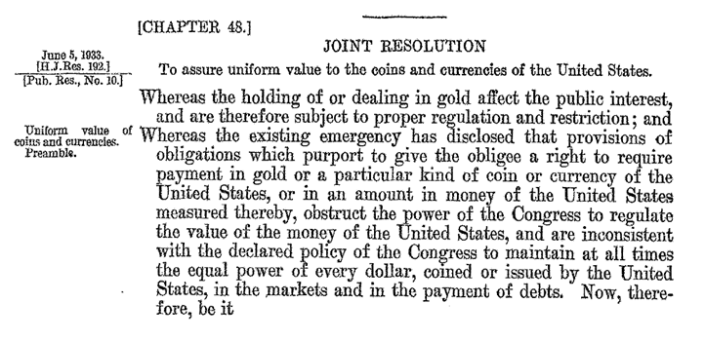
On June 5, 1933, the United States went off the gold standard, a monetary system in which currency is backed by gold, when Congress enacted a joint resolution nullifying the right of creditors to demand payment in gold. The United States had been on a gold standard since 1879 […] but, bank failures during the Great Depression of the 1930s frightened the public into hoarding gold […].
Soon after taking office in March 1933, Roosevelt declared a nationwide bank moratorium in order to prevent a run on the banks by consumers lacking confidence in the economy. He also forbade banks to pay out gold or to export it. According to Keynesian economic theory, one of the best ways to fight off an economic downturn is to inflate the money supply. And, increasing the amount of gold held by the Federal Reserve would in turn increase its power to inflate the money supply. Facing similar pressures, Britain had dropped the gold standard in 1931 and Roosevelt had taken note.
On April 5, 1933, Roosevelt ordered all gold coins and gold certificates in denominations of more than $100 turned in for other money. It required all persons to deliver all gold […] owned by them to the Federal Reserve by May 1 for the set price of $20.67 per ounce. In 1934, the government price of gold was increased to $35 per ounce, effectively increasing the gold on the Federal Reserve’s balance sheets by 69 percent. This increase in assets allowed the Federal Reserve to further inflate the money supply.
After the bombing of Pearl Harbor, President Franklin D. Roosevelt called Dec. 7, 1941, “A date that will live in infamy.” When it comes to the US monetary system, June 5, 1933, should share that ignoble title because that date marks the beginning of a slow death of the dollar.
Roosevelt signed Executive Order 6102 […] touted as a measure to stop hoarding but, was, in reality, a massive confiscation scheme. Even in the heat of Roosevelt’s confiscation scheme, government troops did not break into people’s homes… Ironically, all the gold actually collected by the Treasury was willfully surrendered in a wave of misguided patriotism, while many ‘law-breakers’ simply kept their gold.
The purpose of Roosevelt’s executive order was to remove constraints on inflating the money supply. The Federal Reserve Act required all notes have 40% gold backing [but], the Fed was low on gold and up against the limit. By increasing its gold stores, the Fed could circulate more notes.
Roosevelt’s [actions] in 1933 set off a dollar devaluation that continues to this day. In 1913, prices were only about 20% higher than in 1775 and around 40% lower than in 1813, during the War of 1812. Whatever the mandates of the Federal Reserve, it is clear that the evolution of the price level in the United States is dominated by the abandonment of the gold standard in 1933 and the adoption of fiat money, subsequently. One hundred years after its creation, consumer prices are about 30 times higher than what they were in 1913.
In 1964, the minimum wage stood at $1.25. To put it another way, a minimum wage worker earned five silver quarters for every hour worked. Today, you can’t even buy a cup of coffee with those five quarters [but], the melt-value of those five silver quarters, today, stands close to $15! Roosevelt’s moves, culminating in the June 5 congressional resolutions, initiated a process of monetary deformation that led straight to Nixon’s abomination at Camp David, Greenspan’s panic at the time of the 1998 Long-Term Capital Management crisis and, the final destruction of monetary integrity and financial discipline during the BlackBerry Panic of 2008.
The legacy of June 5, 1933 continues today. The dollar continues to devalue. That means over the long-term, the price of gold in US dollars will almost certainly continue to rise.
This is a Chrysanthemum that I planted back in 2014. It must have been very happy where I put it because it was huge two years later. It finally gave up the next year. ~Vic
This was the second single from the Footloose soundtrack, following the “title track,” which was recorded by Kenny Loggins. In the film, the song was used in a scene where Kevin Bacon tries to teach Christopher Penn how to dance and Penn is having a hard time.
Once the song was written, Pitchford asked Deniece Williams and her producer George Duke to record the song. Kenny Loggins was onboard for the title track, which gave the project credibility and, Williams loved the song and the story idea for the film. She grew up in a small Indiana town with a religious environment similar to the one described in Footloose. When she saw the film, she thought the scene where they used her song was incredible. “If I had come to the film without the music in and they asked me what segment I wanted my song to be in, I would have chosen that segment.” said Williams.
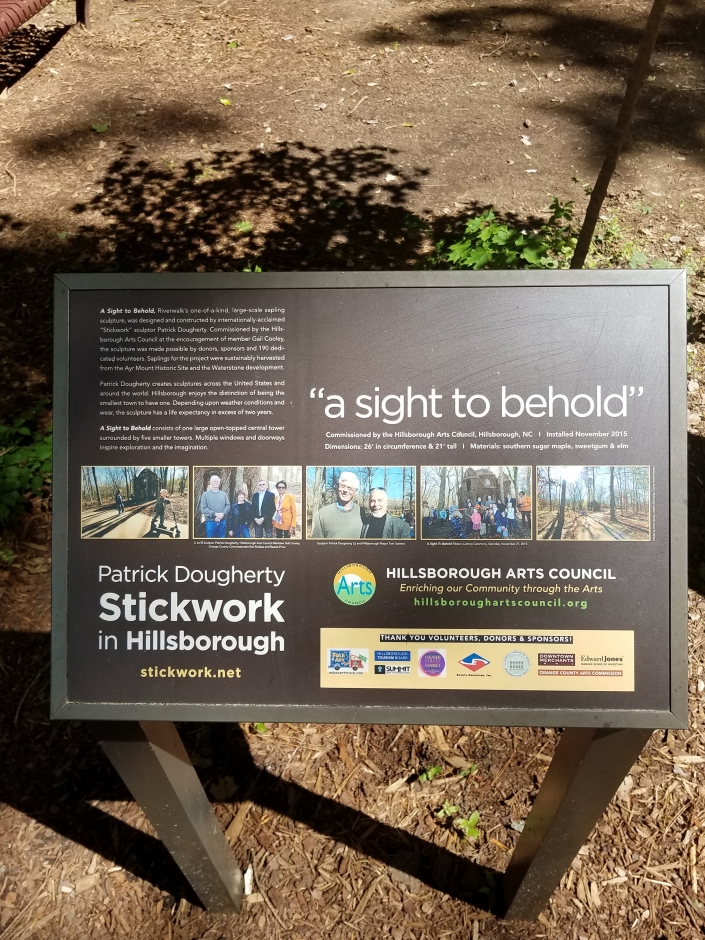
In November of 2015, Patrick Dougherty of Stickwork was commissioned by the Hillsborough Arts Council to craft a sculpture for our Riverwalk. The saplings were sustainably harvested from the Ayr Mount Historic Site. In December of last year, the heavy snowfall damaged the original piece and it was finally taken down. I’m glad I got some photos of it. ~Vic
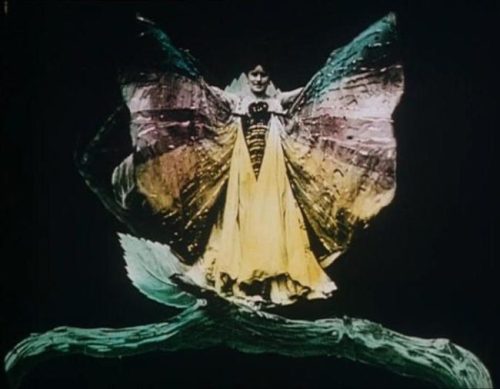
Gaston Velle was a French silent film director, and pioneer of special effects, who was prominent in early French and Italian cinema during the first two decades of the 20th century. Gaston began his career as a travelling magician before putting his illusionist skills to work in cinema and, ultimately, creating more than fifty films between 1903 and 1911. He worked under Auguste and Louis Lumière before serving as the head of production for the Italian film studio Cines. […] he is best remembered for his work at Pathé where he was hired to produce trick films that might rival those of his contemporary, Georges Méliès […]. Velle also created some of the first Féerie films […]. [He] mysteriously retired from film production in 1913 and little is known about the last several decades of his life.
[Disclaimer: Very little is known about this film and the above Wikipedia information is presented without any citations.]
























 Cosmic-Observation