Music
Music Monday: Wait (Sarah McLachlan) 1994

Returning to my Samsung playlist, submitted for your approval…
“You know if I leave you now
It doesn’t mean that I love you any less
It’s just the state I’m in
I can’t be good to anyone else like this…”
The second track from the album Fumbling Towards Ecstasy, the song was never released as a single, so there is no chart data. The album, itself, reached #5 on the Canada Top Albums/CDs (RPM), #6 on the Canadian Albums (The Record), #50 on the US Billboard 200 and #102 on the Australian Albums (ARIA) chart.
The song “Wait” by Sarah McLachlan is a deeply emotional and poignant composition that delves into themes of love, loss and the passage of time. With her heartfelt lyrics and soulful melodies, McLachlan pulls at the heartstrings of listeners, conveying a raw sense of vulnerability and longing. The song explores a complex range of emotions, offering a profound reflection on the bittersweet nature of human connections.
BeatCrave
Bob Larson
October 9, 2023
This was a great album in totality. She is touring for the album’s 30th anniversary.
Lyrics (and meanings)
Music Monday: Bedelia 1904
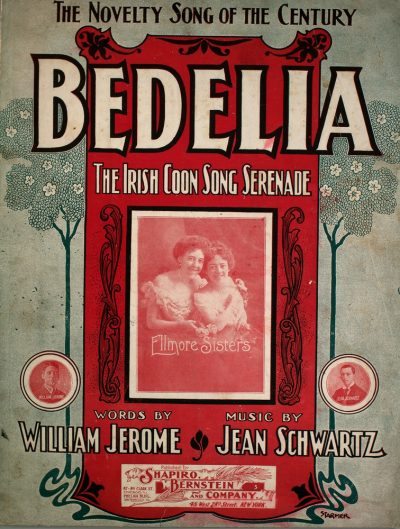
One hundred, twenty years ago, the Irish coon song serenade Bedelia was a number one song for the Haydn Quartet. According to TSort, this version of the song topped Billboard for eleven weeks. Written in 1903 by Jean Schwartz and William Jerome (Flannery), the song has been recorded many times by many singers.
Building songs around girls’ names has always been popular and this one may have been the most popular of this era. The sheet music bills the song as The Novelty Song of the Century and An Irish Coon Song Serenade. Coon songs were popular at the time but, steeped in racial stereotypes about African Americans. The song has more Irish influence than African American, so one assumes the publisher was trying to capitalize on the coon craze with the latter billing. The song was introduced by Blanche Ring playing the character of Liliandra in The Jersey Lily, which opened in September 1903. It was her first starring role on Broadway.
It is unclear who first recorded the song. Billy Murray [did a version that] went to #1. Considering his parents were Irish immigrants, it was fitting that Murray tackled the song, affecting a thick Irish accent to emphasize the song’s comedic nature. Murray’s was among four versions to chart in January 1904. It was quickly followed by a recording by the Haydn Quartet, which spent seven weeks at #1.
Music Monday: Victim Of Love (Eagles) 1976
For the New Year, I will be doing some blog-housekeeping. I have a tendency to stretch myself thin with headings and posts. I will be doing some consolidating. Song Sunday, News of the Day (NOTD) & Word of the Day (WOTD) are gone. I jettisoned some other headings about a year, ago. On to the show…~Vic

Returning to my Samsung playlist, submitted for your approval…
“Tell me your secrets, I’ll tell you mine…”
The second track, on side two, from the album Hotel California, Victim of Love was never released as a single. It was the B-Side to New Kid in Town, released December 7, 1976 and did get some airplay as an album track over the years.
By the time the Eagles reached the mid-1970s, they were on top of the world. They had been sorting their way through every rock trope they could think of and the album One of These Nights spawned three different singles. With success also comes pressure, though and the band had their backs against the wall when it came time to make Hotel California. When talking about making the concept for the album, Don Henley mentioned wanting to say something about the state of Hollywood, saying, “There’s a fine line between the American dream and the American nightmare.” The rest of the band were more than willing to comply, with Joe Walsh coming up with the original lick for Life in the Fast Lane on a whim.
Walsh had claimed to use the lick as a warm-up exercise but, it turned into its own piece once Glenn Frey got the title for the song. While guitarist Don Felder came up with the main chord progression for the title track, he had his sights on another song that he wrote for the album. Midway through recording, Felder said that he wanted to sing the track Victim of Love, which he claimed to have written by himself. As Henley remembers, what Felder presented the band with was just a collection of riffs, which was then turned into a song by Frey and J.D. Souther.
After one butchered take after the next, the band told Felder that it would be better if he didn’t sing the song, only for Felder to put his foot down. The band acquiesced and let Felder do his own take on the song but, they were also keeping a close eye on their manager as well. As the sessions were winding down, the band gave manager Irving Azoff a job…take Felder out to dinner while they re-recorded the entire track. When Felder found out that he was being erased from the song, he mentioned feeling betrayed…”It was like Don was taking that song from me. I had been promised a song on the next record.”
While Henley, to this day, disputes that there were no promises made to Felder, this started the dividing line between the band. As the touring got bigger and bigger, Felder started to get more resentful towards Frey and Henley for getting all of the songwriting royalties. By the time the band pulled into Long Beach for a benefit concert, Felder took it one step too far after making an off-handed remark to Senator Alan Cranston about the free show. Compared to the petty squabbling behind the scenes, there was audio taken of the infamous gig, which led to Frey and Felder threatening to kill each other onstage. When the house lights went out that night, Felder took his guitar, smashed it and drove off, never to be heard from again.
Once bassist Timothy B. Schmidt called Frey about the next rehearsals, he confirmed the worst. The band was history. The Eagles’ music may have reeked of California sunshine but, their final days ended with plotting, resentment and some of the worst drama a band could ask for.
Victim Of Love: The Song That Broke Up The Eagles
Tim Coffman
Far Out Magazine UK
February 12, 2023
♦The Treacherous Feud (Far Out Magazine UK/Arun Starkey/September 24, 2022)
Music Monday: T’ain’t Nobody’s Business If I Do 1923
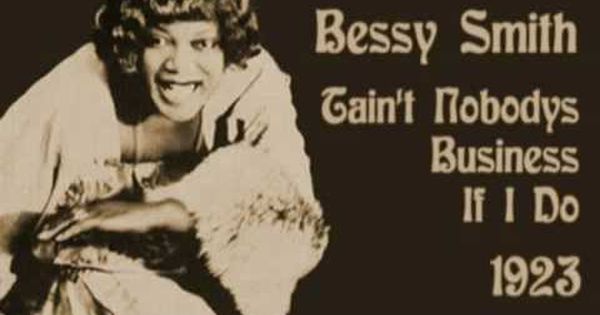
Digging around in Tsort, I was looking for something in 1923 in October. I was not disappointed. T’ain’t Nobody’s Business If I Do was published, originally, in 1922 by Porter Grainger and Everett Robbins, according to the Encyclopedia of the Blues. It was first recorded by an Anna Myers with the Original Memphis Five.
Other recordings were done by Alberta Hunter, Sara Martin and Billie Holiday but, Bessie Smith did her own take.
The most popular of the classic blues singers was Tennessee-born Bessie Smith, who first recorded in 1923. Known as the Empress of the Blues, she possessed a large voice. Smith had toured on the T.O.B.A. circuit since 1912, originally as a chorus girl. By 1918, she was appearing in her own revue in Atlantic City, New Jersey. She struggled, initially, to be recorded. Three companies turned her down before she was signed by Columbia. She eventually became the highest-paid black artist of the 1920s and recorded over 160 songs. Inducted into the Rock and Roll Hall of Fame in 1989, she is often regarded as one of the greatest singers of her era and was a major influence on fellow blues singers, as well as jazz vocalists.
Wikipedia Summaries
With a theme of freedom of choice, some of the lyrics are pretty tough. Per Tsort, this was the top song for a week per US Billboard 9, October 1923. In 1928, guitarist Frank Stokes recorded a country blues version. In 1947, jump blues singer Jimmy Witherspoon did a version titled Ain’t Nobody’s Business, reviving the song and it was the best selling record of 1949. Hank Williams, Jr. recorded his own version of the song for his 1990 album Lone Wolf, peaking at #15 on Billboard’s Hot Country Singles & Tracks chart. In 1996, a version by H2O, featuring Billie Piper got to #19 on the UK Singles chart. ~Vic
The B.B. King Reader: Six Decades of Commentary
Ain’t Nobody’s Business (The Blues Foundation)
Music Monday: Hello Central! Give Me No Man’s Land 1918

One hundred, five years, ago…
Hello Central! Give Me No Man’s Land is a World War I era song released in 1918. Lyrics were written by Sam M. Lewis and Joe Young. Jean Schwartz composed the music. The song was published by Waterson Berlin & Snyder, Co. of New York City. Artist Albert Wilfred Barbelle designed the sheet music cover, which features a photo of Al Jolson next to a shadow of a child on the phone. Explosions in No Man’s Land take up the rest of the red background. The song was written for both voice and piano. It was first introduced in the 1918 musical Sinbad.
The song tells the story of a child attempting to call her father in No Man’s Land. She is unable to reach him over the telephone because her father has been killed fighting on the Western Front.
Wikipedia Summary
There is very little else written about this song. When I have gone to the Tsort charts, with these older pieces, I have usually chosen whatever was at the top of the particular chart, for the particular year. This time, I looked, specifically, for this month in 1918. According to (old) US Billboard 1, this song was on the chart for eight weeks. ~Vic
♦ The New York Public Library Digital Collections
♦ Library of Congress
♦ Smithsonian: National Museum Of American History
♦ WorldCat
♦ First World War: Multimedia History (Web Archive)
Song Sunday: Unchained Melody (Righteous Brothers)
Returning to my Samsung playlist, submitted for your approval…
“I’ll be coming home, wait for me…”
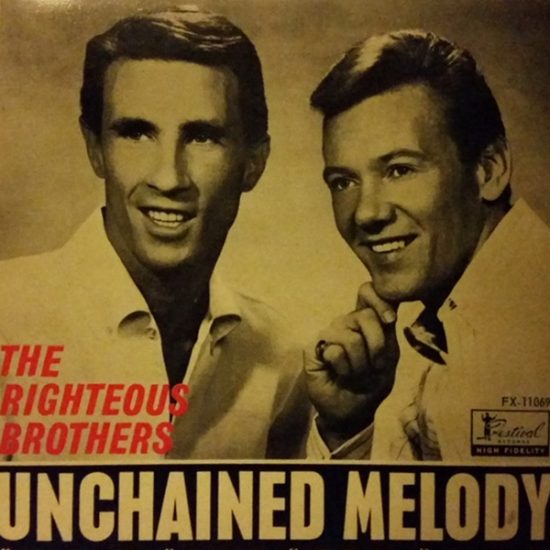
This song is older than I am. My dad liked the Righteous Brothers and their music was in my house, growing up. This is one of my favorites. It has an interesting background. Composed by Alex North in 1955 (a song he’d written in the 1930s), the lyrics were written by Hy Zaret. It was the theme to the movie Unchained, a film about a convict in a medium-security prison, wanting desperately to escape and go home to his wife. This was the movie’s “Melody.” Todd Duncan was the singer for the soundtrack.
There are over 1,500 recordings of this song, with the most notable being the Righteous Brothers’ version. Recorded by the duo in 1965 for Philles Records, Bobby Hatfield won a coin toss to sing it solo on their fifth album Just Once In My Life, according to Bill Medley. [Note: According to the Encyclopedia of Great Popular Song Recordings (Google Books), Just Once In My Life is listed as their fourth album. This reflects, otherwise.] Hatfield changed the song a bit during recordings. He decided to sing “I need your love…” in the final verse much higher than previous singers.
Ken Sharp: “Bobby’s vocals on Unchained Melody […] are stunning. Did he recognize his gift?”
Medley: “I don’t think he knew how good he was. I don’t think either one of us were thinking…are we good or not? I think we were just saying…thank God people enjoy what we’re doing. We admired so many other people and we certainly didn’t feel we were above anyone but, Bobby was sensational.
I happened to produce Unchained Melody. I know a lot of people think Phil (Spector) did it but, I produced and arranged it. I had the arrangement all done and, Bobby came in, sang it twice and that was it. I played piano and sang vocal background on it. [If] I knew that it was gonna be a hit, I certainly would have brought in a better piano player [laughing].”
Soul & Inspiration: A Conversation With Bill Medley Of The Righteous Brothers
Rockcellar Magazine [Web Archive]
Ken Sharp
May 6, 2014

Recorded on the “B” side of the single Hung On You from the album Back To Back, radio DJs weren’t interested in it and flipped the record over. Per Medley, producer Phil Spector was so pissed off, he began calling the radio stations to make them stop playing the wrong song. Thankfully, he was unsuccessful and the song made it to #4 on Billboard’s Hot 100, the week of September 4, 1965. It re-appeared in the Billboard charts in 1990 when the movie Ghost was released July 13. Two versions of the song wound up in the charts at the same time, the original 1965 version and a new recording by Hatfield. [They] became the first act to have two versions of the same song in the Top 20 at the same time.
I had no idea that Elvis Presley did his own version. The first track from the album Moody Blue, it was recorded June 21, 1977 and released in March 1978. It peaked at #6 on the US Hot Country Songs chart.
Cover Me: The Stories Behind The Greatest Cover Songs Of All Time (WorldCat Library)
The Time Of My Life: A Righteous Brother’s Memoir (Google Books)
Bobby Hatfield Memorial (Spectropop)
Music Monday: When Irish Eyes Are Smiling 1913

Image Credit: Knick Of Time Blog
One-hundred, ten years ago…
When Irish Eyes Are Smiling is a lighthearted song in tribute to Ireland and was very popular in June 1913. Its lyrics were written by Chauncey Olcott and George Graff, Jr., set to music composed by Ernest Ball, for Olcott’s production of The Isle O’ Dreams and, Olcott sang the song in the show. It was first published in 1912, at a time when songs in tribute to a romanticised Ireland were very numerous […], both in Britain and the United States. During the First World War, the famous tenor John McCormack recorded the song.
The song continued to be a familiar standard for generations. Decades later, it was used as the opening song on the radio show Duffy’s Tavern. The song has been recorded on over 200 singles and albums, by many famous singers, including Bing Crosby, Connie Francis and Roger Whittaker.
Wikipedia Summary
As I have stated in previous posts, Billboard’s charting abilities, in the early 20th Century, is difficult to navigate. My first stop, for these early pieces, is the Tsort site. Playback FM is very helpful, too. Digging around in the Wayback Machine can be a complete rat maze. The data is there but, how much time do you devote to searching for it.
There was a Shamrock Summit in March 1985, apparently, in Canada (which I don’t remember). Starting on St. Patrick’s Day, Prime Minister Brian Mulroney and President Ronald Reagan met & talked for two days. Remember the Acid Rain Scare back then? It was seen as a Turning Point in U.S.-Canada Relations (both Trudeaus don’t play well with others?) and the closing ceremonies were televised, with the men & their wives singing the song (Mulroney & Reagan are Irish surnames). I find the meeting in Quebec City and the singing of an Irish song, ironic and amusing. ~ Vic
Additional:
♦ Irish Eyes Are Smiling (The Account of Composer Ernest R. Ball’s Life/IMDb/1944)
♦ Still Something To Smile About (Pocono Record/Marta Gouger/Wayback Machine/03-06-2007)
♦ When Irish Eyes Are Smiling (Irish Music Daily/Pat/No Date Given)
♦ List Of Movies Using The Song
Song Sunday: Take A Chance On Me (ABBA)

Returning to my Samsung playlist…submitted for your approval. ~Vic
“My love is strong enough to last when things are rough, It’s magic…”
I have loved ABBA since their music showed up on the radio. Their first album in 1973 didn’t make it to the US. They finally got noticed, here, with their second album in 1974. I clearly remember hearing Waterloo during the summer after second grade (I was seven). I was permanently hooked. I still love them and I am in my middle 50s.
The second track from the album ABBA: The Album, released in December 1977, Take A Chance On Me peaked at #3 on Billboard’s Hot 100 & #9 on Billboard’s Adult Contemporary, in July 1978 and, #5 on Cash Box in April 1978. Written and produced by Benny Andersson & Björn Ulvaeus, the song was one of ABBA’s first singles in which their manager Stig Anderson did not assist with writing the lyrics […]. In the UK Charts, it was number #1 and, of ABBA’s Top 20 biggest songs, this song is #4. It was a #1 hit in Austria, Belgium and Ireland. It was certified Gold in Canada, Denmark, the UK & the US.
English duo Erasure did a version of the song, released in June of 1992. It was the third track on their album Abba-esque. I am not fond of the remake but, I am including two videos, below.
I was also lucky to come across an actual live version of them singing this on a 1978 Olivia Newton-John television special. Most “live” videos are them lip-synching.
Official Video
Olivia’s Show
Erasure Version
Erasure Top of the Pops
Music Monday: Shine On, Harvest Moon 1908

One hundred, fifteen years ago in May (not necessarily today), the song Shine On, Harvest Moon was at the top of the Billboard chart, such as it was back then, for eleven weeks. Sung by Ada Jones & Billy Murray, the song is credited to the married vaudeville team of Nora Bayes & Jack Norworth.
It was one of a series of moon-related Tin Pan Alley songs of the era. The song was debuted by Bayes and Norworth in the Ziegfeld Follies of 1908 to great acclaim. It became a pop standard and, continues to be performed and recorded in the 21st Century. During the vaudeville era, songs were often sold outright and the purchaser would be credited as the songwriter. John Kenrick credits the song’s writers as Edward Madden and Gus Edwards. However, David Ewen credits Dave Stamper, who contributed songs to 21 editions of the Ziegfeld Follies and was Bayes’ pianist from 1903 to 1908. Vaudeville comic Eddie Cantor also credited Stamper.
The song has had a long history with Hollywood movies. In 1932, animation great Dave Fleischer directed a short titled Shine On Harvest Moon. A 1938 Roy Rogers western was named after the song, as was a 1944 biographical film about Bayes and Norworth. The song has been featured in dozens of movies from 1933 to 1978. There was also a popular British 1980s comedy drama called Shine on Harvey Moon.
Wikipedia Summary Excerpts
I am not entirely sure why this Jones & Murray piece is listed as 1909, as Tsort lists it as 1908. There must be some lost data, somewhere. ~Vic
Film & Television
Other Recordings
Duo’s Long List Of Songs Performed
Song Sunday: Sail On (Commodores)

Returning to my Samsung playlist…submitted for your approval. ~Vic
“I know it’s a shame but, I’m giving you back your name…”
Written by Lionel Richie and, produced by James Anthony Carmichael & the Comodores, this was released on July 27, 1979. I was 12 years old and it was the summer before 8th grade. I loved it as soon as I heard it on the radio.
The 8th track from the album Midnight Magic, it was the first single released from the album and it entered the Hot 100 on August 11, peaking at #4. It did very well in the Netherlands, New Zealand and the UK. Richie re-recorded the song with Tim McGraw for his tenth album Tuskegee.
Additional:
♦ The Commodores~Sail On (Saved on the Internet Archive)
♦ Cash Box: A Sparkling Ballad (World Radio History/August 11, 1979)
♦ Billboard: A Surprising Country Flavored Ballad (World Radio History/August 11, 1979)
♦ Record World: A Beautiful Country-Colored Ballad (World Radio History/August 11, 1979)
♦ Real Reason Why Richie Left (Grunge/A. C. Grimes/March 30, 2020)
♦ The Commodores (Encyclopedia of Alabama/Ben Berntson/July 3, 2012)
♦ Commodores Official Website
Full Version
Richie & McGraw
Song Sunday: Radar Love

“I’ve been drivin’ all night, my hands wet on the wheel…There’s a voice in my head that drives my heel…
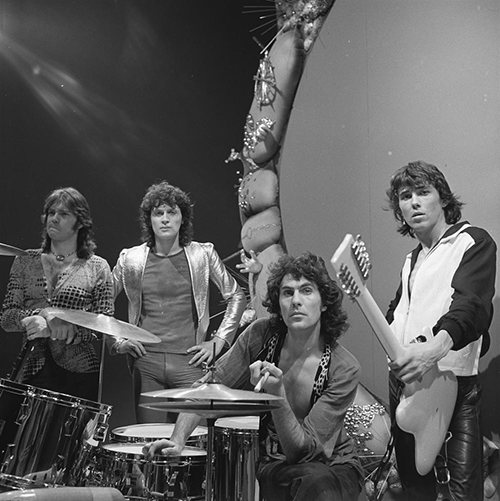
Submitted for your approval, returning to my Samsung playlist, I present Radar Love by Golden Earring, a Dutch hard-rock/progressive rock band. I can’t imagine that anyone out there hasn’t heard this song at least once. Founded in 1961 in The Hague, Netherlands, most of their extensive material didn’t even chart in the US. In the 60 years of their existence, they made 25 studio albums, eight live albums, two compilation albums and an impressive 74 singles. Originally named The Tornadoes…
Golden Earring was formed in 1961 in The Hague by 13-year-old George Kooymans and his 15-year-old neighbour, Rinus Gerritsen. Originally called The Tornados, the name was changed to Golden Earrings, when they discovered that The Tornados was already in use by another group.
They [achieved] their first success in 1965 with “Please Go,” as a pop rock band with Frans Krassenburg as lead singer. By 1969, the rest of the lineup had stabilized, with lead vocalist and multi-instrumentalist Barry Hay and drummer Cesar Zuiderwijk. By ’71, they [were] a regular presence on Dutch charts and [were] starting to climb up the ladder in Germany. They [signed] on to the Who’s Track label, which released a compilation of Dutch singles, Hearing Earring, helping the group break through in England.
Golden Earring
Prog Related/Netherlands
Prog Archives
Date: April 19, 1974
Author: AVRO
Source: Netherlands Wiki
Image Credit: Wikipedia
The young group initially baptizes itself as The Tornadoes but, when that name turns out to have already been claimed by another band, they switch to The Golden Earrings – loosely based on a song by the British band The Hunters.
While most Dutch pop bands from the sixties stumble over the threshold to the seventies, the Golden Earring – as the band has come to call itself – emerges from the decade strong and confident.
In 1973, Golden Earring aspires to make an album that is of international allure both artistically and commercially. A lot of time is put into writing and recording what will eventually become Moontan. The mission succeeds brilliantly. Candy’s Going Bad, Radar Love, Just Like Vince Taylor and The Vanilla Queen are among the best the band has written to date.
Both Moontan’s first single Radar Love are a resounding success. First in the Netherlands, then in the rest of Europe and finally in America – where the album was released in 1974. Radar Love even becomes a big hit, with a 13th place as the highest listing. In the following years, however, the song will mainly grow into one of the ultimate car songs, which can still be heard daily on American radio stations. Radar Love has been covered by hundreds of international acts over the decades, including U2, White Lion, Ministry and Def Leppard. Both the single and the album are an undisputed milestone in Dutch pop history.
Golden Earring Biography Page (Google will have to translate.)

It’s not really normal for a band eight albums into their career to suddenly enjoy a worldwide breakout. And, for it to happen with a track over six minutes long with elongated instrumental passages and a somewhat mysterious narrative is even stranger. “…the song most likely to inspire a speeding ticket some 47 years after it was first released.” Barry Hay, the group’s lead singer and lyricist, explained in a recent interview with American Songwriter that a record company push gave then some hope.
“We signed up with Track records, the label of The Who,” Hay says. “And, they really put an effort into it, because they had a sort of monkey wrench. If they could put us together on tour in Europe, they could put us together in Madison Square Garden. So, [we’re] sort of the sons of the Who.”
“At first, the opening line was ‘I’m sitting in a bathtub.’ And, I thought, ‘That’s hardly masculine.’ Then, I came up with sitting in a car.”
“…Hay managed to come up with effortless couplets […] while tying them together in a resonant story of a mystical connection between two separated lovers. […] I remember, in those days, I was really interested in ESP. I read some shit about it. […] Like there’s an accident but, these people still have ESP, they still have contact in a way. Which is sort of a magical thing…
It also inspired a million interpretations but, Hay says that the tragic one is correct. “The guy actually dies,” he says of the song’s narrator. “That’s the gist of the whole thing. In a way, she still has contact with him. There is an afterlife.”
Behind The Song: Radar Love
American Songwriter
Jim Beviglia (Written three years ago)
Unfortunately, Golden Earring is no more:
Golden Earring Co-Founder George Kooymans Retires After ALS Diagnosis
The Band Calls It Quits ~Vic
Additional:
♦ The Virgin Encyclopedia of Heavy Rock (Colin Larkin/1999/Internet Archive/Pages 187-188/Sign-In Required)
♦ It’s Prog Jim, But Not As We Know It: Golden Earring (Louder Sound/Prog/Malcolm Dome/10-28-2014)
Tune Tuesday: In The Good Old Summer Time 1903

1896 Publicity Photo
National Phonograph Co.
One hundred, twenty years ago, today, the #1 song in 1903 was In The Good Old Summer Time by the Haydn Quartet. In a previous post, I stated that Tsort has very few charts prior to 1920. Music popularity just wasn’t tracked as closely as it is, today. For music this old, I plug in a date on Playback FM and run with it.
Written by Ren Shields and composed by George “Honey Boy” Evans, it is a Tin Pan Alley song, originally published in 1902. Blanche Ring assisted in having the number added to the 1902 comedy musical The Defender. There is also a John Philip Sousa band version.
The Haydn Quartet was originally formed in 1896 as the Edison Quartet. They eventually changed their name to Haydn, an homage to Joseph Haydn and as a way to record for other companies besides Edison Records.
In The Good Old Summer Time was a very popular song for its time and John Scantlebury MacDonald, a replacement member of the Edison Quartet, went on to record the song, solo. It was the Haydn Quartet’s biggest commercial success while contracted with the Victor Talking Machine Company.
The UK Number Ones Blog Favorite Single: Atomic (Blondie) 1980
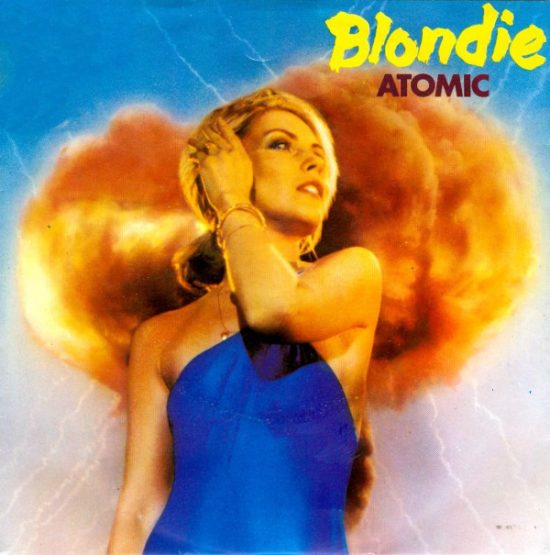
Stewart at UK#1s Blog asked his followers which UK #1 song was their favorite. There were so many to choose from but, I am a kid/young teen of the late 70s, early 80s and this was a no-brainer for me. This is, hands down, my favorite Blondie song. Just as a side note, my second choice was Cathy’s Clown by The Everly Brothers.
Released on February 23, 1980, Atomic was the ninth track on side two of the album Eat to the Beat, Blondie’s fourth album, produced by Mike Chapman. Written by Debbie Harry and Jimmy Destri, it was the third single released and the band’s third #1 in the UK Singles Chart. A rock, disco and new wave fusion, Atomic is described as “a cool, electronic enhanced dance number (PDF). Debbie Harry’s laidback vocals blend into the musical wood work.”
‘Atomic‘, which featured King Crimson‘s Robert Fripp on guitar and Ellie Greenwich on backing vocals, was lyrically meaningless and was described in Record Mirror as ‘vapid and irritating…the best thing about this single is the live [cover] version of David Bowie‘s ‘Heroes‘ on the B-side (12″ UK single).’ “Jimmy Destri wrote this song…” Debbie claimed. “He was trying to do something like ‘Heart of Glass‘ and, then, somehow or another, we gave it the spaghetti western treatment. Before that, it was just lying there like a lox. The lyrics, well, a lot of the time, I would write while the band were just playing the song and trying to figure it out. I would just be kind of scatting along with them and I would start going ‘Oooooooh, your hair is beautiful‘.”
1000 UK #1 Hits
Jon Kutner & Spencer Leigh
May 26, 2010
Page 452
Atomic didn’t do as well in the US. It only made it to #39 on Billboard’s Hot 100, debuting on May 17, 1980 and peaking on July 5, 1980. It may be ‘lyrically meaningless’ but, it is certainly not vapid and irritating. It has a great beat and an energy that is hard to deny. Debbie’s vocals do, indeed, blend well with the ‘musical wood work.’ The single Call Me from American Gigolo had an instrumental version on the B-side and Debbie did some vocal blending with that, too.
The late Gia Carangi was dancing in the video.
Music Monday: Magnificat 1733

D Major
Language: Latin
Performed: Leipzig 1733
Image Source: Digitalisierte Sammlungen
Two hundred, ninety years ago…Johann Sebastian Bach performs a revised version of his Magnificat in D major, BWV 243, ending the mourning period for Augustus II the Strong, Elector of Saxony and King of Poland.
Johann Sebastian Bach‘s Magnificat, BWV 243, is a musical setting of the biblical canticle Magnificat. It is scored for five vocal parts (two sopranos, alto, tenor and bass) and a Baroque orchestra including trumpets and timpani. It is the first major liturgical composition on a Latin text by Bach. In 1723, after taking up his post as Thomaskantor in Leipzig, Bach set the text of the Magnificat in a twelve movement composition in the key of E-flat major. For a performance at Christmas he inserted four hymns (laudes) related to that feast. This version, including the Christmas interpolations, was given the number 243.1 in the catalogue of Bach’s works.
Likely for the feast of Visitation of 1733 or another feast in or around that year, Bach produced a new version of his Latin Magnificat, without the Christmas hymns…instrumentation of some movements were altered or expanded and, the key changed from E-flat major to D major for performance reasons of the trumpet parts. This version of Bach’s Magnificat is known as BWV 243.2 (previously BWV 243). After publication of both versions in the 19th century, the second became the standard for performance. It is one of Bach’s most popular vocal works.
In Leipzig, the Magnificat was regularly part of Sunday services, sung in German on ordinary Sundays but more elaborately and in Latin on the high holidays (Christmas, Easter and Pentecost) and on the three Marian feasts Annunciation, Visitation and Purification.
Apart from an early setting of the Kyrie, on a mixed Greek and German text (BWV 233a), all of Bach’s known liturgical compositions in Latin were composed during his tenure as Thomaskantor in Leipzig, from 1723 until his death in 1750. Compared to Lutheran practice elsewhere, an uncharacteristic amount of Latin was used in church services in Leipzig. An early account of Bach showing interest in liturgical practices in Leipzig dates from 1714 when he noted down the order of the service on the first Sunday in Advent during a visit to the town.
Bach assumed the position of Thomaskantor on May 30, 1723, the first Sunday after Trinity, performing an ambitious cantata in 14 movements, Die Elenden sollen essen, BWV 75, followed by a comparable cantata, Die Himmel erzählen die Ehre Gottes, BWV 76 the next Sunday.
Wikipedia Summary & History
 Cosmic-Observation