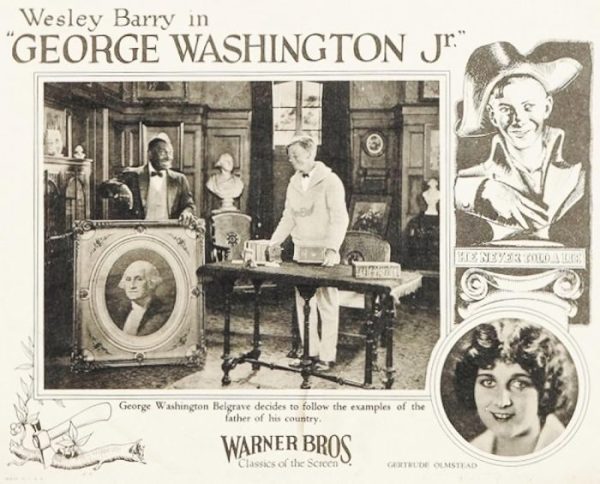
As described in a film magazine review, Count Gorfa, anarchist leader, steals the private records of a Senate Investigative Committee, the loss of which threatens the political fortunes of Senator Belgrave, whose daughter the Count wishes to wed. The Senator’s son, the young George Washington Belgrave and his friend Robert Lee Hopkins trail the anarchists. After many adventures and burlesques of historical fables, the documents are recovered and the Senator is saved.
A senator is trying to get his niece to marry a foreign count. The senator’s teenage son finds out that the count is not only a phony but, an international criminal. The boy sets out to break up the impending marriage, save his father from ruin and, his cousin from marrying a man she doesn’t love.
IMDb Storyline
George Belgrave is guided by George Washington’s principles of integrity and honesty. He exposes his cousin Dolly’s fiancé, Count Tyrola, to be a bogus count and an internationally sought criminal. [As] the leader of the Vassalini gang, [he] steals a secret treaty from George’s father, a United States senator. It is Tyrola’s intention to use the treaty to cause political strife in Bessarabia. George, his friend Bob, and Ham, the negro butler, subdue the Vassalini gang and, after recovering the treaty, lock them up. Tyrola’s treachery is revealed seconds before the wedding ceremony. George, to save his father embarrassment, tells his only lie in giving him credit for the whole “plan” to capture Tyrola. Cousin Dolly marries friend Bob.
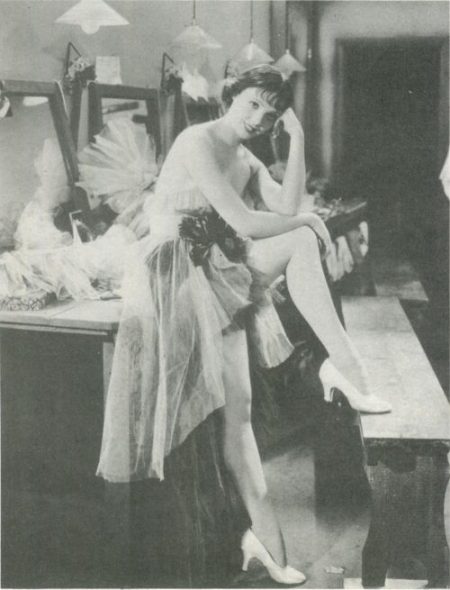
I got lucky, today and found a Friday The 13th movie that had nothing to do with Jason or Camp Crystal Lake. Ninety years, ago, Friday The Thirteenth was released in the UK, at some point in November of 1933. The movie opened in New York on May 14, 1934. Curiously, this movie seems more science-fiction than spook. ~Vic
Jessie Matthews as Millie
Photo Credit: IMDb & Amazon
It is pouring with rain at one minute to midnight on Friday the thirteenth and the driver of a London bus is peering through his blurred windshield as his vehicle sails down an empty road. Suddenly, lightning strikes and a vast crane above topples into the path of the oncoming bus. Then, Big Ben begins to wind backwards. Time recedes and we discover the lives of all of the passengers, and the events that brought them to that late-night bus journey, from the con man with a hundred pound cheque to the businessman’s distraught elderly wife. Time flows on, inevitably, to the crash and past it, as some live and some die.
IMDb Storyline
The complicated lives of twelve people travelling on a bus are traced up to the point when the bus crashes into a shop, killing two of the passengers.
BFI Screen Online
In London, near midnight, as a rain storm rages, several people travel across the city on a bus. Of the passengers, one elderly woman seems anxious and upset, a young man who has just been robbed by a pickpocket gratefully accepts money for his fare from another passenger, another man boasts of his knowledge of art, and a young woman angrily destroys a photo of a man. When a lightning strike causes the bus to crash, each passenger recalls what brought them on the ill-fated journey.
Rotten Tomatoes Movie Info
After a London bus crash leaves two people dead and several injured, the clock is turned back twenty-four hours to show the lives of the bus passengers, how they happened to be on that bus at that time, and the effect of the crash upon their lives.
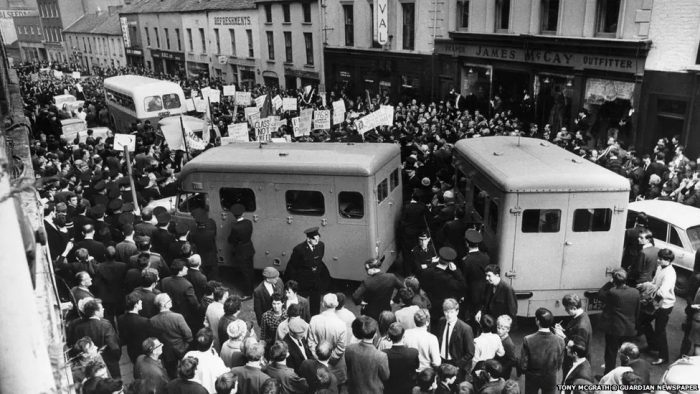
Police have used batons and water cannons to break up a civil rights march in Londonderry, Northern Ireland. At least 30 people, including MP Gerard Fitt and some children, have been injured. Reports say police tried to disperse the protesters by using their batons indiscriminately and spraying water from hoses on armoured trucks. The demonstrators retaliated with petrol bombs. A number of bonfires were lit in the Bogside area and when a fire engine arrived, the crowd turned on it and threatened to set it alight.
“These were stormtrooper tactics at their worst.”
MP Gerard Fitt
The march, organised with the support of the Northern Ireland Civil Rights Association (NICRA), was held in protest at alleged discrimination against the majority Nationalist (and mainly catholic) population in Londonderry by the mainly Protestant Unionist-controlled local authority. The trouble began when the march headed for Duke Street, a road declared out of bounds by the Northern Ireland Minister of Home Affairs, William Craig.
When the protesters turned into the street they were confronted by a barricade of police officers, in rows three deep, all armed with batons. Loudspeakers urged the crowds to disperse but the calls went unheeded. Violent skirmishes broke out and very quickly the street was filled with police wielding batons against men, women and children.
In the chaos the Stormont and Westminster Republican Labour MP for Belfast west, Gerry Fitt, was struck down by a baton. He was hurried to a police car with blood pouring from his head and taken to hospital, where he later received stitches.
Mr. Fitt told reporters: “I was a marked man before the march started. These were stormtrooper tactics at their worst. They hit me once, but that wasn’t enough – they had to have another go, and this was the cause of the wound which had to be stitched.”
Mr Craig has said he is satisfied there was no unnecessary brutality. He rejected suggestions that police had used their batons improperly. NICRA formed in February 1967 to call for a number of reforms, including an end to the perceived discrimination against Catholics in the allocation of council housing and public sector jobs.
It wants the introduction of one man-one vote, rather than one vote per household, which was also seen as discriminatory against Catholic homes with multiple occupancy and an an end to gerrymandering electoral boundaries which in Nationalist areas like Londonderry has led to the return of Unionist-led authorities. And, it wants the repeal of the Special Powers Act, which was aimed at suppressing the IRA and gave police the power to search any property, and was therefore seen as discriminatory against Catholics.
The Leaning Tower of Pisa (torre pendente di Pisa…in Italian) is the campanile or freestanding bell tower of Pisa Cathedral. It is known for its nearly four-degree lean, the result of an unstable foundation. The tower is one of three structures in the Pisa’sCathedral Square, which includes the cathedral and Pisa Baptistry. The tower has 296 or 294 steps. [The] seventh floor has two fewer steps on the north-facing staircase.
The tower began to lean during construction in the 12th century, due to soft ground, which could not properly support the structure’s weight. It worsened through the completion of construction in the 14th century. By 1990, the tilt had reached 5.5 degrees. The structure was stabilized by remedial work between 1993 and 2001, which reduced the tilt to 3.97 degrees.
Construction of the tower occurred in three stages over 199 years. On January 5, 1172, Donna Berta di Bernardo, a widow and resident of the house of dell’Opera di Santa Maria, bequeathed sixty soldi to the Opera Campanilis petrarum Sancte Marie. The sum was then used toward the purchase of a few stones which still form the base of the bell tower. On August 9, 1173, the foundations of the tower were laid. Work on the ground floor of the white marble campanile began on August 14 of the same year, during a period of military success and prosperity.
The tower began to sink after construction had progressed to the second floor in 1178. This was due to a mere three-meter foundation, set in weak, unstable subsoil, a design that was flawed from the beginning. Construction was subsequently halted for the better part of a century, as the Republic of Pisa was almost continually engaged in battles with Genoa, Lucca and Florence. This allowed time for the underlying soil to settle […], [otherwise], the tower would almost certainly have toppled.
There has been controversy surrounding the identity of the architect […]. For many years, the design was attributed to Guglielmo and Bonanno Pisano […]. A 2001 study seems to indicate Diotisalvi was the original architect, due to the time of construction and affinity with other Diotisalvi works, notably the bell tower of San Nicola and the Baptistery, both in Pisa.
Between 1589 and 1592, Galileo Galilei, who lived in Pisa at the time, is said to have dropped two cannonballs of different masses from the tower to demonstrate that their speed of descent was independent of their mass, in keeping with the law of free fall.
During World War II, the Allies suspected that the Germans were using the tower as an observation post. Leon Weckstein, a U.S. Army sergeant sent to confirm the presence of German troops in the tower, was impressed by the beauty of the cathedral, and its campanile and […] refrained from ordering an artillery strike, sparing it from destruction.
The tower has survived at least four strong earthquakes since 1280. A 2018 engineering investigation concluded that the tower withstood the tremors because of dynamic soil-structure interaction. [The] height and stiffness of the tower, combined with the softness of the foundation soil, influences the tower’s vibrational characteristics in such a way that it does not resonate with earthquake ground motion. The same soft soil, that caused the leaning and brought the tower to the verge of collapse, helped it survive.
Wikipedia Summary
***The ceremony, for the 850th anniversary of the foundation of the Tower of Pisa, was started, today and runs all year to August 9, 2024.
One hundred years, ago, today, the black & white silent film [The] Forbidden Lover was released. Brackets around “THE” is a product of the differences of the title from data sources. This film is an edited version of The Power of Love, the very first 3-D movie, released on September 27, 1922 at the Ambassador Hotel Theater in Los Angeles. Both films are believed lost.
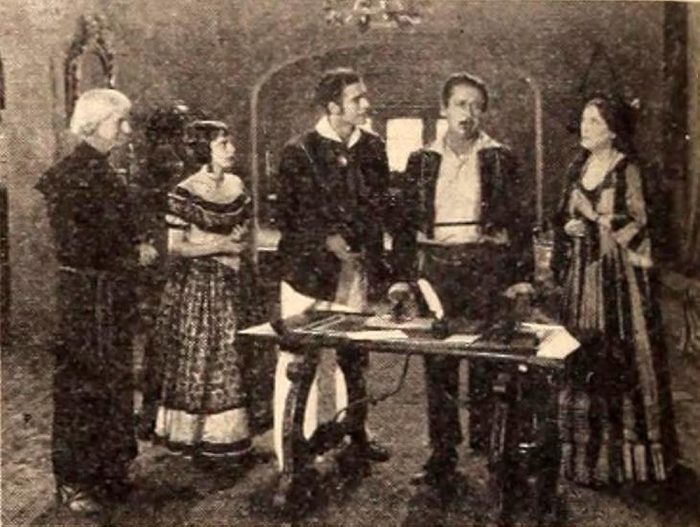
Yankee sea captain lands on the coast during the old Spanish days to trade with the ranch owners. He meets a girl who is betrothed to a man she loathes. After a series of adventures and narrow escapes, he shows up the unscrupulous ranch owner and wins the girl.
Still Image
The Power Of Love
Image Credit: IMDb & Amazon
Because of his financial trouble, Don Almeda promises his daughter, Maria, to Don Alvarez but, Maria does not love [him]. In fact, she falls in love with Terry O’Neil, a stranger who has been wounded by robbers associated with Alvarez. O’Neil takes Alvarez’s place at a masked ball. Alvarez, in turn, robs the old Padre of some pearls and stabs him to death with O’Neil’s knife. He then accuses O’Neil of the murder and tries to shoot him but, wounds Maria instead, having thrown herself in front of him. Maria recovers and, after proving that Alvarez is a thief and a killer, weds O’Neil.
IMDb The Power of Love Storyline Moving Picture World
October 1922 Production Company:Perfect Pictures Tagline: A pair of spectacles will be handed to you as you enter the theatre, through which you will view the new sterescopic pictures.
The Power of Love was screened in front of a live audience at the Ambassador Hotel Theater […]. It was projected dual-strip in the red/green anaglyph format, making it both the earliest known film that utilized dual strip projection and the earliest known film in which anaglyph glasses were used. The camera rig used to shoot the film was made by the producers themselves and as you can imagine, it was far from perfect. Simply put, the film was not a success. It was screened, again, for exhibitors, and press, in New York City and, then, almost immediately fell out of sight. It was not booked again by other exhibitors. Unfortunately, we may never see what this movie looked like.
3-D TV & Movies
The first stereoscopic image dates to 1844, which makes 3-D images as old as the art of photography. [No] less a personage than Queen Victoria was photographed in 1854 in stereoscopic 3-D. 3-D stereoscopic moving images date to the 1850s with what was called the Kinetamatoscope [sic]. The first public display of a 3-D movie came in 1922 with The Power of Love […]. The film received a decent review in Moving Pictures World, then promptly disappeared from history by changing its title to Forbidden Lover and touring the country in a 2-D version. It was too complex and costly at the time to take 3-D on the road.
Randome
Looking Up/My Daily Plant Blogspot (Blogger) Cirque de 3-D
March 6, 2009
The song tells the story of a child attempting to call her father in No Man’s Land. She is unable to reach him over the telephone because her father has been killed fighting on the Western Front.
Wikipedia Summary
There is very little else written about this song. When I have gone to the Tsort charts, with these older pieces, I have usually chosen whatever was at the top of the particular chart, for the particular year. This time, I looked, specifically, for this month in 1918. According to (old) US Billboard 1, this song was on the chart for eight weeks. ~Vic
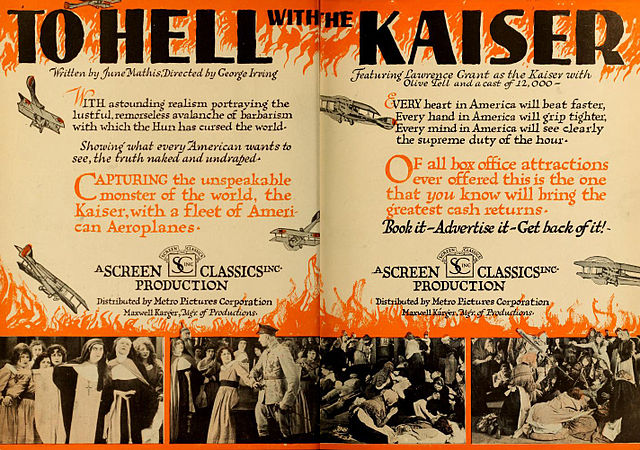
Following the death of his father, Frederick III of Germany, Wilhelm Hohenzollern becomes the German Kaiser and forms a pact with the devil that, he will conquer the globe in exchange for his soul. During the Kaiser’s invasion of Belgium, the Crown Prince enters a church and rapes Ruth Monroe, the daughter of an American inventor who has perfected a noiseless communications device. When the professor denounces the Crown Prince, he immediately is shot, whereupon his other daughter Alice vows to obtain revenge. While Alice’s sweetheart, Winslow Dodge, fights with the Americans as an aviator, she arranges to meet the Crown Prince through her friend Robert Graubel, an actor who impersonates the Kaiser at public functions. With her father’s wireless [device], Alice informs Winslow of the Kaiser’s whereabouts and, as he captures the German emperor, she kills the Crown Prince. Now a prisoner, the Kaiser drowns himself and wakes up in Hell, where Satan abdicates in his favor, saying that the Kaiser’s tortures are more fiendish than any he ever devised.
Lawrence Grant, who spent his lengthy career playing odious villains, appeared in the dual role of Kaiser Wilhelm II and his look-alike, German actor Robert Graubel. Terrified of being assassinated, the Kaiser hires Graubel to impersonate him at various political functions. In the film, the Kaiser achieves military success through an infernal pact with Satan. Once this is established, the film concentrates on the seemingly endless tally of misdeeds perpetrated by the Kaiser during his quarter-century reign over Germany. His “partner in crime” is the Crown Prince […], who thinks nothing of casually raping convent girls and gunning down protesting nuns. The Crown Prince’s latest conquest is Ruth Monroe […], the daughter of an American inventor. When Ruth’s father protests this outrage, he is brutally murdered, whereupon Ruth’s sister Alice […] vows revenge. Using her father’s newest invention, a wireless machine whose coded messages cannot be intercepted, Alice directs a battalion of planes to bomb the small German village where the Kaiser is hiding. Captured by the Allies, the Kaiser is ignominiously dumped in a POW camp but, not before enduring a well-aimed sock on the jaw from a pugnacious dough-boy. In despair, the Kaiser commits suicide and sends his soul to hell. In hell, the devil […] gives up his throne, confessing that the Kaiser is far more sinister than he could ever hope to be.
[On June 8, 1918], Motography ran a Screen Classics press release explaining that To Hell With The Kaiser “reveals the machinations of Europe’s military monster before and during the war, his contempt for Americans […], his elaborate plans to crush France, […] destroy Russia, […] partition the world, […] his [order] to employ deadly gases in the war, the true circumstances under which he ordered the sinking of the Lusitania, the raiding of hospitals […].” Years before the war, Mr. Grant’s physical likeness to the German ruler was noted by a high official of the Kaiser’s court and a proposition was made for Grant to play the Kaiser in a dramatization […]. The war broke out before discussions went any further.
Actor John Sunderland, playing American pilot Winslow Dodge, was himself “an aviator who has seen service in Belgium.”
[It] had been released in the press that Kaiser Wilhelm II had half a dozen doubles who were employed to pose for him in various parts of the country, where there might be danger of assassination, while the real Kaiser, himself, remained safe behind this cloak.
To Hell With The Kaiser opened in New York City at the Broadway Theatre on June 30, 1918, immediately after it had emerged from the cutting and editing rooms […].
The film turned out to be an effective propaganda tool […]. Not only has the picture been shown in munitions plants and training camps […] but, this power has now been demonstrated in a new way…to convert conscientious objectors.
The National Film Preservation Board (NFPB) included this film on its list of Lost U.S. Silent Feature Films as of February 2021.
I found the building of this post fascinating. What started out as a simple movie post, turned into a history lesson. It’s a shame that it is lost. There are photographs of still pictures on IMDb. ~Vic
When Irish Eyes Are Smiling is a lighthearted song in tribute to Ireland and was very popular in June 1913. Its lyrics were written by Chauncey Olcott and George Graff, Jr., set to music composed by Ernest Ball, for Olcott’s production of The Isle O’ Dreams and, Olcott sang the song in the show. It was first published in 1912, at a time when songs in tribute to a romanticised Ireland were very numerous […], both in Britain and the United States. During the First World War, the famous tenor John McCormack recorded the song.
The song continued to be a familiar standard for generations. Decades later, it was used as the opening song on the radio show Duffy’s Tavern. The song has been recorded on over 200 singles and albums, by many famous singers, including Bing Crosby, Connie Francis and Roger Whittaker.
Wikipedia Summary
As I have stated in previous posts, Billboard’s charting abilities, in the early 20th Century, is difficult to navigate. My first stop, for these early pieces, is the Tsort site. Playback FM is very helpful, too. Digging around in the Wayback Machine can be a complete rat maze. The data is there but, how much time do you devote to searching for it.
There was a Shamrock Summit in March 1985, apparently, in Canada (which I don’t remember). Starting on St. Patrick’s Day, Prime Minister Brian Mulroney and President Ronald Reagan met & talked for two days. Remember the Acid Rain Scare back then? It was seen as a Turning Point in U.S.-Canada Relations (both Trudeaus don’t play well with others?) and the closing ceremonies were televised, with the men & their wives singing the song (Mulroney & Reagan are Irish surnames). I find the meeting in Quebec City and the singing of an Irish song, ironic and amusing. ~ Vic
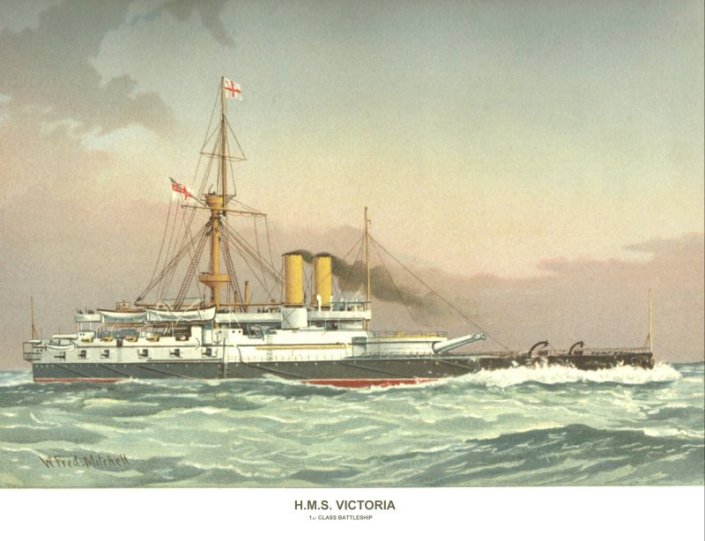
Victoria was constructed at a time of innovation and rapid development in ship design. Her name was originally to be Renown but, this was changed to Victoria while still under construction to celebrate Queen Victoria‘s Golden Jubilee, which took place the year the ship was launched. Her arrival was accompanied by considerable publicity. She was the largest, fastest and most powerful ironclad afloat, with the heaviest guns. Despite the ship’s many impressive features, compromises in the design meant that she proved less than successful in service.
Scale Model As Launched In Elswick 1887
Discovery Museum
Newcastle-Upon-Tyne
Image Credit: Hammersfan
May 18, 2015
A detailed model of the ship was exhibited at the Royal Navy exhibition in 1892 and another in silver was given to Queen Victoria by the officers of the Royal Navy and Royal Marines as a Jubilee gift.
The ship was nicknamed The Slipper (or when with her sister ship, [the] HMS Sans Pareil […] The Pair of Slippers) because of a tendency for her low fore-deck to disappear from view, in even slight seas, especially as a result of the low forward deck and raised aft superstructure…the two ships [had a] humorously perceived resemblance to the indoor footwear.
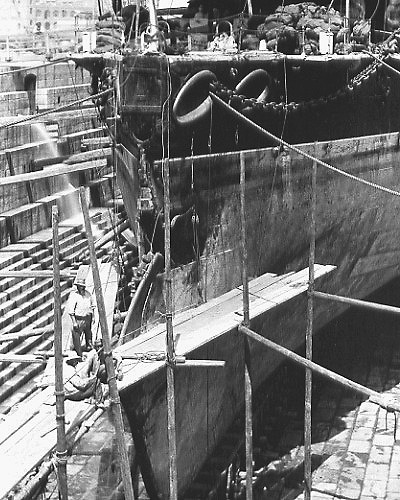
HMS Camperdown’s Bow Damage
Source: Royal Navy
1893
Image Credit: Wikimedia
The officer in command, Vice Admiral Sir George Tryon, was a fearsome martinet with a reputation as a master of complicated ship handling. He had an elaborate plan for bringing his fleet to anchor, providing onlookers a spectacle of precision maneuvering. [Ten] battleships of the Mediterranean fleet were drawn up in two parallel columns, 1200 yards apart, heading directly away from port out to sea. Tryon then ordered a crash 180-degree turn in succession. The intention, apparently, was for each pair of ships…in order…to turn inwards and create a breathtaking view of the ships’ wakes fanning out, while the ships came about, only 400 yards from each other, [then proceeding] in the opposite direction from their original course, heading towards the land. Then, the ships were to turn 90 degrees to form one column and anchor in unison.
[The] Victoria capsized just 13 minutes after the collision, rotating to starboard with a terrible crash, as her boats and anything, free fell to the side and, as water, entering the funnels, caused explosions when it reached the boilers. With her keel uppermost, she slipped down into the water, bow first, propellers still rotating and threatening anyone near them. Most of the crew managed to abandon ship, although those in the engine room never received orders to leave their posts and were drowned. Those who escaped had to contend with the suction from the sinking ship. A circular wave spread out from it which repeatedly drew down those in the water. All manner of items broke loose from the ship as it sank and came shooting up among the men. Onlookers watched as the number of live men in the water steadily reduced.
[On August 22, 2004], the wreck of the Victoria was discovered by Lebanese-Austrian diver Christian Francis, aided by British diver Mark Ellyatt. She was found in [460 feet] of water off the coast near Tripoli […] and was located using sonar. The most amazing aspect of the wreck is that, unlike all others, she sits vertically with about two thirds of her above the sea bed. The upright position is assumed to have been caused by the huge weight of her fore guns, which would have dragged her down, bow first. The wreck has already been declared a war grave and an exclusion zone has been imposed around her, while the English and Lebanese authorities determine her legal status.
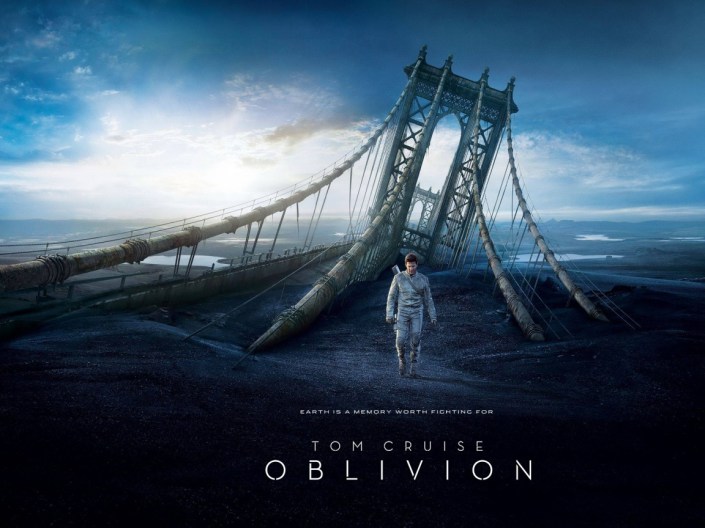
This Sunday evening’s Samsung playlist submission comes from the movie Oblivion. I never saw the movie at the theater but, caught it on HBO at my uncle’s house (I was dog-sitting). It is a fascinating movie and very sad. It is visually stunning with a unique cast and Tom Cruise loves to play the action hero. At the end of the movie, as the credits roll, this song kicks in. It immediately gave me chills and made me cry.
Jeannette Rankin was an American politician and women’s rights advocate and, the first woman to hold federal office in the United States. She was elected to the U.S. House of Representatives as a Republican from Montana in 1916 and, again, in 1940. As of 2022, Rankin is still the only woman ever elected to Congress from Montana.
A suffragist during the Progressive Era, Rankin organized and lobbied for legislation enfranchising women in several states including Montana, New York and North Dakota. While in Congress, she introduced legislation that eventually became the 19th Constitutional Amendment, granting unrestricted voting rights to women nationwide. She championed a multitude of diverse women’s rights and civil rights causes throughout a career that spanned more than six decades.
Rankin was born on June 11, 1880, to John and Olive Rankin at Grant Creek Ranch near Missoula, in what was then the Montana Territory. She was the first of seven children […] in a prosperous family. Her father […] was a rancher and builder who had come to Montana from Canada. Her mother […] had moved from New Hampshire to teach before marrying John Rankin and becoming a housewife. Jeannette attended Montana State University in Missoula (now the University of Montana) and graduated in 1902 with a degree in biology. [Her] career in politics began as a student volunteer with a local women’s suffrage campaign in Washington State, preparing for a referendum on voting rights. [In] February 1911, she became the first woman to address the Montana legislature when she testified in support of women’s suffrage.
Jeannette Rankin
History, Art & Archives
United States House of Representatives
Rankin held office in her first term from March 4, 1917, one-hundred and five years, ago, today, to March 3, 1919. Her second term was from January 3, 1941 to January 3, 1943. Powerful enemies made sure she could not get re-elected. Twenty-four years later, she reclaimed her seat. She never married and passed away May 18, 1973 at the age of 92. ~Vic
Hanspostcard has a song draft challenge. This is my Round Eight pick.
I remember when I heard Possession on the radio the first time. I was driving home from work and I was immediately in love. The music was stunning, her voice was stunning and I was captivated. Who is she, I thought to myself (I had no idea that Sarah McLachlan had two previous albums). I found the Fumbling Towards Ecstasy CD as fast as I could. It is a fantastic album. There is not a bad song on it.
When Surfacing came out in July 1997, I snatched it, too. It was released to coincide with the Lilith Fair. Though Fumbling Towards Ecstasy remains my favorite of her albums, Witness is my favorite single. The sixth track, it was never released as a single, has no chart information what-so-ever and it remains in the shadow of Building A Mystery, Sweet Surrender, Adia and, in particular, Angel. The album is one of two that reached #2 on the Billboard 200. It was the #1 album on Billboard’s Canadian Albums chart on August 2, 1997 and on Canada’s RPM Top Albums/CDs chart on July 28, 1997.
This song speaks to me on so many levels. It’s a beautiful piece with beautiful lyrics… ~Vic
Image Credit: YouTube
Make me a witness
Take me out
Out of darkness
Out of doubt
I won’t weigh you down
With good intention
Won’t make fire out of clay
Or other inventions
Will we burn in heaven
Like we do down here
Will the change come
While we’re waiting
Everyone is waiting
And, when we’re done
Soul searching
As we carried the weight
And died for the cause
Is misery made beautiful
Right before our eyes
Will mercy be revealed
Or blind us where we stand
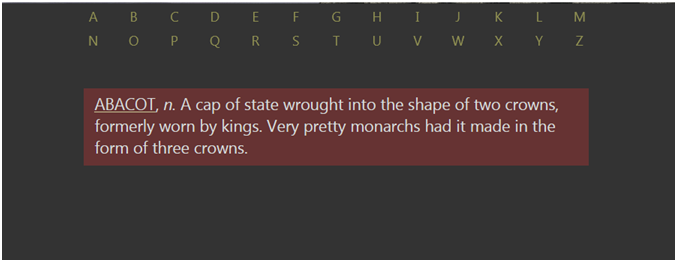
Generations of reference books once included this term, including the first edition of the Encyclopaedia Britannica, dated 1771 […]
James Murray, the famous editor of the Oxford English Dictionary, found that the original word was bycoket, which was indeed a form of headgear, a cap or headdress with a peak both in front and behind, whose name he thought derived from an Old French term for a small castle crowning a hill. He declared abacot to be a ghost word and wrote in an article in [T]he Athenaeum in February 1882:
“There is not, never was, such a word.”
His entry for abacot in the first edition of the OED read in its entirity [sic] “a spurious word found in many dictionaries, originating in a misprint of bycoket.” In the bycoket entry, he told the story:
Through a remarkable series of blunders and ignorant reproductions of error, this word appears in modern dictionaries as abacot. In Hall’s Chronicles a bicocket appears to have been misprinted abococket, which was copied by Grafton, altered by Holinshed to abococke, and finally “improved” by Abraham Fleming to abacot (perhaps through an intermediate abacoc) […]
One may instead argue that since the word has — albeit rarely — been used, then it exists and ought to be treated as such. There is, after all, no shortage of words that have been grossly altered through popular error. The revision of its entry in the Oxford English Dictionary in December 2011 takes this view […]
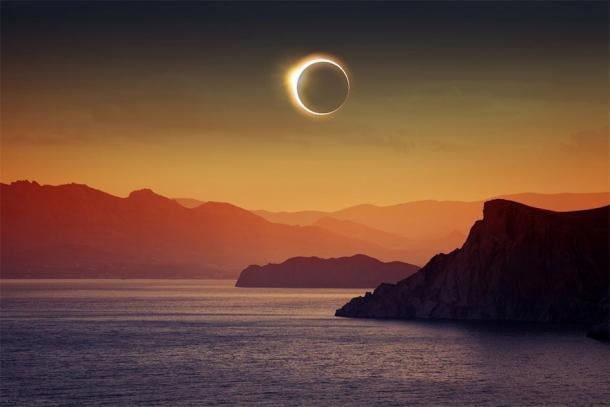
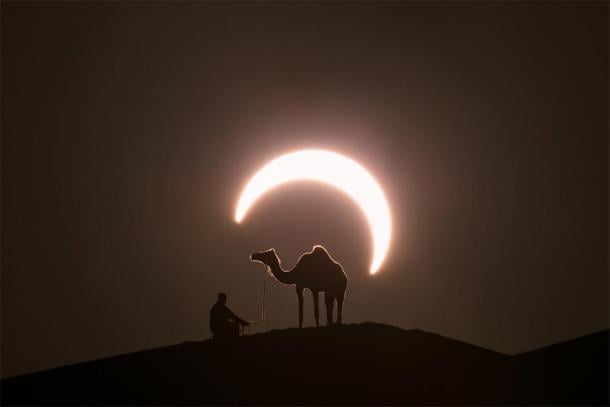
According to Herodotus, the appearance of the eclipse was interpreted as an omen and, interrupted a battle in a long-standing war between the Medes and the Lydians. The fighting immediately stopped and they agreed to a truce. Because astronomers can calculate the dates of historical eclipses, Isaac Asimov described this battle as the earliest historical event whose date is known with precision to the day and described the prediction as the birth of science.
Photo Credit: Ancient Origins
The Mechanics of a Monumentally Difficult Prediction
The reason this astronomical event is thought of as being so important is that predicting a solar eclipse, compared with a lunar eclipse, is exceptionally difficult. The astronomer must not only calculate when it will occur but, where on Earth’s surface it will be visible […]. [In] a lunar eclipse, the moon passes through the Earth’s sun shadow and the phenomena is visible on the whole side of the Earth that is in night-time […]. [They] often last longer than an hour. In solar eclipses, however, the moon’s shadow falls across the Earth in a comparatively narrow path, with a maximum duration, at any given location, of about 7 1/2 minutes.
[What] makes Thales’ prediction [an] historical mystery is that historians know early Greeks, at large, didn’t have this essential lunar data and there are no other records of Greek astronomers in this period accurately predicting any other eclipses. Thus, it is thought by historians that the only place Thales’ advanced astronomical knowledge could have come from was Egypt. [It’s] known [that] Thales studied Egyptian techniques for measuring sections of land with rope […].
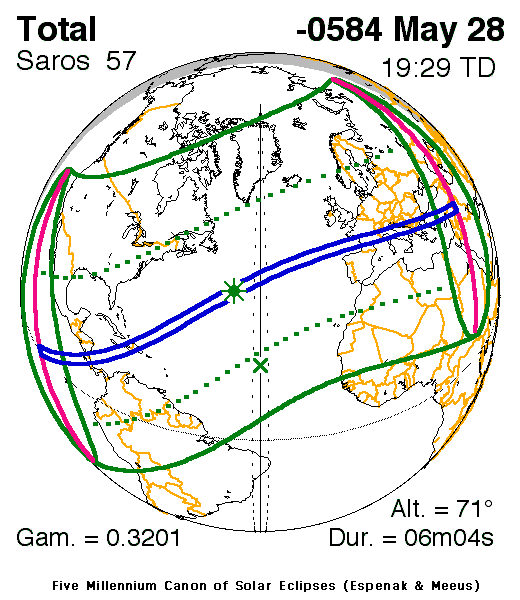
Returning [to] the war (mentioned above), after 15 years of fighting, on May 28, 585 BC, the armies of King Aylattes of Lydia were in battle with the forces of King Cyaxares of Medes (or, possibly, Astyages, his son), near the River Halys in what is, today, central Turkey. Chroniclers noted the heavens darkening and soldiers on both sides laying down their weapons in awe of the spectacle […]. [The] event ended both the battle and the war.
[A] Wired article says this famous astronomical event has been debated by hundreds of scholars for nearly two millennia and that some authorities believe Thales’ eclipse may have occurred 25 years earlier in 610 BC. But, the reason most agree with the 585 BC date is the record of the famous battle in Asia Minor ending when the day was suddenly turned to night.











 Cosmic-Observation