Gore Vidal: […on Truman’s voice…] “To the lucky person who has never heard it, I can only say…imagine what a brussel sprout would sound like, if a brussel sprout could talk.”
Truman Capote: […on Smith & Hickock…] “When you’re talking to them, they seem like perfectly nice boys. To be frank, I’m much more concerned for my safety around Norman Mailer.”
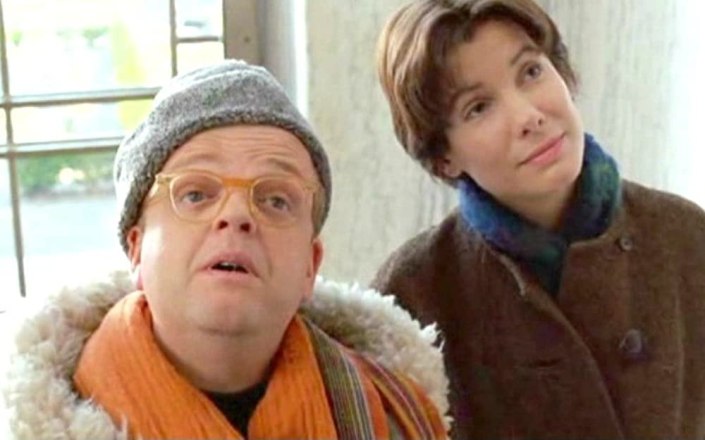
This is the second movie on Truman Capote regarding his foray into the Clutter Family murders. Released August 31, 2006, at the Venice Film Festival and widely on October 13, 2006, this film stood in the shadow of Philip Seymour Hoffman‘s Capote and his Academy Award for Best Actor. Unlike its predecessor, this film, with its $13 million budget, lost money. That being said, despite Hoffman’s turn, Toby Jones is no slouch and his interpretation has its own unique depth. Jones was awarded the London Critics’ Circle Film Award for British Actor of the Year. I found this film to be fascinating and quite entertaining, with parts difficult to watch. Bubbly Sandra Bullock brings forth the subdued, Southern To Kill A Mockingbird novelist Harper Lee. Much of the storytelling is done in mock interviews with the actors, in character, talking about their interactions with Truman. I seem to have a thing for underdog/obscure movies. ~Vic
“Why shouldn’t there be a fizzy, comedic take on the naughty adventures of the Park Avenue gadabout as he fashioned In Cold Blood […]? Why not a movie that concentrates on the contrast between the writer’s frivolous party-boy side and the brutal murders in Kansas, the exotic and colorful tropical specimen who becomes a fish-out-of water when he jumps from his luxurious high-rise swan pond into the Midwestern plains?
[A]fter In Cold Blood, [Capote] never published another major work. Out of career desperation as much as anything else, he sold out his friendships with these […] people, publishing gossipy stories about them in an Esquire excerpt from Answered Prayers in 1976 and was banished from their lives.
[T]he movie centers on the symbiotic relationship between Truman and Perry, pondering the extent of the seduction and, who seduced whom.
Toby Jones inhabits Truman as if he were to the character born, a livelier and more perversely ebullient man than Phillip Seymour Hoffman‘s version in Capote (2005).”
[This was] the finale of the television series about Dr. David Banner, a scientist who transforms into a mighty, larger-than-life creature called the Hulk when he gets angry. Desperately attempting to purge himself of his monster-like alter ego, Banner sneaks into a research laboratory. During the critical experiment to purge him of the Hulk, once and for all, a spy sabotages the laboratory. Banner falls in love with the spy, Jasmin, who performs missions only because her sister is being held hostage by Jasmin’s superiors. Banner and Jasmin attempt to escape from the enemy agents to rebuild their lives together but, the Hulk is never far from them.
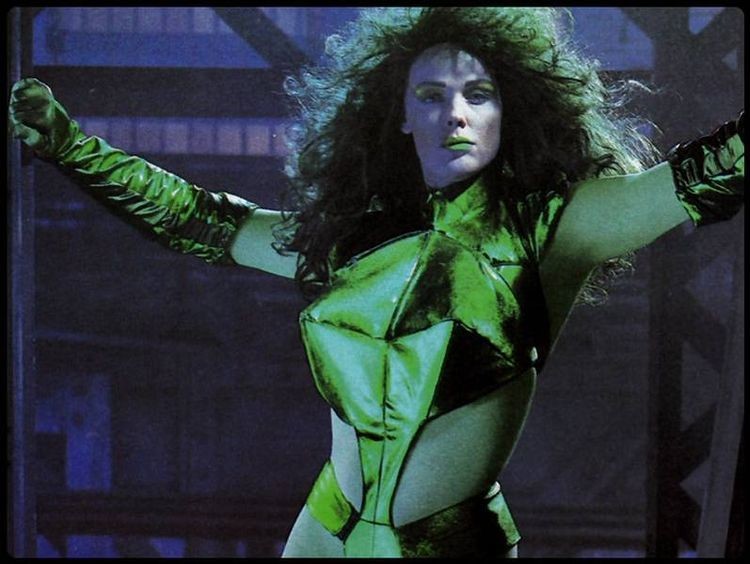
The Incredible Hulk Returns and The Trial of the Incredible Hulk actually served as backdoor pilots for possible Thor and Daredevil series that never materialized. The third film, The Death of the Incredible Hulk was originally supposed to be the same sort of experiment, introducing She-Hulk, with Iron Man scheduled for the following film.
Image Credit: imdb.com
[However], when it finally came together, it, instead, served as a swan-song for Bill Bixby and focused on one last attempt at a cure for Banner’s Hulk-itis. Unfortunately, even though it wasn’t intended to really be the end of the Hulk on television (the plan was to have him return from the grave with Banner’s mind in the Hulk body), Bill Bixby’s health went south and he died before a proposed Rebirth of the Incredible Hulk film could get underway.
Photo Credit: syfy.com
Trivia Bits:
♦ After the ratings failure of this film, NBC decided not to continue the series. CBS already wanted nothing to do with The Incredible Hulk, prior to The Incredible Hulk Returns (1989). [For] the planned next installment, […] Bill Bixby tried to reach an agreement with ABC and they turned him down. [Then], he did the same for the Fox Network, who agreed to air another movie. Bixby and Fox were doing business together until Bixby was diagnosed with prostate cancer, causing production […] [to] shut down.
Image Credit: americanmovieawards.com & The Wayback Machine
Screen Capture
Forty years ago, today, the very first American Movie Awards was televised on NBC. Filmed at the Wilshire Theatre, the ceremony honored film, actors, directors, screenwriters, music, favorites and a special recognition. Co-hosts were David Frost (also Executive Producer) and Dudley Moore with Angie Dickinson as Co-Hostess. Susan Anton was a performer. Judging by what few images I could find, the trophy was designed to resemble the Empire State Building.
Winners:
♦ Best Film: Rocky II
♦ Best Actor: Alan Alda (The Seduction of Joe Tynan)
♦ Best Actress: Sally Field (Norma Rae)
♦ Best Supporting Actor: Robert Duvall (Apocalypse Now)
♦ Best Supporting Actress: Meryl Streep (The Deer Hunter)
♦ Best Director: Michael Cimino (The Deer Hunter)
♦ Best Screenplay: The China Syndrome
♦ Best Original Song: Every Which Way But Loose (Every Which Way But Loose)
♦ Favorite Film Star-Female: Jane Fonda
♦ Favorite Film Star-Male: Burt Reynolds
♦ Special Marquee: Clint Eastwood (Distinguished and Continuing Career)
There was another ceremony in March 1982 at a different location and a relaunch in 2013 with ceremonies in 2014, 2015, 2016, 2017 and 2018 focusing mainly on Independent Film. I doubt there will be anymore ceremonies as the website was taken down last year. There are no videos of the event on YouTube, either.
It is 1937 and newly qualified vet James Herriot travels to Yorkshire to apply for the post of assistant in Siegfried Farnon’s practice. He soon learns the facts of country life but, struggles to overcome the prejudices of the Darrowby locals who are skeptical of the novice vet’s ability. In between cases, Herriot courts pretty farmer’s daughter Helen Alderson and finally marries her.
A gentle, episodic account of author Herriot’s apprenticeship in the mid-1930s to an eccentric rural English veterinarian and his awkward courtship of a farmer’s daughter.
The story of a young veterinarian’s apprenticeship to a somewhat eccentric, older vet in the English countryside and the young man’s hesitating courtship of the daughter of a local farmer.
Trivia Bits:
♦ Although born in Sunderland, England, James Herriot spent the first twenty-three years of his life in Glasgow, Scotland and never lost the accent, as can be heard in television interviews. Simon Ward however, plays him as a Londoner.
♦ Known to the cast and crew as “All Creatures Grunt and Smell”.
Forty years ago, today, Part I of the mini-series Beggarman, Thief aired on NBC. Based on the novel of the same name by Irwin Shaw, it was the sequel to the novel and mini-series Rich Man, Poor Man that aired from February through March 1976 on ABC. An additional sequel, Rich Man, Poor Man Book II aired from September 1976 to March 1977, also on ABC but, was not based on the actual sequel novel.
This sequel to “Rich Man, Poor Man” is set in the ’60s and focuses on wannabe Hollywood filmmaker Gretchen, black-sheep Army officer Billy and, Billy’s cousin Wesley, who’s tracking his father’s killer in France.
The two-part, four-hour sequel to Irwin Shaw’s “Rich Man, Poor Man” and the vastly successful mini-series made from it (and the subsequent, less-successful short-lived series, “Rich Man, Poor Man Book II,” during the 1976-77 season). Moviemaker Gretchen Jordache, the sister not seen in either of the predecessors, strives to pull the family together after the murder of brother Tom (in the mini-series) and the disappearance of brother Rudy (in the later series), by first re-establishing contact with her soldier son and, then, patching things up with her sister-in-law, Kate, Tom’s widow.
The two-part TV movie Cross of Fire is set in the 1920s, when the Ku Klux Klan was at the height of its political power in Indiana. Part One, originally telecast November 5, 1989, details the resurgence of the Klan (which had been created during the Reconstruction era) under the leadership of David “Steve” Stephenson […]. Cloaking himself in the twin veils of patriotism and morality, Stephenson rails against such “deviates” as blacks, Jews and Catholics, gaining political clout and financial kickbacks as his “invisible empire” grows. Part Two […], telecast November 6, traces the fall of Stephenson…not because his followers have wised up but, because of a 1925 rape and murder charge.
♠ The scandal reached the governor. He was indicted and tried but, the conclusion was a hung jury. He wasn’t retried due to the statute of limitations but, left office disgraced with his political career destroyed.
This sudsy made-for-TV melodrama is based on a Barbara Cartland novel and follows the romantic exploits of an American heiress who sets sail for exciting Paris at the turn-of-the-century. She is traveling there to meet her fiance but, ends up falling in love with a French journalist.
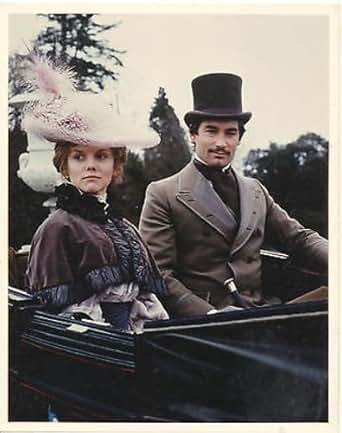
Reluctant to accept her arranged marriage to an English Duke she has never met, beautiful, young, American oil heiress, Emmeline Nevada Holtz, nicknamed “Vada” after the state, travels to Paris to buy her trousseau before meeting her husband-to-be. When her travelling companion, Nancy Sparling, has an accident and hurts her leg, Vada assumes her name to avoid unwelcome attention. [She] travels on with just her elderly maid, determined to make the most of her last chance to explore Bohemian Paris and, the wonders of the city that she had heard and read so much about. At her hotel she finds a handsome intruder in her suite, not a thief as she at first thinks but, a journalist looking to interview the famous heiress Emmeline. Smitten by this charismatic Frenchman and his talk of poetry, Vada finds herself agreeing to go with him to the Soleil d’Or, wellspring of the Symbolist movement. Soon, they are deeply and uncontrollably in love, a love that is surely doomed by her deception, her betrothal to the Duke and, now, a terrifying ordeal at a Satanist Black Mass on the dark side of the City of Light.
Bill Hastings works for a daily newspaper in a large city. His duties include a lonely hearts column, where he advises everyone on their problems, as “Phoebe”, while trying to deal with his own.
Photo Credit: wikipedia.org & wikimedia.org
Peter Lawford with J. Fred Muggs
Lawford stars as Bill Hastings, a former college professor who becomes the writer of the advice-to-the-lovelorn column at the fictitious Los Angeles Daily Star. Hastings writes under the pseudonym “Miss Phoebe Goodheart”. Marcia Henderson portrayed Mickey Riley, the female sportswriter at the newspaper and Hastings’s own romantic interest. Charles Lane, who later portrayed J. Homer Bedloe in the CBS series Petticoat Junction, played newspaper boss Mr. Fosdick. Joe Corey played Humphrey Humpsteader, a copy boy trying to become a reporter.
This is the show that introduced the world to Elvis Presley.
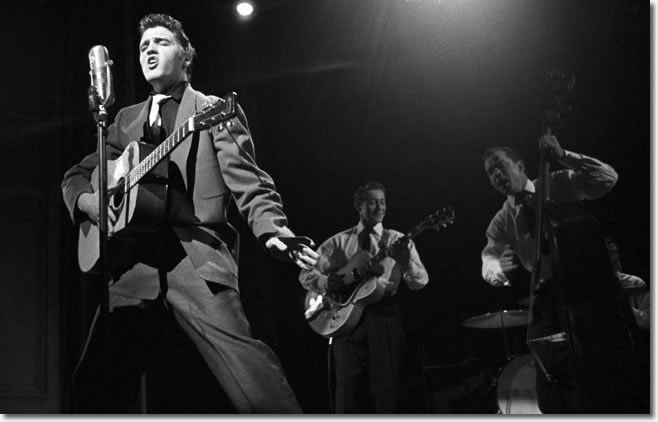
Dave Marsh, in his insightful musical biography Elvis, writes about the moment Elvis Presley burst upon the American scene via The Dorsey Brothers Stage Show on January 28, 1956. “In his first appearance on the Dorsey Brothers’ TV show, the young singer rocked the world”. Marsh described Elvis’ startling rendition of Heartbreak Hotel and concluded, “He owned the song and he owned the crowd”.
March 17, 1956
Photo Credit: elvispresleymusic.com.au
After 17 months of personal appearances all over the south […], Elvis […] made his first appearance […]. Those shows were broadcast, live, from the CBS Studios in New York City. Young Elvis The Pelvis’ first appearance […] was followed by 5 others throughout the next 2 months until the 24 of March, 1956.
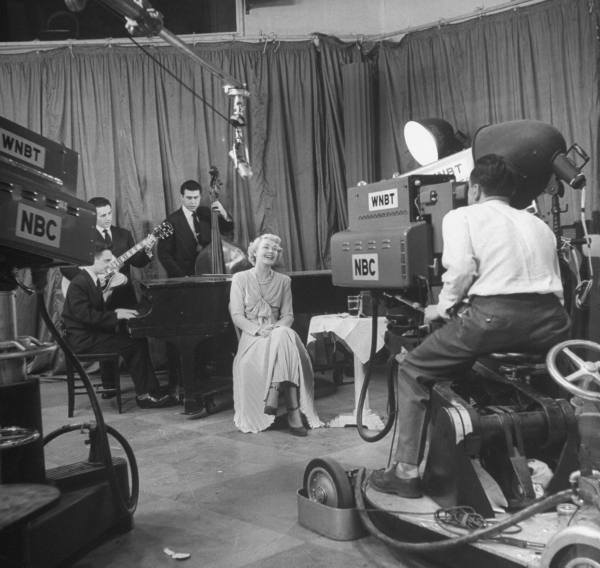
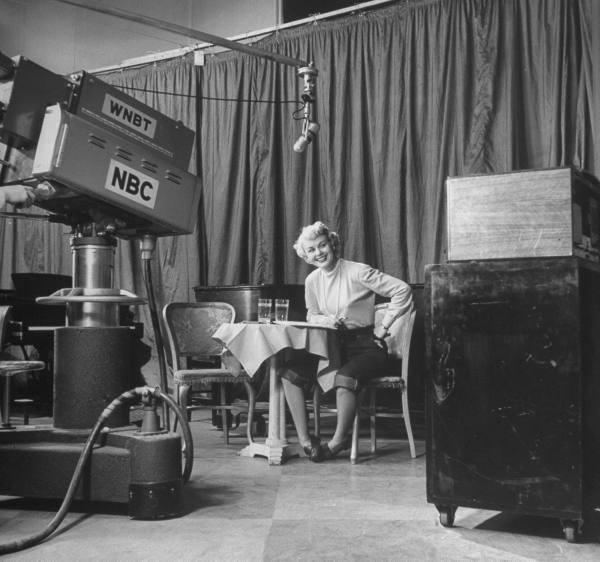
Hour Glass was sponsored by Standard Brands, promoting Chase and Sanborn Coffee and, Tenderleaf Tea. The program included comedians, musicians, entertaining films (such as a film of dance in South America) and a long, live commercial for the sponsor’s products. Such famous names as Doodles Weaver, Bert Lahr, Dennis Day, Jerry Colonna, Peggy Lee and Joe Besser appeared on the program.
The Columbia History of American Television attributed the program’s short life to its cost, saying, “Standard Brands invested $200,000 in this series over its ten-month tenure at a time when that level of investment just couldn’t be supported and sustained, leading to the Hour Glass’s abbreviated run.” Another factor was that James Petrillo, president of the American Federation of Musicians, forbade musicians from performing on television without an agreement between the AFM and the networks, thus, limiting directors, and performers, to use of recorded music.
It is historically important, however, in that it exemplified the issues faced by networks, sponsors and advertising agencies in television’s formative years. The program was produced by the J. Walter Thompson agency […]. The lines of responsibility were not completely defined in those early years and the nine-month run of Hour Glass was punctuated by frequent squabbling among the principals. Each show was assembled by seven Thompson employees working in two teams, each putting together a show over two weeks in a frenzy of production. It must have been the curiosity factor that prompted some stars to appear on the show because they certainly were not paid much money. Hour Glass had a talent budget of only $350 a week, hardly more than scale for a handful of performers. Still, Standard Brands put an estimated $200,000 into the program’s nine-month run, by far the largest amount ever devoted to a sponsored show at that time. In February 1947, Standard Brands canceled Hour Glass. They were pleased with the show’s performance in terms of beverage sales and its overall quality, yet, were leery about continuing to pour money into a program that did not reach a large number of households (it is unclear if the show was broadcast anywhere other than NBC’s interconnected stations in New York and Philadelphia). The strain between NBC and Thompson played a role as well. Still, Hour Glass did provide Thompson with a valuable blueprint for the agency’s celebrated and long-running production, Kraft Television Theatre.
Fifty-four years ago, today, the First March of the Selma to Montgomery marches took place. The planned marches were a response to the murder of Jimmie Lee Jackson by Alabama State Trooper James Fowler. Fowler shot Jackson on February 18, 1965, during a clash between, approximately, 500 protestors walking to Perry County Jail for James Orange and, Marion police officers, sheriff’s deputies and the state troopers. Jackson died from his injuries on February 26. Other casualties that night were two UPI photographers and NBC News correspondent Richard Valereani.
As the demonstrators crossed the Edmund Pettus Bridge, state, and county police, stopped the march and beat the protesters. Boynton was knocked unconscious and the photograph of her wounded body got the entire world’s attention.
The second march took place on March 9, referred to as Turnaround Tuesday. Though the march was peaceful due to a court order declaring no police interference, James Reeb was murdered that evening.










 Cosmic-Observation