Membra Jesu Nostri [or The limbs of our Jesus], BuxWV 75, is a cycle of seven cantatas composed by Dieterich Buxtehude in 1680 and dedicated to Gustaf Düben. The full Latin title Membra Jesu Nostri Patientis Sanctissima translates to “The most holy limbs of our suffering Jesus”. This work is known as the first Lutheran oratorio. The main text are stanzas from the Medieval hymn Salve Mundi Salutare, also known as the Rhythmica Oratio, a poem formerly ascribed to Bernard of Clairvaux but, now thought more likely to have been written by Medieval poet Arnulf of Leuven […]. It is divided into seven parts, each addressed to a different part of Christ’s crucified body: feet, knees, hands, sides, breast, heart and face. In each part, biblical words referring to the limbs frame verses of the poem.
“Oh, it’s Friday night. Let’s run tonight, ’til the morning light…”
Returning to my Samsung playlist, this Sunday’s submission is Keep On Runnin’ by American rock band Journey, formed in San Francisco in 1973 out of former members of Santana and Frumious Bandersnatch. The fourth track from the album Escape (released in July 1981), it was co-written by Jonathan Cain, Steve Perry and Neal Schon and, was never released as a single, though the album, itself, reached #1 on the Billboard 200 on September 12, 1981. The song does show up in the Journey video game from Bally Midway, that came out in March of 1983, with this tagline (one of three):
“The hottest band in the country is about to take over the planet!”
The album got its own Atari 2600video game in 1982. This album, and Frontiers after it, is a musical tapestry to my high school years.
San Antonio/Selma, TX July 2006
Co-Headliner Def Leppard
I got to see the band in concert, twice, in Texas and was lucky enough to get to meet them. This is the tour where Journey dropped Steve Augeri and picked up Jeff Scott Soto for a year. Neither could match Perry but, Augeri was close.
I’m on the far left next to Jonathan Cain. My buddy Monica is in between Cain & Neal Schon. My buddy Amy is in between Deen Castronovo & Ross Valory.
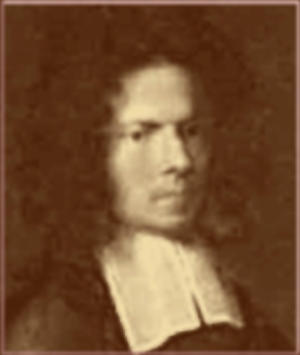
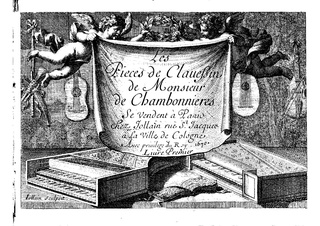
Due to lack of manuscript sources, little is known about French harpsichord music of the first half of the 17th century and Chambonnières emerges as the sole, major composer of the time with a large surviving oeuvre (works of art). Some 150 pieces are extant, almost all of them dances. Sixty were published by the composer, himself, in 1670 in two volumes of Les Pièces de Clavessin and the rest are known through some 20 manuscript sources, most of which were discovered only in the mid and late 20th century.
Since the exact course of evolution of the classic French harpsichord style remains a mystery, it is impossible to ascertain the role Chambonnières played in establishing said style. He was obviously influenced by the French lute school, adapting its style brisé to the harpsichord and he may have been among the first to do so. Another important influence was a thorough grounding in counterpoint, probably transmitted from his grandfather Thomas through his father.
Source: imslp.org
Image Credit: Wikipedia
[The] Pièces de Clavecin (published 1670) reflect in style and texture the compositions of the noted lutenist-composer Denis Gaultier and thus emphasize the roots of the early harpsichord style in lute music. The Pièces are highly ornamented, and rich in harmony, and are grouped by key into suites of dances […] and miniature pieces with fanciful titles. There is no thematic relationship between the movements of a single suite, the aim being rather for contrast within a given key. Chambonnières was one of the first to attach tables of ornaments to his works, indicating the manner of performance of the many embellishments so vital to his free-voiced style.
It appears that he had lavish tastes and struggled financially because of it. He lived beyond his means and died in poverty two years after his Harpsichord Pieces.
**Edward Lodewijk Van Halen (January 26, 1955 – October 6, 2020)**
“She saw the look in his eyes, and she knew better…”
This Sunday’s playlist submission is Jamie’s Cryin’ by American rock band Van Halen, formed in 1972 in Pasadena, California. The sixth track from their debut album Van Halen, it was released as a single on May 16, 1978 but, it never charted. Credit for songwriting is the whole band and the album peaked at #19 on the Billboard 200 on May 20, 1978 after its February 10 release. It was certified RIAA Diamond (10x Platinum) in sales on August 7, 1996.
American rapper Tone Lōc used the opening tom-tom and bass riff from this song on his 1989 hit Wild Thing and wound up settling out of court with Van Halen. He and Eddie Van Halen crossed paths some time afterwards and it wasn’t friendly.
I was in sixth grade when this song came out and I had no clue. I was all into disco back then. I didn’t know who they were until Dance the Night Away came out the following year. I didn’t buy an album of theirs until Diver Down. I have never been to a concert. ~Vic
Three hundred, fifty-five years ago, John Blow, an English Baroque organist, composed the “club anthem” I Will Always Give Thanks, collaborating with Pelham Humfrey and William Turner. There is not a lot written about this song but, there are two suggestions of it either being an honoring of the victory over the Dutch in 1665 or a simple commemoration of the three men working together.
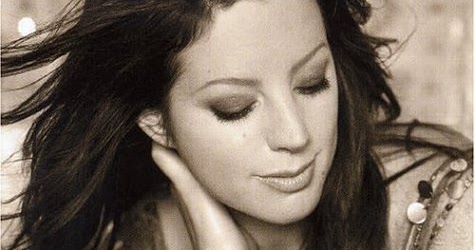
This Sunday night’s playlist submission was never released. The 8th track from her album Fumbling Towards Ecstasy, it has no chart information. Sarah was already a star in her native Canada but, this album was her breakthrough in the US, exploding on the scene when her first track, Possession, was released. Born in Halifax, Nova Scotia in 1968, she was playing music, early, starting with a ukulele at age four. In high school, she was the singer for the short-lived band The October Game and, after finishing a year in college, signed a recording contract with Nettwerk without having written a single song.
This is another album/CD I have worn out. I can remember when Possession showed up on the radio and I first heard it. I was driving home from work and immediately went looking for her album. Her music has been used in many television shows and I remember her being on Charmed. Notable movies using her songs are City of Angels, Message in a Bottle, The Brave One and Four Christmases.
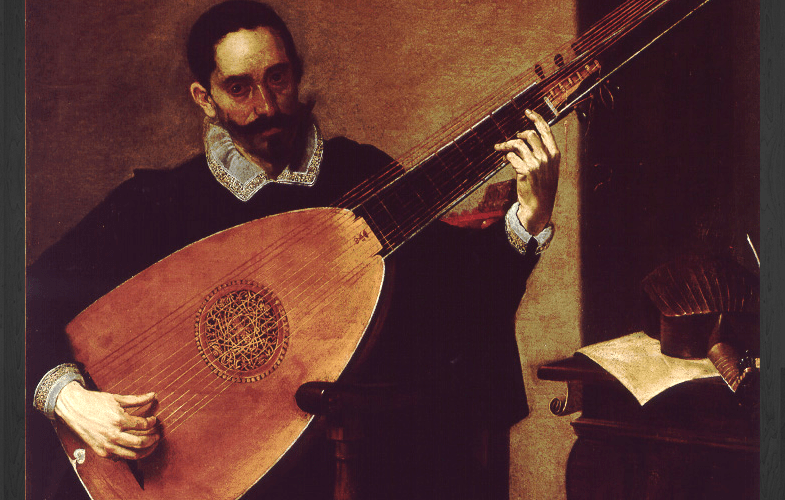
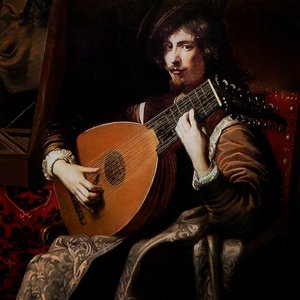
Some of his contemporaries, including Landi, criticized Kapsberger’s composing skill. Due to his unusual rhythmic groupings, sharp contrasts and non-conforming to the rules of counterpoint, it was suggested that he was an inferior composer. A current lutenist, Rolf Lislevand commented in liner notes in 1993:
“Kapsberger was as bad a composer as he was a fine instrumentalist […]. The ideas are often badly developed and are freely associated with one another […]. [N]o real musical discourse is built up […] the rhythm, even after serious efforts at fathoming it, wavers between inspired cleverness and total confusion.
Despite the above complaints, Kapsberger greatly contributed towards advancing European plucked string instruments of the time. At least six collections were published during his lifetime, two of which are currently lost.
There is very little else written about this specific composition. ~Vic
Image Credit: meantone.altervista.org
Wikipedia & Wikimedia
Coming to 1635…
Fiori musicali (Musical Flowers) is a collection of liturgical organ music by Girolamo Frescobaldi, first published in 1635. It contains three organ masses and two secularcapriccios. Generally acknowledged as one of Frescobaldi’s best works, Fiori Musicali influenced composers during at least two centuries. Johann Sebastian Bach was among its admirers and parts of it were included in the celebrated Gradus ad Parnassum, a highly influential 1725 treatise by Johann Joseph Fux which was in use even in the 19th century.
Fiori Musicali was first published in Venice in 1635, when Frescobaldi was working as [the] organist of St. Peter’s Basilica in Rome, under the patronage of Pope Urban VIII and his nephew Cardinal Francesco Barberini. It may have been conceived as music for St. Mark’s Basilica or a similarly important church. The collection was printed by Giacomo Vincenti (a celebrated publisher who had previously published reprints of Frescobaldi’s capriccios) and dedicated to Cardinal Antonio Barberini, Francesco‘s younger brother.
The full title of Frescobaldi’s work is Fiori musicali di diverse compositioni, toccate, kyrie, canzoni, capricci, e recercari, in partitura. Before Fiori musicali, Frescobaldi seldom published liturgical music. The organ mass was still in its infancy and composers seldom published such music. [It] is one of the most influential collections of music in European history. Frescobaldi’s collection was studied by Henry Purcell and Johann Sebastian Bach (the latter copied the entire work for his own use).
As far as I am concerned, there is nothing to celebrate. I wake up everyday hoping the worldwide madness has ended. Nope. Same shit, different day. I await the latest Walking Dead episodes (whenever they resume) with the zombies wearing masks. Oh. Look. Art imitates life… *sigh*
I am posting a favorite song of mine, appropriate for the day, from a powerful voice. I sincerely hope that there will be a day of reckoning for what has been done. ~Vic
“Let freedom ring, let the white dove sing
Let the whole world know that today, is a day of reckoning
Let the weak be strong, let the right be wrong
Roll the stone away, let the guilty pay, it’s Independence Day”
Photo Credit: Paul Durham (the blond)
June 1998
Wikipedia
“Somehow I see, there are ships in her eyes…”
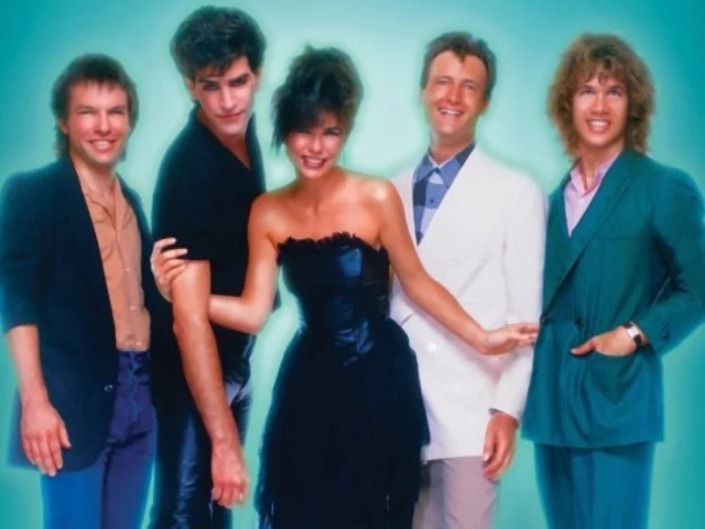
This Sunday’s playlist submission was never released as a single and it never charted…anywhere. It’s the last track, number 12, on the original 1997 debut release of Your Body Above Me by Black Lab. An alternative rock band founded in San Franciso, CA, in 1995 by Paul Durham, the band’s name is an amalgam of band names Black Sabbath and Stereolab. The album did have two hits, one of which peaked at #6 on the BillboardMainstream Rock chart.
There is not a bad song on this album and I nearly wore out my CD. I took notice of them when an alternative rock station showcased their first track (the #6 hit). I love Paul Durham‘s voice and, the band has had many songs used in movies and television, most notably Spider-Man (2002), Blade: Trinity and Transformers.
There are two extant ballads […], both of which narrate the same story. As ballads existed within oral tradition[s] before being written down, other versions of this once popular song also may have existed. Moreover, other ballads used its tune without necessarily referring to [this particular ballad].
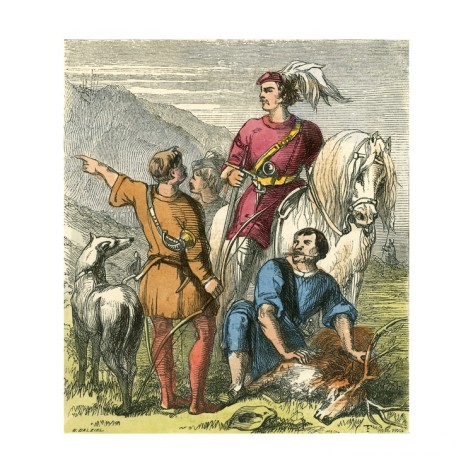
This ballad was entered in the Stationers’ Register in 1624. The title is alternatively spelled Chevy Chace. The ballad is generally thought to describe the Battle of Otterburn. Some of the verses correspond to that battle but, not all. The Battle of Otterburn took place in 1388. At that [b]attle, Henry Percy (Hotspur) was captured, not killed. He was killed in 1403 in an uprising against Henry IV.
The death of Earl Douglas
Author: John Frederick Tayler
Image Credit: All Posters & Wikimedia
[A]nother possibility [was] border warfare between a Percy and a Douglas in 1435 or 1436. Henry Percy of Northumberland made a raid into Scotland with 4,000 men. He was met by William Douglas, Earl of Angus at Piperden. There were great losses on each side but, the Scots prevailed.
Over time, and the various evolutions of the ballad, events and personages have gotten confused.
I’d never heard of Mazzy Star or heard this song when it originally came out. I am late to the party finding this, just discovering them a few years ago. Sadly, David Robackpassed away February 24, 2020, from cancer.
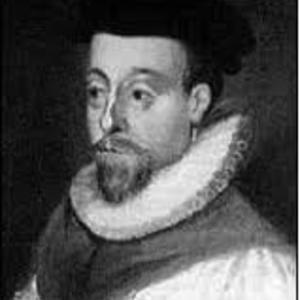
Thomas Morley was an English composer, theorist, singer and organist of the Renaissance. He was one of the foremost members of the English Madrigal School. Living in London at the same time as Shakespeare, Morley was the most famous composer of secular music in Elizabethan England. [He] was active in church music as a singer, composer and organist at St Paul’s Cathedral [and] was involved in music publishing. [He] lived for a time in the same parish as Shakespeare and, a connection between the two has been long speculated but, never proven. In addition to his madrigals, [he] wrote instrumental music, including keyboard music […].
Now Is The Month of Maying is one of the most famous of the English ballets […]. It is based on the canzonetSo Ben Mi Chi Ha Bon Tempo used by Orazio Vecchi […]. It was printed in […] Morley’s First Book of Ballets to Five Voyces [in] 1595. The song delights in bawdy double-entendre. It is, apparently, about spring dancing but, this is a metaphor for making love/sex. For example, a barley-break would have suggested outdoor sexual activity (rather like […] a roll in the hay). The use of such imagery and puns increased during the Renaissance.
Lyrics:
Now is the month of maying,
When merry lads are playing,
Fa la la la la la la la la,
Fa la la, etc…
Each with his bonny lass
Upon the greeny grass.
Fa la la, etc…
The Spring, clad all in gladness,
Doth laugh at Winter’s sadness,
Fa la la, etc…
And to the bagpipe’s sound
The nymphs tread out their ground.
Fa la la, etc…
Fie then! Why sit we musing,
Youth’s sweet delight refusing?
Fa la la, etc…
Say, dainty nymphs, and speak,
Shall we play barley break?
Fa la la, etc…
:format(jpeg):mode_rgb():quality(90)/discogs-images/R-543205-1365450873-9314.jpeg.jpg)







 Cosmic-Observation