The famous fairy tale is musicalized and given a modern 1940s spin with the principal characters (Cinderella, Prince Charming and the Wicked Step Sisters) all played by children.
Trivia Bit:
♦ This short was produced toward the tail end of Shirley Temple‘s reign as Hollywood’s #1 box office star and it’s reasonable to assume it was made to showcase young talent that Warner Brothers may have thought had a shot at replicating Temple’s success.
I’d never heard of Mazzy Star or heard this song when it originally came out. I am late to the party finding this, just discovering them a few years ago. Sadly, David Robackpassed away February 24, 2020, from cancer.
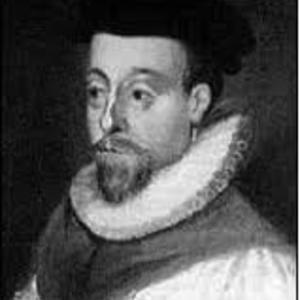
Thomas Morley was an English composer, theorist, singer and organist of the Renaissance. He was one of the foremost members of the English Madrigal School. Living in London at the same time as Shakespeare, Morley was the most famous composer of secular music in Elizabethan England. [He] was active in church music as a singer, composer and organist at St Paul’s Cathedral [and] was involved in music publishing. [He] lived for a time in the same parish as Shakespeare and, a connection between the two has been long speculated but, never proven. In addition to his madrigals, [he] wrote instrumental music, including keyboard music […].
Now Is The Month of Maying is one of the most famous of the English ballets […]. It is based on the canzonetSo Ben Mi Chi Ha Bon Tempo used by Orazio Vecchi […]. It was printed in […] Morley’s First Book of Ballets to Five Voyces [in] 1595. The song delights in bawdy double-entendre. It is, apparently, about spring dancing but, this is a metaphor for making love/sex. For example, a barley-break would have suggested outdoor sexual activity (rather like […] a roll in the hay). The use of such imagery and puns increased during the Renaissance.
Lyrics:
Now is the month of maying,
When merry lads are playing,
Fa la la la la la la la la,
Fa la la, etc…
Each with his bonny lass
Upon the greeny grass.
Fa la la, etc…
The Spring, clad all in gladness,
Doth laugh at Winter’s sadness,
Fa la la, etc…
And to the bagpipe’s sound
The nymphs tread out their ground.
Fa la la, etc…
Fie then! Why sit we musing,
Youth’s sweet delight refusing?
Fa la la, etc…
Say, dainty nymphs, and speak,
Shall we play barley break?
Fa la la, etc…
After approximately eight minutes on screen and a quick promotional plug for his new film G.I. Blues, Presley was gone. The remainder of the special consisted of performances by the additional guest stars. Excerpts from this show appear in Warner Bros. 1981 documentary film This Is Elvis.
Trivia Bit:
♦ Elvis got paid an at the time incredible sum of $125,000 for only a few minutes of onscreen time.
Elmer (Roscoe Ates) fixes up a room for his just-married, freeloading brother-in-law and wife. When the newlyweds show up, Henry (Shemp Howard) brings a surprise in the form of stepson Junior. The apartment is now too small so, Henry decides that they’ll buy a lot and build a do-it-yourself home, a disaster in the making when Junior switches the house’s part numbers. It doesn’t help matters that Elmer, Henry and the wives are all incompetent.
In the 1930s, the Vitaphone division of Warner Brothers made a bunch of very uninspired and, often, unfunny comedy shorts. One of them, Why Pay Rent? is a bit like One Week (with Buster Keaton) but, only if the folks building the house were dumber than a pile of bricks. In many ways, this might have worked better as a Three Stooges short, which is interesting because Shemp Howard stars in this one, as well as Roscoe Ates, an incredibly unfunny comedian whose shtick was stuttering…which was annoying rather and cruel.
This film isn’t listed as lost but, I couldn’t find any video clips of it. I did find some stills of Elmer painting himself into a corner on Getty Images. ~Vic
Trivia Bit:
♦ Some of the construction sight gags, including the final scene, were re-done two years later by Moe, Larry and Curly in The Sitter Downers.
Buck Allen, The Cheyenne Kid, has been accused of holding up the payroll car of the Cody Dam Construction Company and is being pursued by U.S. Marshal Utah Kane and, Sheriff Hank Bates but, they lose him. Buck proceeds to the home of Betty Thorpe, where he meets Duke Porter, who is posing as his friend. [Duke], who advised him that, by running away from the law, he can keep out of jail and force the guilty party to confess. Hiding in the barn, he hears a conversation between Gorman and Madge. [H]e leaps to the floor as Gorman runs out. Gorman shoots at him but, hits Madge instead. The Marshal and Sheriff ride up and Buck, knowing that Madge needs medical attention, gives himself up and, is jailed. Marshal Kane believes that Buck is innocent and is on the hunt for the guilty party but, allows the sheriff to believe that Buck is guilty. Kane has the sheriff bring Gorman to the jail and, tells Buck and Gorman of an old Indian legend that, when two people are given one weapon between them, the survivor will be the innocent party. He throws a bull-whip between them and says that is the weapon.
Lady Gwen, the last of the sporting Grayles, falls in love with Donald MacAllan, a bright young medical student far below her station. Gwen’s father, who opposes the match, introduces her to Prince Carlos, who wishes to marry her in order to pay off his creditors.
Photo Credit: imdb.com & amazon.com
Donald enlists during the World War and Carlos continues his courtship. When Donald returns from the fighting, Carlos tells him that he is engaged to Gwen and Donald, therefore, makes no attempt to see her. Gwen mistakes Donald’s seeming indifference for contempt and seeks to forget him by living riotously in several European capitals. Having exhausted her fortune, and ruined her health, Gwen returns to Scotland and goes to live in the same cottage where Donald used to study. She becomes ill and, in delirium, calls for Donald. Her old nurse goes to fetch him at the Grayle estate, which, having become wealthy, he has just bought. Donald rescues Gwen, who has wandered out in a storm, and nurses her back to health.
A Hollywood conception of Scotsmen who wear the kilt but, whose complexions betray nary a sign of the ruddy ruggedness due to Highland rain and wind, is to be seen at the Capitol this week in a picture called “The Sporting Venus” […]. [There] is a question [of] whether the Wallaces, the Bruces, the Watts and the McTavishes will smile with any satisfaction upon it. Not that they are intentionally maligned in this story but, that the men from the land of the heather are portrayed with studio-blanched complexions and, in one or two instances, wearing brocaded silk dressing gowns.
Marshall Neilan, the director of this celluloid effusion, in his desire to depict Lady Grayle (Blanche Sweet) as a plucky person at the eleventh hour of a fast life, shows her ladyship smoking a cigarette before she breathes her last. Ronald Colman is undoubtedly a bonnie actor but, you just know that he never was born to wear a kilt, [though], he does for a few scenes. He impersonates Donald McAllen, frequently alluded to as a commoner.
Donald and the capricious lassie, Lady Gwendolyn, are happy in Scotland until the coming of Prince Carlos […]. This Prince, played by Lew Cody, is a man of many debts and a faithful valet. His creditors see only one way to get back their money and that is to have the oily gentleman marry a wealthy wife. Donald goes to France to fight, and when he returns on leave, [believes] the Prince’s story […] that [he], more or less, is to wed Lady Gwendolyn.
Lady Gwendolyn […] becomes […] a flighty young woman who gambles in millions. The young hero goes back to France, and as a surgeon, makes a great name for himself. He purchases Grayloch, the great estate of the Grayles.
With the background of Scotland, Mr. Neilan ought to have been able to make a production far stronger than this effort, which, at best, is only a mediocre diversion. It is true that it has some beautiful scenery and the settings are quite pleasing.
This film survived but, I can’t find any clips of it. Silent Era states that a premiere took place on May 10, 1925, at the Capitol Theatre in New York City and was released May 17, 1925. AFI disagrees. ~Vic
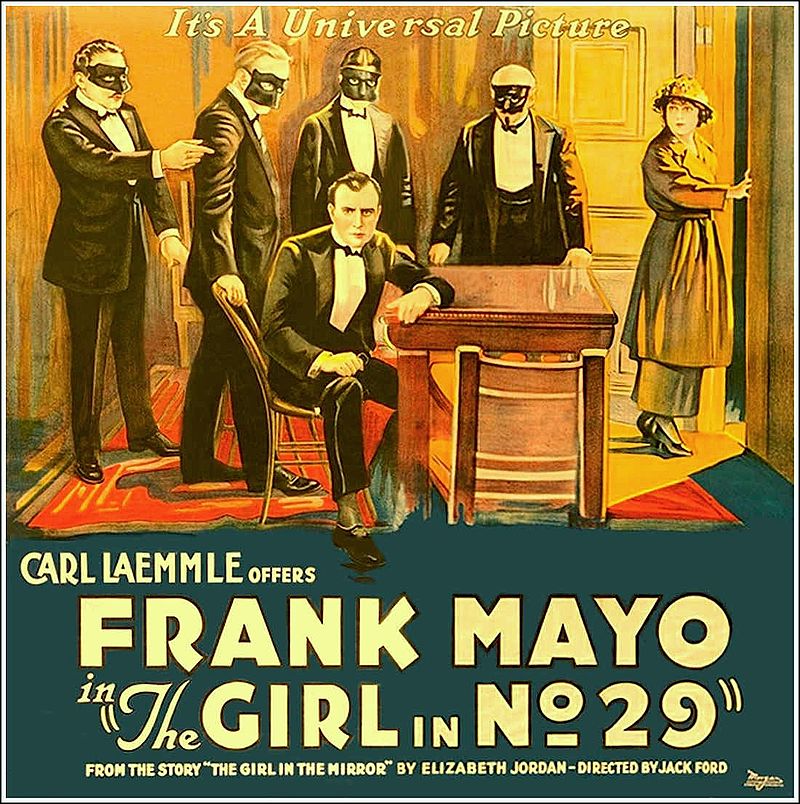
After turning out a successful drama, young playwright Laurie Devon settles down to a life of idleness. Alarmed and disgusted, his friends make every effort to get him to work again but, he refuses. One evening, while glancing into his mirror, Laurie sees a beautiful girl in the apartment across the way, holding a revolver to her head. Dashing out of his apartment house, he prevents her from pulling the trigger. He learns that her name is Doris Williams and discovers that her plight is caused by a man named Shaw. Soon after, Shaw and his thugs abduct her, and Laurie comes to her rescue, shooting her tormentor. Returning home, he confesses his crime to his sister and friends, and learns that the whole incident was a trick to restore his interest in life. The plot succeeds and Laurie writes another hit play in which his new wife Doris is the star.
Laurie Devon (Mayo) is a New York playwright who, having had one success, refuses to work on another play. One night he sees a woman (Anderson) in an apartment across the street take out a gun and place it to her forehead. He reaches her in time to save her and she tells him that she is under some terrible evil influence, which she will not disclose. Devon attempts to untangle the mystery and is led on an adventure. The woman is taken to a house on Long Island, where Devon, after a fight, rescues her. He takes out the revolver and shoots one of the pursuers, who falls to the ground. On returning home, he is heartbroken and tells his sister Barbara (Fair) and his friends that he is a murderer. His sister, and two of his friends, then confess that the whole thing was a frame-up. [T]hey had hired some actors to stage everything and that it was an attempt to get the ambitionless [sic] author to write again. The revolver used in the suicide attempt by the woman, and in the later shooting, had blanks. Devon and the woman from the apartment melt into each other’s arms at the final fade-out.
There were only six episodes that aired between March 31 and June 11 with a seventh episode intended for a May slot, never airing. It’s first episode was on a Friday, the second episode aired the following Wednesday, the third episode went back to Friday, the following week and the fourth episode showed up on a Sunday, the next week. The last two aired episodes were on Sundays in June. [No wonder it failed. ~Vic]
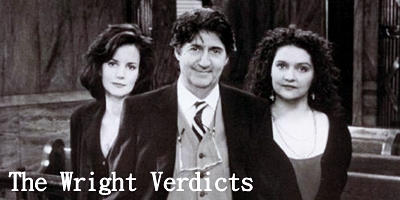
Legal drama with Charles Wright, an Englishman, working as a lawyer in New York City. Sandy Hamar is an ex-NYPD detective who serves as the mandatory private eye and Lydia is the super efficient secretary.
The Wright Verdicts is mature in the best sense. [I]t’s smart, has no false innocence and has the right amount of fun. Criminal lawyer Charles Wright (Tom Conti) will win juries over like clockwork and the series should likewise charm viewers. The character’s chief skill is blarney or, as his investigator puts it, shucking and jiving. Charles is bumbling and self-deprecating one minute, erudite and mischievous the next. Conti brings off Wright’s sense of humor and his status as a ladies’ man. The dynamic between Conti and his two female employees […] needs some work. [T]here’s so much flirtation that the relationships in this office triangle seem headed in only one direction.
The hour has a surplus of spectacular aerial shots of Manhattan.
With crimes revolving around designer drugs and cellular phones, the show poses itself as a Perry Mason for the ’90s. It’s about as conventional and formulaic as that old warhorse. The parlor-game plotting is more than passable but, the writing is undistinguished. Only Conti’s malty voice and trilling accent are enough to elevate the program’s mark a little.
Executive producer Dick Wolf has cannily combined two genres…Murder, She Wrote’s warm coziness and his own Law & Order’s cold, complex cases…and come up with a lukewarm show that’s nonetheless pretty irresistible.
Sixty years ago, today, the 17th annual Golden Globe Awards ceremony was held and aired on KTTV in Los Angeles (an independent station in 1960). The Globes are given by members of the Hollywood Foreign Press Association, the first gathering in 1944. Recognition is for excellence in film (American and International) and television (American). The 1960 ceremony was honoring work done in 1959.
Winners:
♥ Best Drama Film: Ben Hur
♥ Best Comedy Film: Some Like It Hot
♥ Best Musical Film: Porgy & Bess
♥ Best International (Understanding) Film: The Diary of Anne Frank
♥ Best Drama Actor: Anthony Franciosa
♥ Best Drama Actress: Elizabeth Taylor
♥ Best (Comedy/Musical) Actor: Jack Lemmon
♥ Best (Comedy/Musical) Actress: Marilyn Monroe
♥ Best Supporting Actor: Stephen Boyd
♥ Best Supporting Actress: Susan Kohner
♥ Best Director: William Wyler
♥ Best Original Score: Ernest Gold
♥ Cecil B.deMille Award: Bing Crosby
♥ Television Achievement: Edward R. Murrow
♥ Henrietta Awards (World Film Favorite): Doris Day & Rock Hudson
Trivia Bits:
♦ Two and a half years later, on August 4, 1962, Marilyn Monroe was found dead in her Los Angeles home.
♦ On June 5, 1968, Robert F. Kennedy was shot three times inside the Ambassador Hotel and died 26 hours later.
Oh, it has been work looking for a film for today’s date. IMDB had plenty to choose from but, I couldn’t seem to get any further information from the others…Wikipedia, American Film Institute, Turner Classic Movies… Even the Silent Era site and Silent Hollywood were slim pickings and, Silentology had nothing.
The discovery that detectives are on their trail causes Doyle, Broden and Etzer, counterfeiters, to pack their paraphernalia into a trunk and express it to Lone Point. Upon its arrival at that station, a corner of the trunk is smashed. Helen thus learns of its contents. The telegrapher immediately wires to Savage, a railroad detective. The latter, accompanied by Duncan, a Secret Service detective, hastens to the scene. At their suggestion, Helen arranges a trap for the counterfeiters. When the latter appear, they are set upon by the officers. Etzer is captured but, his pals get away. Doyle eludes pursuit but, Broden later falls into Savage’s hands. Helen, watching the pursuit, ventures on the high trestle which crosses the dry bed of the Loro River. Doyle, who is hiding, sees Helen. Overpowered by a desire for revenge, the man attacks the telegrapher and makes her a prisoner. A rope lies nearby. Binding Helen, Doyle suspends his victim from the trestle and fastens the end of the line around the rails. Duncan sees this from afar. Although he rushes forward, he knows that the Keene local, due any moment, will cut the rope as it crosses the trestle. Meanwhile, Helen, after a tremendous effort, frees her hands. There is one chance for life. The girl commences swinging her body. Each time, she [manages] a wider arc. The train is crossing the trestle when Helen swings toward a beam. The engine wheels sever the rope. Helen flies through the air and reaches the beam. Doyle is captured. Savage and Duncan raise Helen to the tracks and find her uninjured.
Moving Picture World
This is one of the lost pieces so, there isn’t a YouTube clip and I could only find one picture. ~Vic
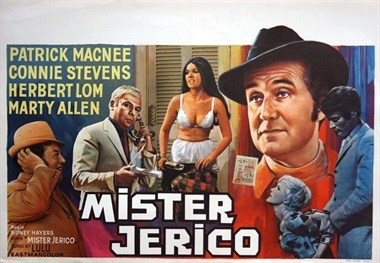
Smooth con man Dudley Jerico sets out to rob corrupt millionaire Victor Rosso [sic] of his legendary Gemini diamond.
A conman hatches a plan to swindle a corrupt millionaire out of his treasured priceless diamond by claiming to have discovered its twin. However, his plot is disrupted by a rival hustler who comes up with the same idea and, the two crooks must each convince their suspicious target that they can be trusted and the other is lying.
Reviews:
This disappointing comedy caper evidently got the green light due to the popularity of Patrick Macnee‘s dapper superspy John Steed in The Avengers. Unfortunately, this attempt to turn Macnee into an equally charismatic jewel thief just can’t compete with its bigger budgeted competition, despite the catchy title track from Lulu and the star’s stunning array of flowery shirts. Herbert Lom is good value as the object of Macnee’s felonious attentions (in a role similar to the one he played in the Michael Caine caper Gambit three years before) but, this lacklustre yarn, ultimately, can’t cut it in the excitement or suspense stakes.
Mister Jerico is one of those charming and fluffy capers that the 1960s did well, quite similar to the higher-budgeted Gambit or How to Steal a Million. The palette is sun-soaked, the plot buoyant and just this side of ridiculous. The second half of the film, in particular, moves along at a nice pace, complicating matters without making anything seem too serious. If you think too deeply about the story, it will all appear very nonsensical but, this is a stylized caper film not intended for deeper scrutiny. It’s a surface film and as such it’s quite enjoyable.
A fun film with a very Avengers feel to it, which should be obvious given the cast and crew. Allen is a little out of place but, Macnee and Lom are great, as is Laurie Johnson‘s score. I’ll even admit, against that, Lulu‘s theme song is catchy. Apparently [it was] intended as a pilot for a Macnee series to follow The Avengers but, instead, [was] released theatrically (though, in the US, it only ended up as a TV movie of the week).
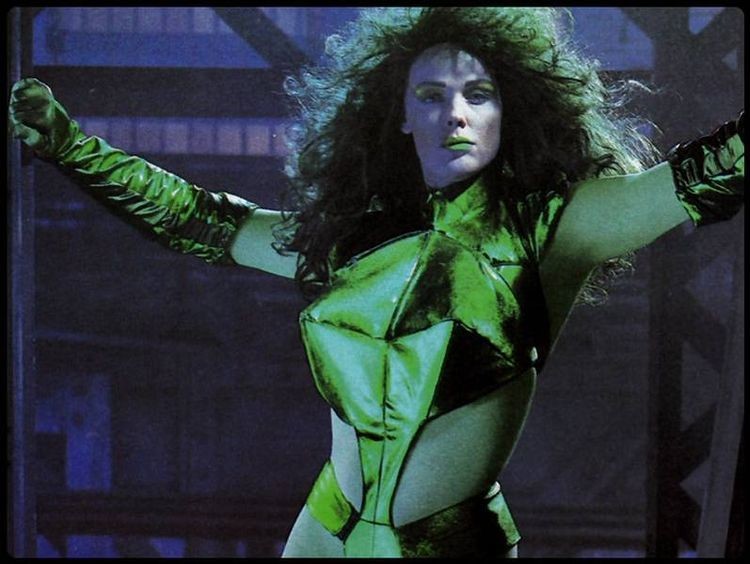
[This was] the finale of the television series about Dr. David Banner, a scientist who transforms into a mighty, larger-than-life creature called the Hulk when he gets angry. Desperately attempting to purge himself of his monster-like alter ego, Banner sneaks into a research laboratory. During the critical experiment to purge him of the Hulk, once and for all, a spy sabotages the laboratory. Banner falls in love with the spy, Jasmin, who performs missions only because her sister is being held hostage by Jasmin’s superiors. Banner and Jasmin attempt to escape from the enemy agents to rebuild their lives together but, the Hulk is never far from them.
The Incredible Hulk Returns and The Trial of the Incredible Hulk actually served as backdoor pilots for possible Thor and Daredevil series that never materialized. The third film, The Death of the Incredible Hulk was originally supposed to be the same sort of experiment, introducing She-Hulk, with Iron Man scheduled for the following film.
Image Credit: imdb.com
[However], when it finally came together, it, instead, served as a swan-song for Bill Bixby and focused on one last attempt at a cure for Banner’s Hulk-itis. Unfortunately, even though it wasn’t intended to really be the end of the Hulk on television (the plan was to have him return from the grave with Banner’s mind in the Hulk body), Bill Bixby’s health went south and he died before a proposed Rebirth of the Incredible Hulk film could get underway.
Photo Credit: syfy.com
Trivia Bits:
♦ After the ratings failure of this film, NBC decided not to continue the series. CBS already wanted nothing to do with The Incredible Hulk, prior to The Incredible Hulk Returns (1989). [For] the planned next installment, […] Bill Bixby tried to reach an agreement with ABC and they turned him down. [Then], he did the same for the Fox Network, who agreed to air another movie. Bixby and Fox were doing business together until Bixby was diagnosed with prostate cancer, causing production […] [to] shut down.
Perhaps the most attractive feature of this picture is the reproduction of early Roman costumes and Roman surroundings. It is a story of political intrigue, with all the contests and disagreeable features, connected therewith in the ancient city. But, the reproduction of manners and customs and, the historically correct scenery and settings, add immensely to the interest and, insure attention when, perhaps, the mere political story would scarcely be considered. The greatest service the motion picture can do is in the direction of educating the people, and a film like this, which faithfully illustrates long past and, perhaps, partially forgotten life, is of vast importance and, deserves a cordial reception. The Selig players have brought enthusiasm to their work and, have put much ability and life into the interpretation of this play.
This film may have been based on the 1835 novel Rienzi, the Last of the Tribunes, by Edward Bulgar-Lytton [sic]. An advertisement in the [February] 19, 1910, Film Index billed Bosworth above the title, “Hobart Bosworth in The Roman,” and labeled the movie “Film De Art of the Classics,” declaring: “Its teachings are based upon the scriptures and traditions of the early history of the eternal city.” The advertisement also suggested that theater owners book The Roman as a “Special Lenten Picture.”
A young woman [orders] her girl slave to deposit in the waters of the Tiber a child which she has cause to be rid of. The infant is found by one of the aristocracy and adopted. In later years she is betrothed but, just before the wedding, the ruler of the land claims the young woman, on the ground that she was born in slavery. By military force, she is torn from the arms of her foster father and taken to the ruling house where she is held captive for only a few hours, as the father and young lover, have aroused a popular rebellion which overthrows the ruler, end[ing] in his death and the defeat of his defenders. (Variety February 19, 1910)
One Trivia Bit:
♦ Per [Hobart] Bosworth, first picture made at Selig’s (Studio at 1845 Allesandro Street, now Glendale Blvd.) in the Edendale (now Silver Lake) plant of Los Angeles.
[There was not much written about this film and no video clip(s). The image, above, doesn’t seem to jive with the TCM synopsis. But, that is all I could find.
Addendum: I continued to dig and found the, above, write-ups via the Internet Archive database and AFI. Turner Classic Movies synopsis was WAY off. ~Vic]
It is 1937 and newly qualified vet James Herriot travels to Yorkshire to apply for the post of assistant in Siegfried Farnon’s practice. He soon learns the facts of country life but, struggles to overcome the prejudices of the Darrowby locals who are skeptical of the novice vet’s ability. In between cases, Herriot courts pretty farmer’s daughter Helen Alderson and finally marries her.
A gentle, episodic account of author Herriot’s apprenticeship in the mid-1930s to an eccentric rural English veterinarian and his awkward courtship of a farmer’s daughter.
The story of a young veterinarian’s apprenticeship to a somewhat eccentric, older vet in the English countryside and the young man’s hesitating courtship of the daughter of a local farmer.
Trivia Bits:
♦ Although born in Sunderland, England, James Herriot spent the first twenty-three years of his life in Glasgow, Scotland and never lost the accent, as can be heard in television interviews. Simon Ward however, plays him as a Londoner.
♦ Known to the cast and crew as “All Creatures Grunt and Smell”.












 Cosmic-Observation