Photo Credit: Christi SykesPhoto Credit: Kate FranklinPhoto Credit: Melissa FredPhoto Credit: Suzanne DeNeve Goodall
Her daughter wanted to dress as ElsaPhoto Credit: Amber Alexandra
We’ve had cold temps here and plenty of rain but, the two haven’t combined to give us any frozen precipitation. Don’t me wrong. I’m not complaining. I like a good snow storm, here and there but, I don’t like the mess. That being said, since we haven’t had any of the white stuff, I submit…for your approval…some pix I harvested from a FakeBook group back in 2018, when we had two snow bombs. I posted my own photos on December 9, 2018 and added some of my stuff to the same group. These are really good and photographer credit is listed. I will post the rest, tomorrow. ~Vic
Photo Credit: Mike OechslePhoto Credit: Alex WebbPhoto Credit: Laura SmithPhoto Credit: Becky JohnsonPhoto Credit: Dora Hammond
Perhaps the most attractive feature of this picture is the reproduction of early Roman costumes and Roman surroundings. It is a story of political intrigue, with all the contests and disagreeable features, connected therewith in the ancient city. But, the reproduction of manners and customs and, the historically correct scenery and settings, add immensely to the interest and, insure attention when, perhaps, the mere political story would scarcely be considered. The greatest service the motion picture can do is in the direction of educating the people, and a film like this, which faithfully illustrates long past and, perhaps, partially forgotten life, is of vast importance and, deserves a cordial reception. The Selig players have brought enthusiasm to their work and, have put much ability and life into the interpretation of this play.
This film may have been based on the 1835 novel Rienzi, the Last of the Tribunes, by Edward Bulgar-Lytton [sic]. An advertisement in the [February] 19, 1910, Film Index billed Bosworth above the title, “Hobart Bosworth in The Roman,” and labeled the movie “Film De Art of the Classics,” declaring: “Its teachings are based upon the scriptures and traditions of the early history of the eternal city.” The advertisement also suggested that theater owners book The Roman as a “Special Lenten Picture.”
A young woman [orders] her girl slave to deposit in the waters of the Tiber a child which she has cause to be rid of. The infant is found by one of the aristocracy and adopted. In later years she is betrothed but, just before the wedding, the ruler of the land claims the young woman, on the ground that she was born in slavery. By military force, she is torn from the arms of her foster father and taken to the ruling house where she is held captive for only a few hours, as the father and young lover, have aroused a popular rebellion which overthrows the ruler, end[ing] in his death and the defeat of his defenders. (Variety February 19, 1910)
One Trivia Bit:
♦ Per [Hobart] Bosworth, first picture made at Selig’s (Studio at 1845 Allesandro Street, now Glendale Blvd.) in the Edendale (now Silver Lake) plant of Los Angeles.
[There was not much written about this film and no video clip(s). The image, above, doesn’t seem to jive with the TCM synopsis. But, that is all I could find.
Addendum: I continued to dig and found the, above, write-ups via the Internet Archive database and AFI. Turner Classic Movies synopsis was WAY off. ~Vic]
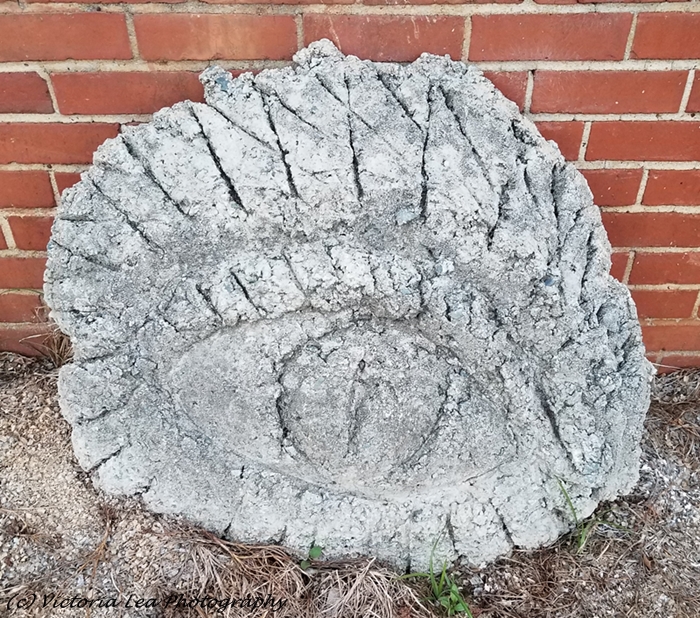
This was propped up against a building in downtown, about two blocks from my house. I was out for an afternoon walk and it was an unusual sight. It’s no longer there and I have no idea who it belonged to, who put it there or…where it went. I found it creepy but, took a picture of it, anyway. ~Vic
Also known as the Second Treaty of Indian Springs or Treaty with the Creeks, one-hundred, ninety-five years ago, today, it was signed by the Muscogee and the U.S. government at the Indian Springs Hotel (now a museum).
The U.S. and the Muscogee had, previously, signed the Treaty of Indian Springs of 1821. On January 8, the Muscogee agreed to cede their land holdings east of the Flint River to the state of Georgia in exchange for $200,000, paid in installments.
[…] Duncan Campbell and James Meriwether, U.S. Commissioners, [wrote] to Georgia Governor George M. Troup regarding obstacles the commissioners [faced] in treating with the Creeks. They [related] that proceedings [were] being conducted orally since the written method [had] failed. Also, the publication of negotiations held at Tucabatchee (Tuckabatchee or Tuckabatchie) and Pole Cat Springs [had] spread alarm throughout the nation as [had] the persistent “interference” of the Cherokees. Campbell and Meriwether negotiated the Treaty of Indian Springs [of] 1825 that was unauthorized by a majority of Creeks and, later, abrogated by the United States.
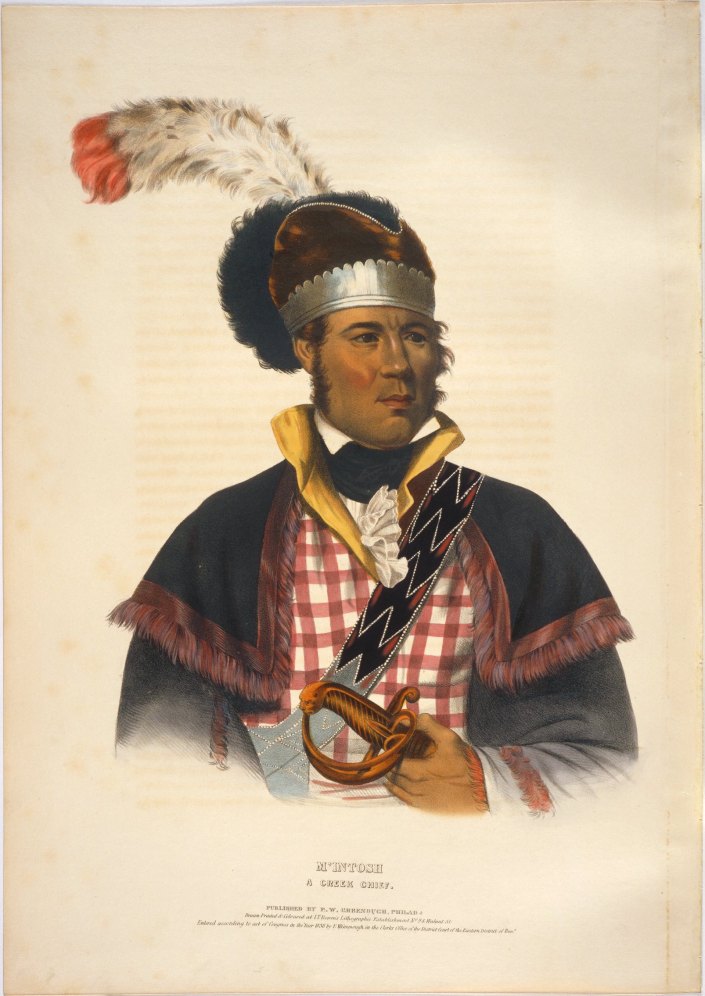
Image Credit: Georgia Encyclopedia William McIntosh
Tustunnuggee Hutke (White Warrior)
The treaty that was agreed [to] was negotiated with six chiefs of the Lower Creek, led by William McIntosh. McIntosh agreed to cede all Muscogee lands east of the Chattahoochee River, including the sacred Ocmulgee National Monument (Historic Park), to Georgia and Alabama and, accepted relocation west of the Mississippi River to an equivalent parcel of land along the Arkansas River. In compensation for the move to unimproved land, and to aid in obtaining supplies, the Muscogee nation would receive $200,000 (again), paid in decreasing installments over a period of years. An additional $200,000 was paid directly to McIntosh.
Outcome:
Governor Troup, and most Georgians, were in favor of the treaty and his inside man was his first cousin…William McIntosh. McIntosh paid the highest price. According to a Creek law, that McIntosh, himself, had supported, a sentence of execution awaited any Creek leader who ceded land to the United States without the full assent of the entire Creek Nation. Just before dawn on April 30, 1825, Upper Creek chief Menawa, accompanied by 200 Creek warriors (The Law Menders), attacked McIntosh at Lockchau Talofau (Acorn Bluff/McIntosh Reserve) to carry out the sentence. They set fire to his home, shot and stabbed him to death and, [killed] the elderly Coweta chief Etomme Tustunnuggee. Chillie McIntosh, the chief’s oldest son, had also been sentenced to die but, he escaped by diving through a window. Later that day, the Law Menders found [Samuel and Benjamin Hawkins, Jr.] (McIntosh’s sons-in-law), who were also signatories. They hanged Samuel and shot Benjamin but, he escaped.
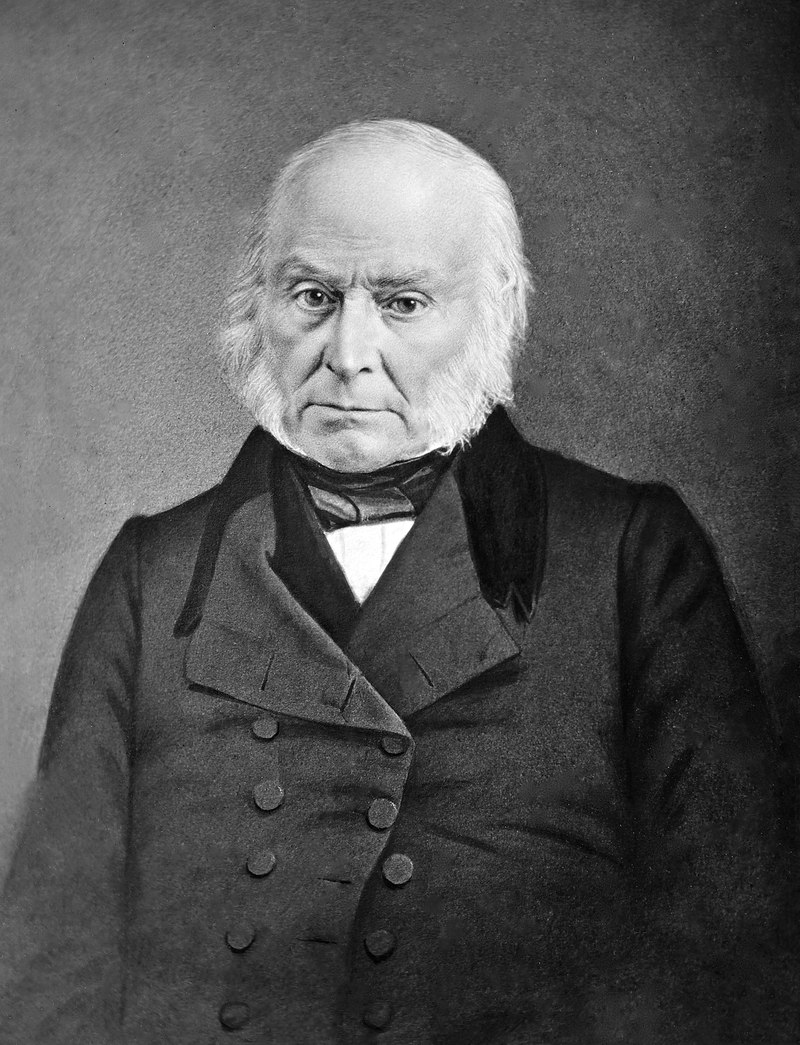
A large majority of chiefs and warriors objected that McIntosh did not have sufficient authority to sign treaties or cede territory. [The] Creek Nation sent a delegation, led by Opothleyahola and [included] Menawa, to lodge an official complaint. Federal investigators (appointed by President John Quincy Adams) agreed and the U.S. government negotiated a new land cession in the 1826 Treaty of Washington. The Creeks did not, however, have their territory restored in the new treaty.
Though the Creek did retain a small tract of land on the Georgia-Alabama border and the Ocmulgee National Monument, Governor Troup refused to recognize the new treaty. [He] authorized all Georgian citizens to evict the Muscogee and ordered the land surveyed for a lottery, including the piece that was to remain in Creek hands. He threatened an attack on Federal troops if they interfered with the [previous] treaty and challenged [the President]. The president intervened with Federal troops but, Troup called out the state militia, and Adams, fearful of a civil war, conceded.
Image Credit: americanmovieawards.com & The Wayback Machine
Screen Capture
Forty years ago, today, the very first American Movie Awards was televised on NBC. Filmed at the Wilshire Theatre, the ceremony honored film, actors, directors, screenwriters, music, favorites and a special recognition. Co-hosts were David Frost (also Executive Producer) and Dudley Moore with Angie Dickinson as Co-Hostess. Susan Anton was a performer. Judging by what few images I could find, the trophy was designed to resemble the Empire State Building.
Winners:
♦ Best Film: Rocky II
♦ Best Actor: Alan Alda (The Seduction of Joe Tynan)
♦ Best Actress: Sally Field (Norma Rae)
♦ Best Supporting Actor: Robert Duvall (Apocalypse Now)
♦ Best Supporting Actress: Meryl Streep (The Deer Hunter)
♦ Best Director: Michael Cimino (The Deer Hunter)
♦ Best Screenplay: The China Syndrome
♦ Best Original Song: Every Which Way But Loose (Every Which Way But Loose)
♦ Favorite Film Star-Female: Jane Fonda
♦ Favorite Film Star-Male: Burt Reynolds
♦ Special Marquee: Clint Eastwood (Distinguished and Continuing Career)
There was another ceremony in March 1982 at a different location and a relaunch in 2013 with ceremonies in 2014, 2015, 2016, 2017 and 2018 focusing mainly on Independent Film. I doubt there will be anymore ceremonies as the website was taken down last year. There are no videos of the event on YouTube, either.
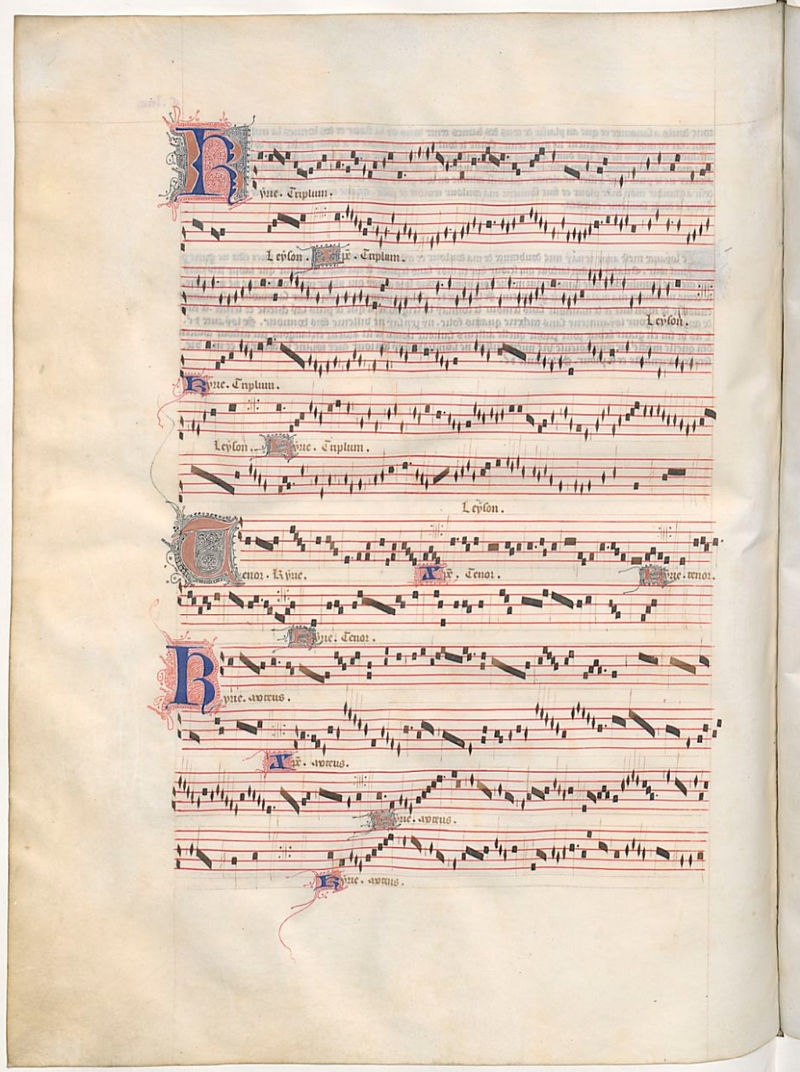
Messe de Nostre Dame (Mass of Our Lady) is a polyphonicmass composed before 1365 by French poet and composer Guillaume de Machaut […]. Widely regarded as one of the masterpieces of medieval music, and of all religious music, it is historically notable as the earliest complete setting of the Ordinary of the Mass attributable to a single composer […].
The Messe de Nostre Dame consists of 5 movements: the Kyrie (Eleison…”Lord, have mercy”), Gloria (in Excelsis Deo…”Glory to God in the highest”), Credo (Nicene Creed), Sanctus (“Holy”) and Agnus Dei (“Lamb of God”), followed by the dismissal Ite, missa est (Mass Response: Deo Gratias or “Thanks be to God”). The tenor of the Kyrie is based on Vatican Kyrie IV, the Sanctus and Agnus correspond to Vatican Mass XVII and the Ite is on Sanctus VIII. The Gloria and Credo have no apparent chant basis, although they are stylistically related to one another. Machaut’s Messe de Nostre Dame is for four voices rather than the more common three. Machaut added a contratenor voice that moved in the same low range as the tenor, sometimes replacing it as the lowest voice.
The information is rather wonky and, not only have I never studied music theory, my education on Catholic Mass is limited to a short stint as a member in an Anglican church in Austin, TX, a decade ago. That being said, what I find fascinating about this composition is that Machaut combined each part into an artistic whole, the earliest known example of it unified. Previously, the items were performed non-consecutively and, separated by prayers and chants.
[Instrumental Version of The Kyrie by Guillaume de Machaut]
[Modern Take on Kyrie by Patrick Lenk]
And, just because I could, I’m ending with Mr. Mister.
Two months ago, on December 7, 2019, I visited Alamance Battleground with my buddy Ray. I posted the first batch of pictures on December 8, intending to post the rest on December 14. For obvious reasons, that didn’t happen so, here are the rest.
The Colonial Column Monument
Originally located at Guilford Courthouse Military Park
Moved in 1962, “on indefinite loan.”Colonial Column MarkerFront Plaque
It is claimed that the battle was the first of the Revolutionary War.
It was actually the last battle of the War of Regulation,
which lead to the Revolutionary War.Right Side James Hunter
General of the RegulatorsBack Side
North Carolina Timeline 1774 North Carolina Provincial Congress The Mecklenburg Declaration 1775 Battle of Moore’s Creek Bridge 1776 North Carolina is the first to call for independence
with the Halifax Resolves 1776Twelve Regulators Condemned At Hillsboro
Six were executed.
“Our blood will be as good seed in good ground,
that will soon produce one hundred fold.” James Pugh June 19, 1771Bridge over the creek.View across the highway.Image Credit: wikipedia.org & wikimedia.org
Dates reflect the Mecklenburg Declaration of Independence (disputed but,
possibly Mecklenburg Resolves) and
the Halifax Resolves.
I haven’t gotten a shot of our now-blooming Narcissus. They started coming up last month. They seem to enjoy the cold weather. I’ve seen them bloom with ice on the ground. ~Vic
Oh deary, deary me. What a fine mess we seem to have gotten ourselves into. Just as we were beginning to believe all the messages that we are changing for the better, we seem to be surrounded by more and more chaos and, confusion. If we are changing, raising our energy frequencies, how come everything seems to be becoming worse?
As we undergo our ‘changes’, what we are actually doing is bringing more and more of our soul energy into the body, until we once again become a true human being. Let me explain: For the past 7,000 years our human form has been divided into a ‘physical self’ and a ‘higher self’. The physical self, that which we refer to as the human body, has only contained about one-quarter of our total consciousness, our total soul. The higher self has made up the other three-quarters.
At long, long last we have found the way to reintegrate the whole, to bring the whole soul back into the physical body. That is why I always explain to people that we are not ‘ascending’ anywhere. We are just becoming ‘whole’, we are just becoming human. This is what is meant by change.
Always remember that, fundamentally, we are energy. Einstein’s Theory of Relativity is correct: all things ‘physical’ are made of energy and that energy cannot be destroyed, it can only be altered. The same applies to consciousness energy, the energy that is the soul. Consciousness is not just seated within one small region of the brain, as current scientific thinking is suggesting. The energy that is the soul infuses all the cells of the body and, extends via the chakras and aura far beyond the physical confines of the body.
We began this process of soul reintegration back in 1996 and, as we did so, we began to realise that we had a great deal of accumulated emotional debris to clear. Our state of seeming chaos is entirely brought about by the amount of emotional debris we have built up over the past seven thousand years.
We have become used to not being us. We have become used to wearing masks, presenting faces to the world that we think the world wants to see. We have become so un-used to showing our true selves and, we have kept our true selves so hidden that, even we do not know who we truly are any longer. We have become accustomed to believing the web of falsities we have woven around ourselves and the journey to re-discovering who we really are is proving uncomfortable. This is the reason for the chaos. This is the reason for the confusion.
Image Credit: pinterest.com
The simple answer is that we have become used to not being honest and this lack of honesty has led to all the confusion (conflicts, wars and prejudice) that we are currently experiencing.
As we reintegrate the higher elements of consciousness, our higher selves are requesting us to become more and more honest with ourselves and, with those with whom we share our lives. The further we progress through the process of re-integration, the more this request becomes an imperative and the less we can hide from the requirements of the higher self, the requirements of the soul.
We have also begun to realise that truth has its own vibration. Words spoken to us by others become recognised for what they are: the truth or not. This ‘feeling’ for truth is also adding to our confusion. Conventions or ideologies we accepted as truth in the past are now being seen as less than truth.
What we, now, need to do is to bring all our new understanding, of what is honest and what is not, to bear on all aspects of our lives. The way to remove the chaos from our lives, and from humanity as a whole, is to be as honest as possible within every situation…honest with ourselves and honest with those around us. This is how we complete our process of change…by being totally honest in everything we do. If we all became totally honest tomorrow, we could all complete our reintegrations the day after. The truth is that powerful!
Becoming honest begins with little steps. If someone asks you a question, reply in as honest a way as possible. This does not mean forgetting about diplomacy but, it does mean expressing your truth. If someone makes you angry or sad, or upsets you in any way, let them know as honestly as possible what their actions have done. It is no good trying to ‘let it go with love’ any longer, as that is a false situation and, it will only lead to resentment and a delay in your personal development. Neither is it good to think that, by being honest, you will ‘hurt the other person’s feelings’. You are assuming that your honest reaction is going to be hurtful but, how are you able to judge what price the other person has put on their feelings? Being dishonest, by not expressing your true feelings, always creates more harm and damage than being honest does. Of course we need to be as diplomatic as the situation or person warrants but, we all need to begin to realise that we cannot pre-judge someone else’s reactions. Do not forget that being honest with someone gives them full permission to be honest in return and that builds a stronger relationship.
The soul, the higher self, is not a hard taskmaster. All that it requires of us is that we be ourselves and be as honest as it is possible to be in any given situation. It is not a question of being rude or unthinking, just of being who we truly are without masks.
The end of 2011 is the date we humans have set ourselves to finally complete our process of reintegration. Every single person on the planet has the potential and capability to fulfil the task we have set ourselves. Whilst time seems short, all that is needed is honest communication…with ourselves and others. Once honest communication in all aspects of our lives is achieved, individually and collectively, we automatically and, without further effort, become more than we have ever dreamed possible.
The B-47 bomber was on a simulated combat mission from Homestead Air Force Base in Florida. It was carrying a single 7,600-pound bomb. At about 2:00am EST, an F-86 fighter collided with the B-47. The F-86 crashed after the pilot ejected from the plane. The damaged B-47 remained airborne, plummeting 18,000 feet from 38,000 feet when [the pilot] regained flight control. The crew requested permission to [drop] the bomb in order to reduce weight and prevent the bomb from exploding during an emergency landing. Permission was granted and the bomb was jettisoned at 7,200 feet […]. The crew did not see an explosion when the bomb struck the sea. They managed to land the B-47 safely at […] Hunter Air Force Base. The pilot, a Colonel Howard Richardson, was awarded the Distinguished Flying Cross after this incident.
Some sources describe the bomb as a functional nuclear weapon but, others describe it as disabled. If it had a plutonium nuclear core installed, it was a fully functional weapon. If it had a dummy core installed, it was incapable of producing a nuclear explosion but, could still produce a conventional explosion. […] The Air Force maintains that its nuclear capsule, used to initiate the nuclear reaction, was removed before its flight aboard B-47. […] the bomb contained a simulated 150-pound cap made of lead. However, according to 1966 Congressional testimony by Assistant Secretary of Defense W.J. Howard, the Tybee Island bomb was a “complete weapon, a bomb with a nuclear capsule” and one of two weapons lost that contained a plutonium trigger. Nevertheless, a study of the Strategic Air Command documents indicates that Alert Force test flights in February 1958 with the older Mark 15 payloads were not authorized to fly with nuclear capsules on board.
The collision, and its aftermath, also drives the plot of the novel Three Chords & The Truth by Craig McDonald, published in November 2016.
It is 1937 and newly qualified vet James Herriot travels to Yorkshire to apply for the post of assistant in Siegfried Farnon’s practice. He soon learns the facts of country life but, struggles to overcome the prejudices of the Darrowby locals who are skeptical of the novice vet’s ability. In between cases, Herriot courts pretty farmer’s daughter Helen Alderson and finally marries her.
A gentle, episodic account of author Herriot’s apprenticeship in the mid-1930s to an eccentric rural English veterinarian and his awkward courtship of a farmer’s daughter.
The story of a young veterinarian’s apprenticeship to a somewhat eccentric, older vet in the English countryside and the young man’s hesitating courtship of the daughter of a local farmer.
Trivia Bits:
♦ Although born in Sunderland, England, James Herriot spent the first twenty-three years of his life in Glasgow, Scotland and never lost the accent, as can be heard in television interviews. Simon Ward however, plays him as a Londoner.
♦ Known to the cast and crew as “All Creatures Grunt and Smell”.
I’ve been digging around, looking for something interesting. Back in September 2019, I posted about Billboard locking down/wiping out their online charts behind a paywall. I don’t know if this is a fluke or if they got a lot of blow-back for what they did but, the charts have reappeared (their Hot 100 era). Ok. Good. Time will tell if they stay. And, I hope they did get some blow-back. Assholes.
Now that I got that off my chest, on to other stuff.
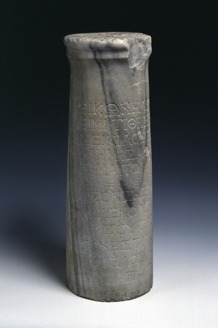
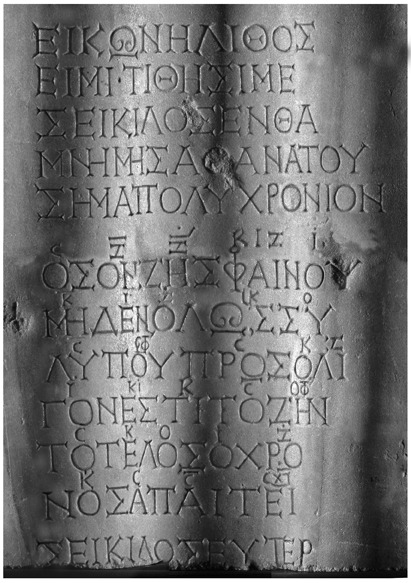
Wikipedia has a timeline of musical events (Yeah. I know. Wikipedia is hardly a bastion of truth but, seems to be a bit less haphazard with music, plants, animals, cars and finding a U.S. town.) I stumbled across the Seikilos Epitaph, a short, little marble tombstone with poetry/lyrics/text, with musical notation, written in Greek. It is unusual and unique because it is the oldest, intact musical composition in the world. It was found in Tralles, Turkey, an ancient, Hellenistic town where Aydin exists, now. The lyrics:
Εἰκὼν ἤ λίθος εἰμί. τίθησί με Σεικίλος ἔνθα μνήμης ἀθανάτου σῆμα πολυχρόνιον.
eikṑn ḗ líthos eimí. títhēsí me Seikílos éntha mnḗmēs athanátou sêma polukhrónion.
“I am a tombstone, an image. Seikilos placed me here as a long-lasting sign of deathless remembrance.”
The dating of the tombstone has proven elusive. The range is from the first century B.C to the first or second century A.D. based upon paleography.
Take a listen:
Here is another version, based upon the inscription being dedicated to a wife: Song of Seikilos (Classic FM website)
Yes. I’m still alive. I wasn’t sure I would be after battling septicemia. That is not something to be trifled with. I had an abscessed tooth rupture on me the night of December 14/15. The details of my desperate attempt to get it pulled is boring but, suffice to say that, with a 103 fever and delirium, I did manage to post here, scribble some instructions for a friend and write out a will. The pain was unimaginable and the dead bacteria my body shed while I was recovering was disgusting. I never could get pain medication and I had a bad reaction to an antibiotic. I have no kind words for the dental industry. It’s taken me six weeks to get my energy levels back to normal. It wasn’t until after my ordeal that I did some reading on toothaches. They can, indeed, kill you. I was scared and I got lucky.




















 Cosmic-Observation