*************
[The USS Pawnee was] dispatched to Norfolk to secure the ships and stores of the Gosport Navy Yard. Arriving at Norfolk the night of [April 20], she found that all ships, save [the] USS Cumberland, had been scuttled […]. [So], an attempt was made to destroy the Naval stores and the dry dock. Their efforts were largely unsuccessful but, she took Cumberland in tow and saved the frigate.
*************
On Saturday evening, at 9 o’clock, the Pawnee arrived from Washington with 200 volunteers, and 100 marines, besides her own crew […]. [At] once, the officers and crew of the Pawnee and Cumberland went to the Navy yard and, spiked and disabled the guns, [plus], threw the shot and small arms into the river. At 10 o’clock, the marines, who had been quartered in the barracks, fired them and came on board the Pawnee. A party of officers, [in the] meantime, were going through the different buildings and ships, distributing waste and turpentine, and laying a train, so as to blow up the dry dock. At this time, the scene was indescribably magnificent, all the buildings being in a blaze, and explosions, here and there, scattering the cinders in all directions.
The Government vessels had been scuttled in the afternoon before the Pawnee arrived, to prevent their being seized by the Secessionists, who had been in arms in both Norfolk and Portsmouth.
The Merrimack Conversion
Image Credit: M. W. Robbins Collection &
The Virginian-Pilot
pilotonline.com
The Confederate forces did, in fact, take over the shipyard and did so without armed conflict through an elaborate ruse orchestrated by civilian railroad builder William Mahone (then President of the Norfolk and Petersburg Railroad and soon to become a famous Confederate officer). He bluffed the Federal troops into abandoning the shipyard in Portsmouth by running a single passenger train into Norfolk with great noise and whistle-blowing […]. [T]hen, much more quietly, [he sent] it back west […]. [He returned] the same train, again, creating the illusion of large numbers of arriving troops [with] the Federals listening in Portsmouth across the Elizabeth River (and just barely out of sight).
*************
[In] July, Confederate shipyard workers begin converting the unburned underbelly of the USS Merrimack into the ironclad CSS Virginia in Drydock 1.
The battle was a total and bloody defeat for the Jacobites which effectively marked the end of almost sixty years of the Jacobite struggle, as never again would an armed uprising be used in the attempt to return the Stuarts to the throne. The government victory also paved the way for a sustained programme to destroy the power base of the rebel clans.
Culloden (pronounced culawden, with the emphasis on ‘oden‘) is one of the most important battles in the history of the British Isles and has international significance. It is the final battle fought on the British mainland and brings to an end more than half a century […] of Jacobite conflict, itself played out against a background of wider international wars. Its aftermath transforms the Highlands, bringing to an end the traditional way of life of the area and contributing to the subsequent clearances. The battle also holds a prominent place within the Scottish cultural legacy, frequently depicted, and commemorated, in art, music, literature and film. The battlefield, itself, is one of the most visited tourist sites in the Highlands […]. [T]he site holds a particularly high significance, and emotional connection, to many within Scotland and to the ancestors of the Scottish Diaspora.
The official return for British Army casualties (government troops) was 50 officers, and men, killed and 259 wounded [with] one missing (a proportion of the wounded later died of their wounds). Jacobite fatalities have been estimated at between 1,200-1,500 with between 400 and 500 prisoners taken in the immediate aftermath and many more in the days which followed. Only the Irish and Scottish troops in French service were treated as bona fide prisoners of war, the rest as rebels.
Image Credit: britishbattles.com
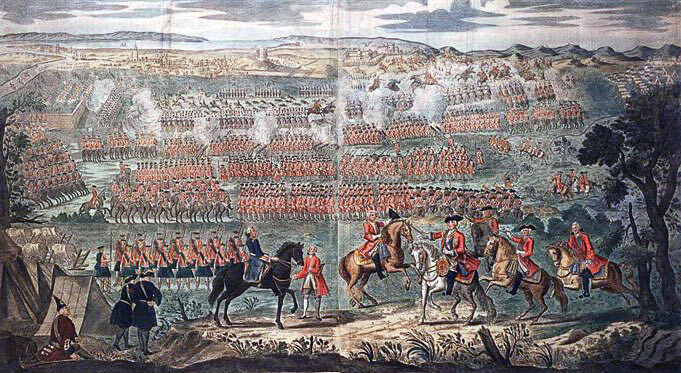
The battle, which lasted only 40 minutes, resulted in bitter defeat for the heavily outnumbered Jacobites. Led by the Duke of Cumberland, son of King George II, [the] devastating slaughter of the Jacobites was the result of the opening British cannonade and, subsequent tactics of the Redcoats during the attack […] when each British soldier, instead of attacking the Highlander directly in front of him, bayoneted the exposed side of the man to his right. The Highlanders finally broke and fled […].
Hunted by troops and spies, Prince Charles wandered over Scotland for five months before escaping to France and final exile. The [battle] […] marked the end of any serious attempt by the Jacobites to restore the Stuart dynasty to the British throne.
A generation before, a previous Jacobite rebellion had been thwarted by the king’s officer, George Wade, who had “pacified” and “disarmed” the highland clans. So concerned was the English establishment, and relieved by Wade’s actions, that an additional verse to the National Anthem was penned: God grant the Marshal Wade
May be thy Mighty aid,
Victory bring;
May he sedition hush,
And like a torrent rush,
Rebellious Scots to crush,
God save the king
Addendum: “Culloden is viewed by the Scottish people as a war grave. To my fellow Americans, stepping onto the Culloden battlefield would be like visiting Gettysburg or Normandy. And, since Scotland views it as a grave, you could also liken it to Arlington Cemetery. You don’t simply walk onto any of these places with a light spirit.” ~Brit At Heart
[Preface from a client of Chris Thomas: My friend Chris Thomas, who is “hard-wired” to the Akashic, has produced a list of events in Earth’s history that I would like to share with you. Chris Thomas’ books go into much greater detail about the [below] but, this is quite a nice summary.]
14,376.279.386 years ago…..Creation of our Universal envelope. 100 million yrs ago…..Creation of the six non-physical races. 40 million yrs ago…..Completion of our solar system with early life forms on the outer planets. 30 million yrs ago…..Creation of the seven semi-physical races. 25 million yrs ago…..Beginnings of life on Earth (Earth’s choice). 20 million yrs ago…..Creation by earth of the Sidhe’ and the Faerie. 4.5 million yrs ago…..Neanderthal Man developed by Earth from early primate models. 4 million yrs ago…..The arrival of The Merlin on Earth. 3.9 million yrs ago…..Removal of 4 planets from our solar system. 3.8 million yrs ago…..Arrival of Cro-Magnon man’s template from Mars. 3.6 million yrs ago…..Disruptive alien race called the 14th faction burst into our Universe. 94-98,000 yrs ago…..Lemuria established. 85,000 yrs ago…..Atlantis established. 65,000 yrs ago…..Atlantis destroyed and the Sphinx constructed in Egypt. 28,000 yrs ago…..New energy matrix to support human life post Atlantis. 20,000 yrs ago…..Human resettlement of the planet begun. 12,000 yrs ago…..First use of language in the form of Hewbrewa. 10,000 yrs ago…..Construction of energy sites at Silbury Hill, Avebury and Stonehenge. Aug 14th 1996…..New Earth energy grid activated for whole planet. Aug 16th 1996…..A bridge between Avalon and Glastonbury Tor is made so that the Sidhe’ could counteract the threat of genetically modified organisms. Dec 31st 1999…..Earth energies boosted to speed up human evolution. May 30th 2000…..Earth alters her base frequency from 7.56Hz to 3,500Hz. Jan 19th 2004…..Energies changed chakra speeds and all colour was lost from the chakras. Aug 2nd 2004…..Earth charged up all its crystal deposits. Feb 2005…..Another energy boost and this time, the energy level is maintained. Also, a higher-self census was taken to see who was to remain on the planet.
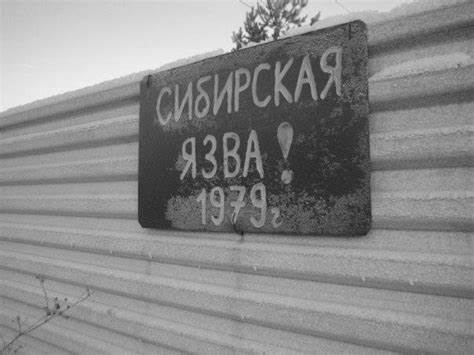
Forty-one years ago, today, spores of anthrax were accidentally released from a Soviet military research facility near the city of Sverdlovsk, Russia (now Yekaterinburg/Ekaterinburg).
On April 2, 1979, there was an unusual anthrax outbreak, which affected 94 people and killed at least 64 of them, in the Soviet city of Sverdlovsk, roughly 850 miles east of Moscow. The first victim died after four days. [T]he last one died six weeks later. The Soviet government claimed the deaths were caused by intestinal anthrax from tainted meat, a story some influential American scientists found believable. However, officials in the Carter Administration suspected the outbreak was caused by an accidental release of anthrax spores from a suspected Soviet biological weapons facility located in the city (Military Compound 19). The US believed that the Soviet Union was violating the Biological Weapons Convention signed in 1972 and made their suspicions public. But, the Soviets denied any activities relating to biological weapons and, at numerous international conferences, tried to prove their contaminated meat story. It wasn’t until thirteen years later, in 1992, that President Boris Yeltsin admitted, without going into details, that the anthrax outbreak was the result of military activity at the facility. [Russia] allowed a team of Western scientists to go to Sverdlovsk to investigate the outbreak. The team visited Sverdlovsk in June 1992 and August 1993 […].
Photo Credit: Topwar
Although the KGB had confiscated hospital and other records after the incident, the Western scientists were able to track where all the victims had been at the time of the anthrax release. Their results showed that on the day of the incident, all the victims were clustered along a straight line downwind from the military facility. Livestock in the same area also died of anthrax. After completing their investigation, the team concluded the outbreak was caused by a release of an aerosol of anthrax pathogen at the military facility. But, they were unable to determine what caused the release or what specific activities were conducted at the facility.
“Clogged filter, I removed it. Replace the filter”. [A] reminder on a piece of paper left [by a] factory worker […] to his mate when he went home on Friday evening…
Colonel Nicholas Cheryshev, shift supervisor at the plant, […] was in a hurry to go home and, for some unknown reason, was not aware of the lack of filter. In the end, the workers on the night shift, finding entries in the log window, quietly launched [the] equipment. [For] more than three hours, the plant was [throwing], into the air [of] the night sky of […] Sverdlovsk, portions [of] dried culture of anthrax. When the lack of bio-security was discovered, production was urgently stopped, […] the filter [replaced] and [they], quietly, continued working.
It was an accident at a clandestine biological weapons lab that allowed deadly anthrax spores to contaminate Sverdlovsk’s air, as evidence unearthed later would show. Over the years, as DNA sequencing technology has improved, scientists have been piecing together more and more information about the anthrax strain.
This facility has not been closed. It just went underground…literally. ~Vic
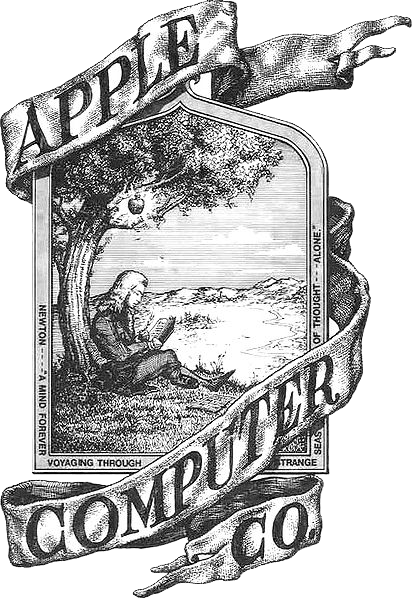
Designed by Ronald Wayne Isaac Newton under an apple tree.
Image Credit: wikimedia.org & wikipedia.org
Forty-four years ago, today, the Apple Computer Company was founded by Steve Jobs, Steve Wozniak and Ronald Wayne, though Wayne sold his share back within 12 days. Headquartered in Cupertino, California, it grew from the “two Steves” into a multinational company. Jobs and Wozniak met in 1971 via mutual friend Bill Fernandez. Their partnership began with autodidact Wozniak’s blue boxes build and Jobs salesmanship. Jobs split the blue box profits with Wozniak.
Wozniak designed a video terminal and, new microcomputers, such as the Altair 8800 and the IMSAI, inspired [him] to build a microprocessor into his video terminal and have a complete computer. [He] designed computers on paper, waiting for the day he could afford a CPU. When MOS Technology released its 6502 chip in 1976, Wozniak wrote a version of BASIC for it, then began to design a computer for it to run on. When Jobs saw Wozniak’s computer, which would later become known as the Apple I, he was immediately interested in its commercial potential.
Initially, Wozniak intended to share schematics of the machine for free but, Jobs insisted that they should, instead, build and sell bare printed circuit boards for the computer. Jobs eventually convinced Wozniak to go into business together and start a new company of their own. According to Wozniak, Jobs proposed the name “Apple Computer” when he had just come back from Robert Friedland’s All-One Farm in Oregon. Jobs told Walter Isaacson that he was “…on one of my fruitarian diets…” when he conceived of the name and thought “…it sounded fun, spirited and not intimidating…plus, it would get us ahead of Atari in the phone book.”
The information on Apple, Jobs & Wozniak is extensive. This post is a mere highlight of its beginnings. I won’t be reinventing the wheel, here. I will say, though, that the very first computer I ever programmed on in 1983, using BASIC, was an Apple II. ~Vic
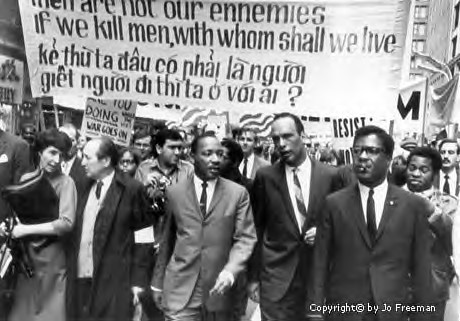
In addition to his moral objections to the war, he argued that the war diverted money and attention from domestic programs to aid the black poor. He was strongly criticized by other prominent civil rights leaders for attempting to link civil rights and the antiwar movement.
Dr. Benjamin Spock joins Dr. King
and Bernard Lee in the front line.
Photo Credit: jofreeman.com
Dr. King had never been neutral on the war in Vietnam but, he had been silent. He felt, as did the leaders of most other civil rights organizations, that the movement should concentrate on the domestic struggle. They were concerned that opposition to President Johnson’s foreign policy would result in loss of support for passing and enforcing civil rights laws at home. On July 5 1965, Dr. King told a college audience in Virginia that “the war in Vietnam must be stopped.” His friends and contacts in the Johnson Administration told him he was treading in dangerous waters and should back off.
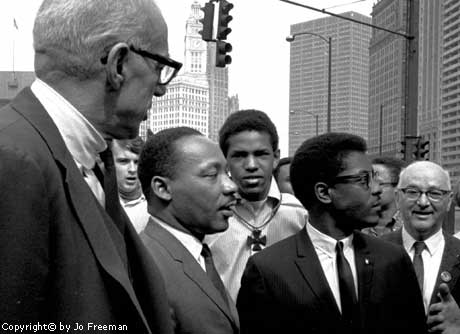
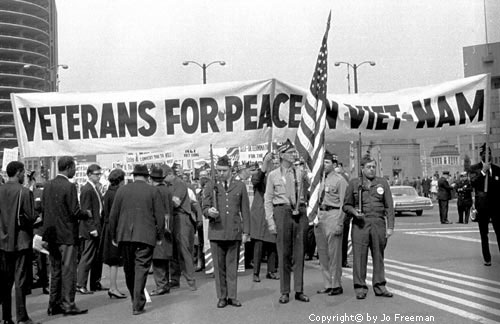
By 1967, Dr. King was ready to speak his mind publicly. His first statement was made on February 25 at an anti-war conference in California, along with several Senators who also opposed the war. He said it was immoral and, also, took money and attention from the anti-poverty program. After the walk down State Street on March 25, Dr. King addressed a rally.
Veterans for Peace get ready to march.
Photo Credit: jofreeman.com
There are videos of March 25, 1965 and videos of April 1, 1967 but, nothing for this date. ~Vic
It’s Friday the 13th! Eek! Everybody…RUN! Hide! Yeah, well, enough of the hysteria. We have plenty of that going on with the corona beer virus. Sugar, rice, pasta, Clorox & Lysol hand wipes, bleach, hand sanitizer and toilet paper doesn’t stand a chance. Now, we have to deal with the dreaded number 13. E-gads! The humanity!
March 13 has been a rather busy day in history. Curiously, Uranus and Pluto are involved.
Uranus and its rings.
Image Credit: mirror.co.uk
Uranus is the seventh planet from the sun. The name of Uranus references the ancient Greek deity of the sky Uranus, the father of Cronus (Saturn) and grandfather of Zeus (Jupiter) […]. It has the third-largest planetary radius and fourth-largest planetary mass in [our] solar system and, […] is the only planet whose name is derived directly from a figure of Greek mythology. Uranus is similar in composition to Neptune and, both have bulk chemical compositions which differ from that of the larger gas giants Jupiter and Saturn. Uranus’ atmosphere is similar to Jupiter’s and Saturn’s in its primary composition of hydrogen and helium but, it contains more “ices” such as water, ammonia and methane […]. It has the coldest planetary atmosphere in the solar system […]. Like the other giant planets, Uranus has a ring system, a magnetosphere and numerous moons. The Uranian system has a unique configuration because its axis of rotation is tilted sideways, nearly into the plane of its solar orbit. Its north and south poles, therefore, lie where most other planets have their equators. Voyager 2 remains the only spacecraft to visit the planet.
Like the classical planets, Uranus is visible to the naked eye but, it was never recognised as a planet by ancient observers because of its dimness and slow orbit. [Two hundred, thirty-nine years ago, today], Sir William Herschel first observed Uranus on March 13, 1781 (from the garden of his house at 19 New King Street in Bath, Somerset, England, now the Herschel Museum of Astronomy), leading to its discovery as a planet, expanding the known boundaries of the solar system for the first time in history and making Uranus the first planet classified as such with the aid of a telescope.
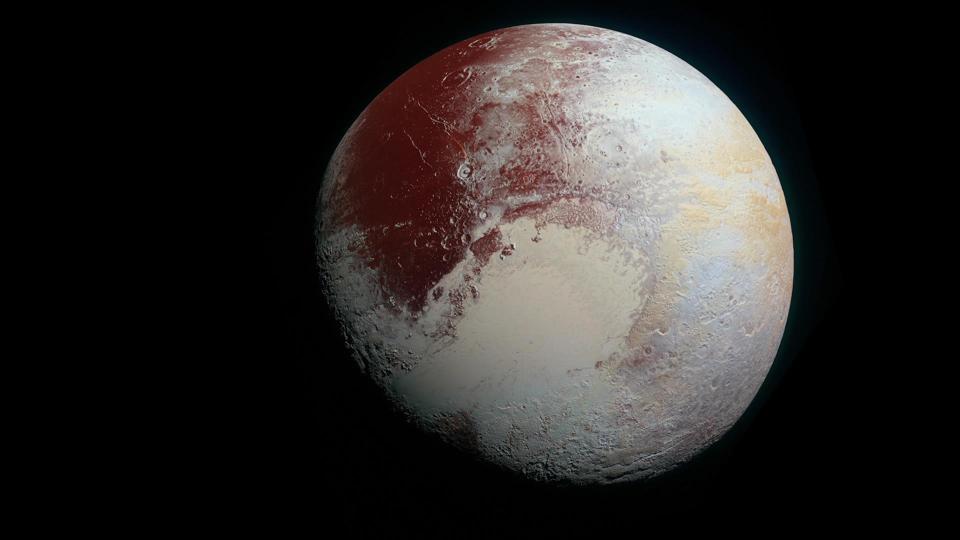
Dwarf Planet Pluto
Photo Credit: forbes.com
Pluto is an icy dwarf planet in the Kuiper belt, a ring of bodies beyond the orbit of Neptune. It was the first Kuiper belt object to be discovered and is the largest known dwarf planet. Pluto was discovered by Clyde Tombaugh in 1930 as the ninth planet from the Sun. After 1992, its status as a planet was questioned following the discovery of several objects of similar size in the Kuiper belt. In 2005, Eris, a dwarf planet in the scattered disc which is 27% more massive than Pluto, was discovered. This led the International Astronomical Union (IAU) to define the term “planet”, formally, in 2006, during their 26th General Assembly. That definition excluded Pluto and reclassified it as a dwarf planet.
It is the ninth-largest and tenth-most-massive known object directly orbiting the Sun. It is the largest known trans-Neptunian object by volume but, is less massive than Eris. Like other Kuiper belt objects, Pluto is primarily made of ice and rock and, is relatively small…about one-sixth the mass of the Moon and one-third its volume. It has a moderately eccentric and inclined orbit […]. This means that Pluto periodically comes closer to the Sun than Neptune but, a stable orbital resonance with Neptune prevents them from colliding.
[Observations] of Neptune in the late 19th century led astronomers to speculate that Uranus’s orbit was being disturbed by another planet besides Neptune. In 1906, Percival Lowell, a wealthy Bostonian who had founded [the] Lowell Observatory in Flagstaff, Arizona, in 1894, started an extensive project in search of a possible ninth planet, which he termed “Planet X“. Lowell and his observatory conducted his search until his death in 1916 but, to no avail. Unknown to Lowell, his surveys had captured two faint images of Pluto on March 19 and April 7, 1915 but, they were not recognized for what they were.
Percival’s widow, Constance Lowell, entered into a ten-year legal battle with the Lowell Observatory over her husband’s legacy and the search for Planet X did not resume until 1929. [23-year-old] Clyde Tombaugh, who had just arrived at the observatory, discovered a possible moving object on photographic plates on February 18, 1930. After the observatory obtained further confirmatory photographs, news of the discovery was telegraphed to the Harvard College Observatoryninety years ago, today, on March 13, 1930. Pluto has yet to complete a full orbit of the Sun since its discovery, as one Plutonian year is 247.68 years long.
The discovery made headlines around the globe. Lowell Observatory, which had the right to name the new object, received more than 1,000 suggestions from all over the world, ranging from Atlas to Zymal. Constance Lowell proposed Zeus, then Percival and finally Constance. These suggestions were disregarded. The name Pluto, after the god of the underworld, was proposed by Venetia Burney (1918–2009), an eleven-year-old schoolgirl in Oxford, England, who was interested in classical mythology.
USS Princeton 1843-1849
Image Credits: Lithograph by N. Currier, New York, 1844
U.S. Naval History & Heritage Command history.navy.mil
wikipedia.org & wikimedia.org
President Tyler hosted a public reception for Stockton in the White House on February 27, 1844. On February 28, [the] USS Princeton departed Alexandria, Virginia, on a demonstration cruise down the Potomac with Tyler, members of his cabinet, former First Lady Dolley Madison, Senator Thomas Hart Benton of Missouri and about 400 guests. Captain Stockton decided to fire the larger of her two long guns, Peacemaker, to impress his guests. Peacemaker was fired three times on the trip downriver and was loaded to fire a salute to George Washington as the ship passed Mount Vernon on the return trip. The guests aboard viewed the first set of firings, [then] retired below decks for lunch and refreshments.
Awful Explosion of the Peacemaker on board the
U.S. steam frigate Princeton on Wednesday, 28 Feb. 1844
Image Credits: Lithograph by N. Currier/Currier & Ives
Gale Research
Library of Congress
wikipedia.org & wikimedia.org
Secretary [of the Navy] [Thomas Walker] Gilmer urged those aboard to view a final shot with the Peacemaker. When Captain Stockton pulled the firing lanyard, the gun burst. Its left side had failed, spraying hot metal across the deck and shrapnel into the crowd. Instantly killed were Gilmer, Secretary of State [Abel P.] Upshur, Captain Beverley Kennon, who was Chief of the Bureau of Construction [Equipment] and Repairs, Virgil Maxcy (a Maryland attorney with decades of experience as a state and federal officeholder), David Gardiner (a New York lawyer and politician) and the President’s valet, a black slave named Armistead. Another 16 to 20 people were injured, including several members of the ship’s crew, Senator Benton and Captain Stockton. The president was below decks and not injured.
The disaster on board the Princeton killed more top U.S. government officials in a single day than any other tragedy in American history.
Artist: Joseph-Nicolas Robert Fleury Original Image: library.thinkquest.org Image Credit: wikipedia.org & wikimedia.org
They really wanted Galileo to shut up. Four hundred, four years, today, the Catholic Church was nearly successful with an injunction. Referred to as the Galileo Affair, it started in 1610 and ended in 1633 with the Roman Inquistion.
In 1610, Galileo published his Sidereus Nuncius (Starry Messenger), describing the surprising observations that he had made with [a] new telescope, among them, the Galilean Moons of Jupiter. With these observations, and additional observations that followed, such as the phases of Venus, he promoted the heliocentric theory of Nicolaus Copernicus published in De revolutionibus orbium coelestium in 1543. Galileo’s discoveries were met with opposition within the Catholic Church and, in 1616, the Inquisition declared heliocentrism to be “formally heretical.” Heliocentric books were banned and Galileo was ordered to abstain from holding, teaching or defending heliocentric ideas.
On February 19, 1616, the Inquisition asked a commission of theologians, known as qualifiers, about the propositions of the heliocentric view of the universe. [It was] confirmed that Galileo had advocated the Copernican doctrines of a stationary Sun, and a mobile Earth, and as a consequence, the Tribunal of the Inquisition would have eventually needed to determine the theological status of those doctrines.
On February 24, the Qualifiers delivered their unanimous report:
“[The] proposition that the Sun is stationary at the centre of the universe is foolish and absurd in philosophy and, formally, heretical since it explicitly contradicts, in many places, the sense of Holy Scripture. [The] proposition that the Earth moves and is not at the centre of the universe receives the same judgement in philosophy and … in regard to theological truth, it is at least erroneous in faith.”
At a meeting of the cardinals of the Inquisition on the following day, Pope Paul V instructed [Cardinal] Bellarmine to deliver this result to Galileo and to order him to abandon the Copernican opinions. [Should] Galileo resist the decree, stronger action would be taken. On February 26, Galileo was called to Bellarmine’s residence and ordered:
“[To] abstain completely from teaching or defending this doctrine and opinion or, from discussing it… to abandon completely… the opinion that the [Sun] stands still at the center of the world and the [Earth] moves and, henceforth, not to hold, teach or defend it in any way whatever, either orally or in writing.”
Galileo accepted the order. He didn’t have much choice as his reputation was at stake. Shortly afterwards, all books regarding the Copernican system were banned and Galileo’s works regarding Copernicanism were banned as well. His sentence prevented him from teaching or speaking of the matter further. He remained silent only for so long.
Also known as the Second Treaty of Indian Springs or Treaty with the Creeks, one-hundred, ninety-five years ago, today, it was signed by the Muscogee and the U.S. government at the Indian Springs Hotel (now a museum).
The U.S. and the Muscogee had, previously, signed the Treaty of Indian Springs of 1821. On January 8, the Muscogee agreed to cede their land holdings east of the Flint River to the state of Georgia in exchange for $200,000, paid in installments.
[…] Duncan Campbell and James Meriwether, U.S. Commissioners, [wrote] to Georgia Governor George M. Troup regarding obstacles the commissioners [faced] in treating with the Creeks. They [related] that proceedings [were] being conducted orally since the written method [had] failed. Also, the publication of negotiations held at Tucabatchee (Tuckabatchee or Tuckabatchie) and Pole Cat Springs [had] spread alarm throughout the nation as [had] the persistent “interference” of the Cherokees. Campbell and Meriwether negotiated the Treaty of Indian Springs [of] 1825 that was unauthorized by a majority of Creeks and, later, abrogated by the United States.
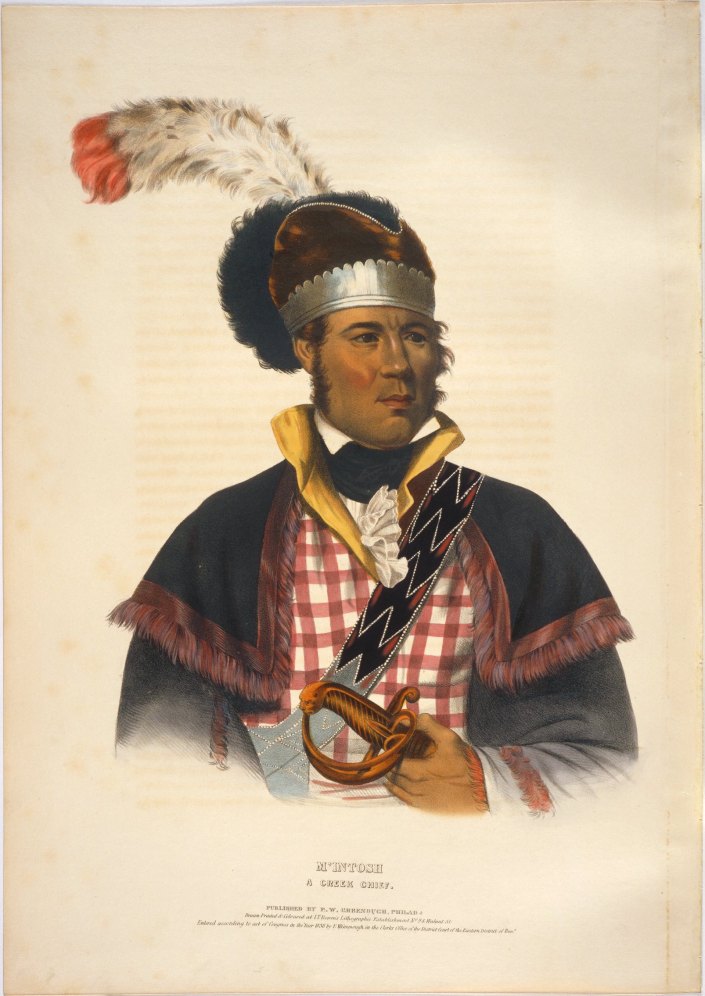
Image Credit: Georgia Encyclopedia William McIntosh
Tustunnuggee Hutke (White Warrior)
The treaty that was agreed [to] was negotiated with six chiefs of the Lower Creek, led by William McIntosh. McIntosh agreed to cede all Muscogee lands east of the Chattahoochee River, including the sacred Ocmulgee National Monument (Historic Park), to Georgia and Alabama and, accepted relocation west of the Mississippi River to an equivalent parcel of land along the Arkansas River. In compensation for the move to unimproved land, and to aid in obtaining supplies, the Muscogee nation would receive $200,000 (again), paid in decreasing installments over a period of years. An additional $200,000 was paid directly to McIntosh.
Outcome:
Governor Troup, and most Georgians, were in favor of the treaty and his inside man was his first cousin…William McIntosh. McIntosh paid the highest price. According to a Creek law, that McIntosh, himself, had supported, a sentence of execution awaited any Creek leader who ceded land to the United States without the full assent of the entire Creek Nation. Just before dawn on April 30, 1825, Upper Creek chief Menawa, accompanied by 200 Creek warriors (The Law Menders), attacked McIntosh at Lockchau Talofau (Acorn Bluff/McIntosh Reserve) to carry out the sentence. They set fire to his home, shot and stabbed him to death and, [killed] the elderly Coweta chief Etomme Tustunnuggee. Chillie McIntosh, the chief’s oldest son, had also been sentenced to die but, he escaped by diving through a window. Later that day, the Law Menders found [Samuel and Benjamin Hawkins, Jr.] (McIntosh’s sons-in-law), who were also signatories. They hanged Samuel and shot Benjamin but, he escaped.
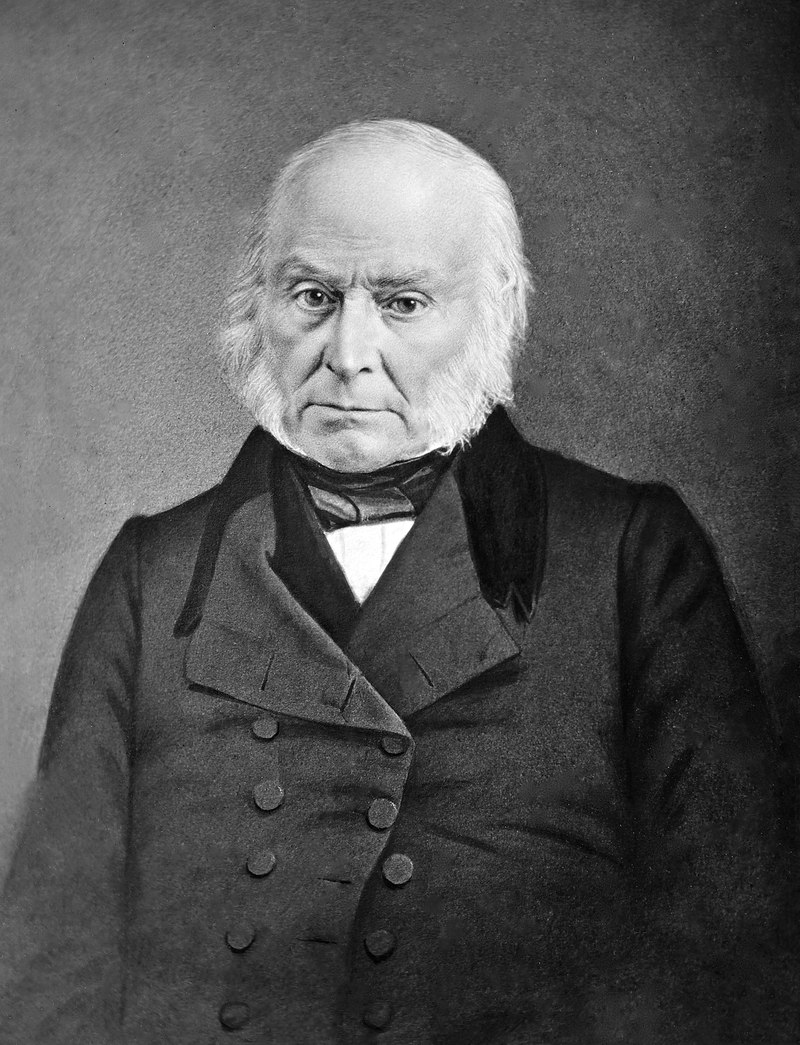
A large majority of chiefs and warriors objected that McIntosh did not have sufficient authority to sign treaties or cede territory. [The] Creek Nation sent a delegation, led by Opothleyahola and [included] Menawa, to lodge an official complaint. Federal investigators (appointed by President John Quincy Adams) agreed and the U.S. government negotiated a new land cession in the 1826 Treaty of Washington. The Creeks did not, however, have their territory restored in the new treaty.
Though the Creek did retain a small tract of land on the Georgia-Alabama border and the Ocmulgee National Monument, Governor Troup refused to recognize the new treaty. [He] authorized all Georgian citizens to evict the Muscogee and ordered the land surveyed for a lottery, including the piece that was to remain in Creek hands. He threatened an attack on Federal troops if they interfered with the [previous] treaty and challenged [the President]. The president intervened with Federal troops but, Troup called out the state militia, and Adams, fearful of a civil war, conceded.
Two months ago, on December 7, 2019, I visited Alamance Battleground with my buddy Ray. I posted the first batch of pictures on December 8, intending to post the rest on December 14. For obvious reasons, that didn’t happen so, here are the rest.
The Colonial Column Monument
Originally located at Guilford Courthouse Military Park
Moved in 1962, “on indefinite loan.”Colonial Column MarkerFront Plaque
It is claimed that the battle was the first of the Revolutionary War.
It was actually the last battle of the War of Regulation,
which lead to the Revolutionary War.Right Side James Hunter
General of the RegulatorsBack Side
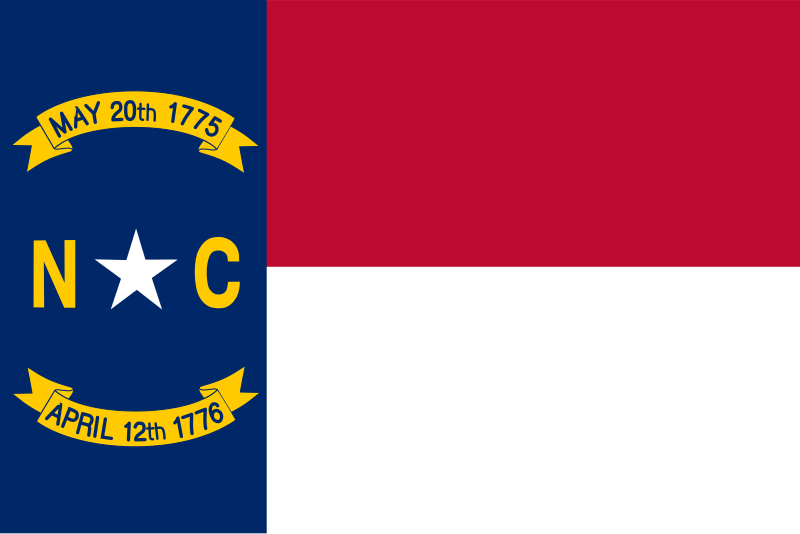
North Carolina Timeline 1774 North Carolina Provincial Congress The Mecklenburg Declaration 1775 Battle of Moore’s Creek Bridge 1776 North Carolina is the first to call for independence
with the Halifax Resolves 1776Twelve Regulators Condemned At Hillsboro
Six were executed.
“Our blood will be as good seed in good ground,
that will soon produce one hundred fold.” James Pugh June 19, 1771Bridge over the creek.View across the highway.Image Credit: wikipedia.org & wikimedia.org
Dates reflect the Mecklenburg Declaration of Independence (disputed but,
possibly Mecklenburg Resolves) and
the Halifax Resolves.
The B-47 bomber was on a simulated combat mission from Homestead Air Force Base in Florida. It was carrying a single 7,600-pound bomb. At about 2:00am EST, an F-86 fighter collided with the B-47. The F-86 crashed after the pilot ejected from the plane. The damaged B-47 remained airborne, plummeting 18,000 feet from 38,000 feet when [the pilot] regained flight control. The crew requested permission to [drop] the bomb in order to reduce weight and prevent the bomb from exploding during an emergency landing. Permission was granted and the bomb was jettisoned at 7,200 feet […]. The crew did not see an explosion when the bomb struck the sea. They managed to land the B-47 safely at […] Hunter Air Force Base. The pilot, a Colonel Howard Richardson, was awarded the Distinguished Flying Cross after this incident.
Some sources describe the bomb as a functional nuclear weapon but, others describe it as disabled. If it had a plutonium nuclear core installed, it was a fully functional weapon. If it had a dummy core installed, it was incapable of producing a nuclear explosion but, could still produce a conventional explosion. […] The Air Force maintains that its nuclear capsule, used to initiate the nuclear reaction, was removed before its flight aboard B-47. […] the bomb contained a simulated 150-pound cap made of lead. However, according to 1966 Congressional testimony by Assistant Secretary of Defense W.J. Howard, the Tybee Island bomb was a “complete weapon, a bomb with a nuclear capsule” and one of two weapons lost that contained a plutonium trigger. Nevertheless, a study of the Strategic Air Command documents indicates that Alert Force test flights in February 1958 with the older Mark 15 payloads were not authorized to fly with nuclear capsules on board.
The collision, and its aftermath, also drives the plot of the novel Three Chords & The Truth by Craig McDonald, published in November 2016.
I’ve been digging around, looking for something interesting. Back in September 2019, I posted about Billboard locking down/wiping out their online charts behind a paywall. I don’t know if this is a fluke or if they got a lot of blow-back for what they did but, the charts have reappeared (their Hot 100 era). Ok. Good. Time will tell if they stay. And, I hope they did get some blow-back. Assholes.
Now that I got that off my chest, on to other stuff.
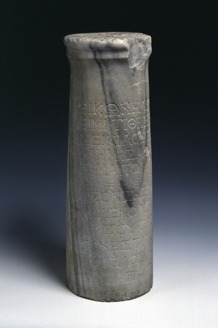
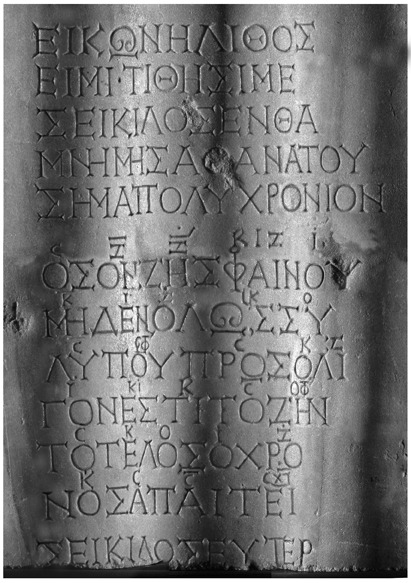
Wikipedia has a timeline of musical events (Yeah. I know. Wikipedia is hardly a bastion of truth but, seems to be a bit less haphazard with music, plants, animals, cars and finding a U.S. town.) I stumbled across the Seikilos Epitaph, a short, little marble tombstone with poetry/lyrics/text, with musical notation, written in Greek. It is unusual and unique because it is the oldest, intact musical composition in the world. It was found in Tralles, Turkey, an ancient, Hellenistic town where Aydin exists, now. The lyrics:
Εἰκὼν ἤ λίθος εἰμί. τίθησί με Σεικίλος ἔνθα μνήμης ἀθανάτου σῆμα πολυχρόνιον.
eikṑn ḗ líthos eimí. títhēsí me Seikílos éntha mnḗmēs athanátou sêma polukhrónion.
“I am a tombstone, an image. Seikilos placed me here as a long-lasting sign of deathless remembrance.”
The dating of the tombstone has proven elusive. The range is from the first century B.C to the first or second century A.D. based upon paleography.
Take a listen:
Here is another version, based upon the inscription being dedicated to a wife: Song of Seikilos (Classic FM website)
Back in May, I did a post on the Battle of Alamance so, I won’t revisit the historical details. Yesterday, I visited the actual battleground with my buddy, Ray. They were having German Heritage Day with authentic German food for visitors. I was so glad we had a beautiful day. It was chilly but, there was a really good turnout. I hadn’t been to this site in nearly 45 years.
Battle map behind the Visitor Center Museum, facing the battleground.3-D Map of NC Militia troops and the Regulators.The rock in the 3-D battle map and
the small creek/tributary of Beaver Creek/Big Alamance Creek/Lake Mackintosh.Field cannon.Facing Inscription:
“HERE WAS FOUGHT THE BATTLE OF ALAMANCE
MAY 18, 1771
BETWEEN THE BRITISH AND
THE REGULATORSLeft Inscription:
Crossed Cannons & LIBERTY
Right Inscription:
FIRST BATTLE OF THE REVOLUTIONBattleground Sun
















 Cosmic-Observation