I picked this up from another blog. I loved The Conjuring franchise movies. Were Ed & Lorraine Warren for real? Are the hauntings real? The guy who posted this video stated that he knew someone that was friends with a family that lived in the Amityville house in the 1990s. They reported nothing weird. He also stated that he had another friend that knew Ronald Defeo, Jr. and that person stated that Defeo was totally messed up. Apologies, up front, for all the adverts…and that stupid fish. Submitted for your approval… ~Vic
Hanspostcard has a movie draft challenge. This is my Round Eleven pick.
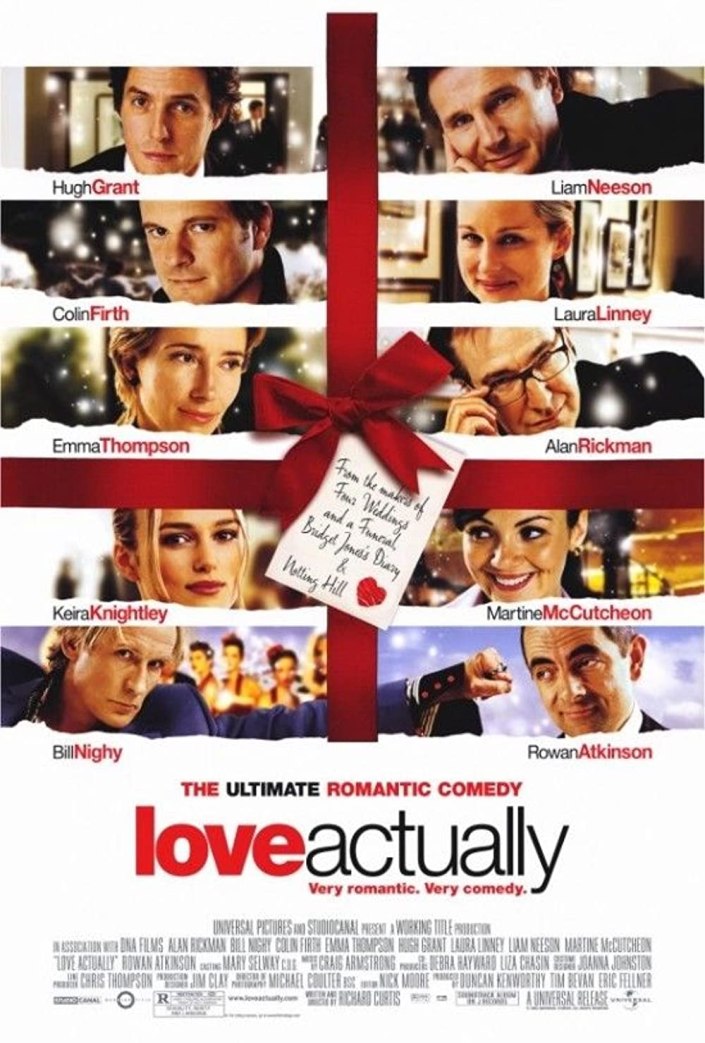
Category: Romance/Holiday/Animation Film: Love Actually
All I have to say is, this is a great movie. It will make you laugh. It will make you cry. ~Vic
Written and directed by Richard Curtis (with six producers in tow), this is a Christmas romance romp with an all-star ensemble cast, mostly comprised of Brits. There are ten separate stories, that become interwoven in places…with one exception. This was Curtis’s Directorial Debut.
The movie opens with Prime Minister David talking about the state of the world.
[1] Rock and Roll legend Billy Mack records a Christmas version of the song Love Is All Around (by The Troggs). He thinks it’s crap but, he promotes it, anyway. He spends Christmas with his manager Joe and, you can see him on various TV sets throughout the movie. [2] Best man Mark (a very young Andrew Lincoln sans Colt Python) is in love with Peter’s soon-to-be wife, Juliet, though they both believe that Mark dislikes her. He declares his love with cue cards on Christmas Eve. [3]Jamie discovers his girlfriend is having an affair with his brother. He meets Aurélia but, she doesn’t speak any English. He learns Portuguese to communicate his love for her. [4]Harry & Karen are happily married and raising their children. Mia is Harry’s new secretary. He is drawn to her and nearly destroys his marriage over her. [5] Karen’s brother is David, the Prime Minister. He finds himself attracted to staffer Natalie and having to deal with the U.S. President.
Image Credit: Wikipedia & Wikimedia
[6]Daniel, Karen’s friend, is still mourning the loss of his wife, Joanna. His step-son Sam is interested in an American classmate, also named Joanna. Sam shows his affection for Joanna at the airport (before she returns to the US). Daniel crosses paths with Carol and is interested. [7]Sarah works for Harry and is in love with Karl. Karl is interested but, Sarah’s mentally ill brother Michael is an issue. [8]Colin tells his friend Tony that he is traveling to America to try to woo some women there. He meets Stacey, Jeannie and Carol-Anne in Milwaukee and they invite him to stay with them. Roommate Harriet shows up, later. [9]John (a young Martin Freeman…Arthur Dent/Bilbo Baggins) and Judy meet as nude stand-ins for a film that Tony is a production assistant for. Comfortable with each other simulating sex, they are shy with clothes on, later. [10]Rufus is a jewelry salesman, wrapping Harry’s gift for Mia and, he assists Sam at the airport in getting to Joanna before her flight. He was, originally, to be a Christmas angel but, a script re-write removed that part of the story.
The video for Billy Mack’s [Christmas single] is a reference to
a series of […] videos by Robert Palmer.
Image Credit: IMDb
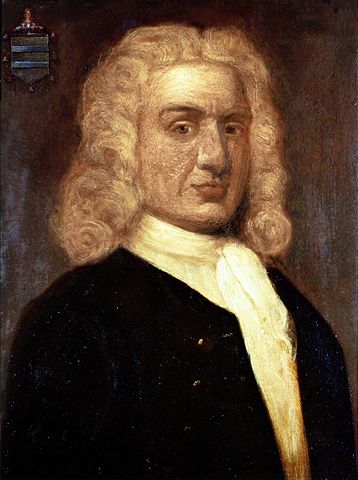
[P]roceedings against [Kidd] had been long and notorious. The actions for which he was tried had been still more notorious, one involving murder and five [involving] piracy. His career had been brief, brilliant in the beginning [but], catastrophic at the end. The general excitement at the time of his execution and, all during his imprisonment in London, had been at [a] fever pitch. Gossip went to work and, the wildest of tales of Kidd’s wickedness and wealth were believed. […] Upon his death, numerous accounts, both factual and fictitious, appeared.
William Hallam Bonner
University of Buffalo
American Literature, Vol. 15, No. 4, Jan. 1944 Journal Storage
Of all the things written and expressed, the ballad Captain Kid’s Farewel to the Seas (or the Famous Pirate’s Lament) was the only thing to survive. It was quite popular in the Colonies where the Captain had a home and may be considered America’s first folk legend. There is a British version and an American version, which changed the Captain’s first name to Robert for some strange reason and, several contemporary covers. The last website, below, has his name as John. He had to be hanged, twice, as the rope broke the first time. ~Vic
Captain Yelland: […to his Native American Weather Officer…] “Ahhh, Black Cloud, you’ve been doing unauthorized rain dances again.”
Lasky: […as a Japanese pilot is holding Laurel at gunpoint…] “Why don’t you tell him what’s going on here, Commander? You’re an expert on what’s gonna happen tomorrow…” Captain Yelland: “Go ahead, tell him.” Commander Richard Owens: “26 November, six carriers left the Kuril Isles north of Japan. The carriers were the Akagi, Kaga, Shokaku, Zuikaku, Hiryu, Soryu. Tomorrow at dawn, these carriers will send 353 planes to attack Pearl Harbor.” Senator Chapman: “How in the hell do you know all that?”
F-14 Pilot #1: “Mission aborted? But, we can see ’em!” F-14 Pilot #2: “They’re gonna let the Japs do it, again.”
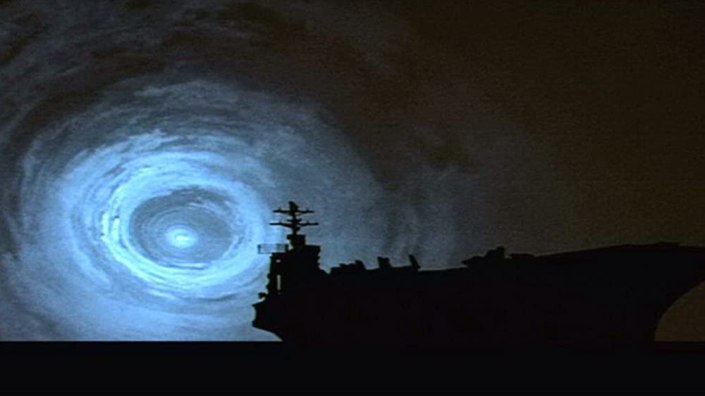
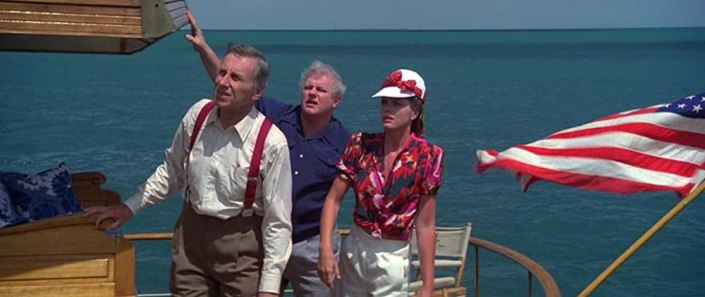
It’s 1980 and Warren Lasky (Sheen) is a Systems Analyst from Tideman Industries, working with the Department of Defense as an efficiency expert. He is dispatched by his secretive employer to board the USS Nimitz before its departure from Naval Station Pearl Harbor for naval exercises in the Pacific. Tideman Industries designed and built the carrier. Not long at sea, a strange storm appears out of nowhere and the Nimitz can neither outrun nor maneuver away from it. Passing thru the storm, electronics and people, alike, are knocked out. Once the storm is gone and everything returns to normal, Captain Yelland (Douglas), his crew and his civilian passenger discover that they have been thrown backwards in time to 1941, just hours before the attack on Pearl Harbor. What now?
It’s original premiere was in London on May 21, 1980, Japan on July 5 and the US on August 1. I didn’t get to see it at the theater but, caught it on HBO a year later. IMDb lists this as Action & Sci-Fi, which it is but, I think it fits in the Adventure/Thriller categories, too. As a contributor on IMDb, I’ve made a suggested update of the genre. Having been on board the USS Enterprise on December 7, 2001, I have a much greater appreciation for the making of this movie. It received mixed reviews and didn’t make a lot of money. Two months later, another time travel film was released…Somewhere In Time and The Philadelphia Experiment, four years later, is the reverse of this movie in time frames. ~Vic
In 1879, London was the center of the photographic and business world. George Eastman went there to obtain a patent on his plate-coating machine. An American patent was granted the following year. In April 1880, Eastman leased the third floor of a building on State Street in Rochester and began to manufacture dry plates for sale. Success of the dry plate venture so impressed businessman Henry A. Strong, that he invested some money in the infant concern. On January 1, 1881, Eastman and Strong formed a partnership called The Eastman Dry Plate Company. While actively managing all phases of the firm’s activities, [Eastman] continued research in an effort to simplify photography.
In 1883, Eastman startled the trade with the announcement of film in rolls, with the roll holder adaptable to nearly every plate camera on the market. [By] 1884, the Eastman-Strong partnership had given way to a new firm…the Eastman Dry Plate and Film Company with 14 shareowners.
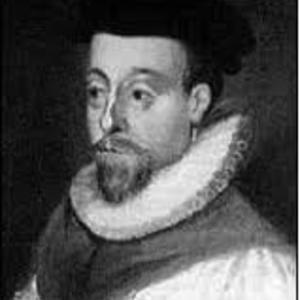
Thomas Morley was an English composer, theorist, singer and organist of the Renaissance. He was one of the foremost members of the English Madrigal School. Living in London at the same time as Shakespeare, Morley was the most famous composer of secular music in Elizabethan England. [He] was active in church music as a singer, composer and organist at St Paul’s Cathedral [and] was involved in music publishing. [He] lived for a time in the same parish as Shakespeare and, a connection between the two has been long speculated but, never proven. In addition to his madrigals, [he] wrote instrumental music, including keyboard music […].
Now Is The Month of Maying is one of the most famous of the English ballets […]. It is based on the canzonetSo Ben Mi Chi Ha Bon Tempo used by Orazio Vecchi […]. It was printed in […] Morley’s First Book of Ballets to Five Voyces [in] 1595. The song delights in bawdy double-entendre. It is, apparently, about spring dancing but, this is a metaphor for making love/sex. For example, a barley-break would have suggested outdoor sexual activity (rather like […] a roll in the hay). The use of such imagery and puns increased during the Renaissance.
Lyrics:
Now is the month of maying,
When merry lads are playing,
Fa la la la la la la la la,
Fa la la, etc…
Each with his bonny lass
Upon the greeny grass.
Fa la la, etc…
The Spring, clad all in gladness,
Doth laugh at Winter’s sadness,
Fa la la, etc…
And to the bagpipe’s sound
The nymphs tread out their ground.
Fa la la, etc…
Fie then! Why sit we musing,
Youth’s sweet delight refusing?
Fa la la, etc…
Say, dainty nymphs, and speak,
Shall we play barley break?
Fa la la, etc…
Image Credit: Doubleday Philip K. Dick 1974
First Edition Hardcover
wikipedia.org & wikimedia.org
Lyrics:
Flow, my tears, fall from your springs!
Exiled for ever, let me mourn;
Where night’s black bird her sad infamy sings,
There let me live forlorn.
Down vain lights, shine you no more!
No nights are dark enough for those
That in despair their last fortunes deplore.
Light doth but shame disclose.
Never may my woes be relieved,
Since pity is fled;
And tears and sighs and groans my weary days, my weary days
Of all joys have deprived.
From the highest spire of contentment
My fortune is thrown;
And fear and grief and pain for my deserts, for my deserts
Are my hopes, since hope is gone.
Hark! you shadows that in darkness dwell,
Learn to contemn light
Happy, happy they that in hell
Feel not the world’s despite.
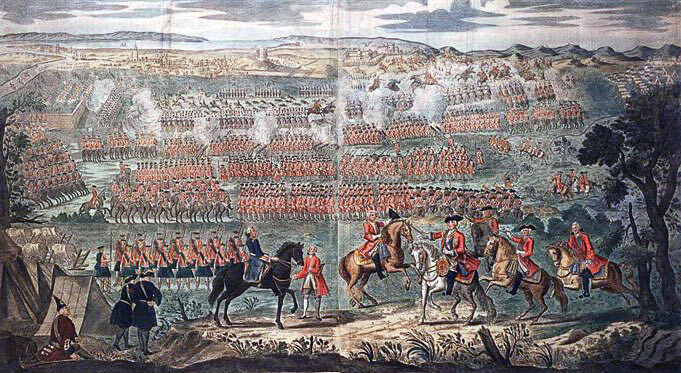
The battle was a total and bloody defeat for the Jacobites which effectively marked the end of almost sixty years of the Jacobite struggle, as never again would an armed uprising be used in the attempt to return the Stuarts to the throne. The government victory also paved the way for a sustained programme to destroy the power base of the rebel clans.
Culloden (pronounced culawden, with the emphasis on ‘oden‘) is one of the most important battles in the history of the British Isles and has international significance. It is the final battle fought on the British mainland and brings to an end more than half a century […] of Jacobite conflict, itself played out against a background of wider international wars. Its aftermath transforms the Highlands, bringing to an end the traditional way of life of the area and contributing to the subsequent clearances. The battle also holds a prominent place within the Scottish cultural legacy, frequently depicted, and commemorated, in art, music, literature and film. The battlefield, itself, is one of the most visited tourist sites in the Highlands […]. [T]he site holds a particularly high significance, and emotional connection, to many within Scotland and to the ancestors of the Scottish Diaspora.
The official return for British Army casualties (government troops) was 50 officers, and men, killed and 259 wounded [with] one missing (a proportion of the wounded later died of their wounds). Jacobite fatalities have been estimated at between 1,200-1,500 with between 400 and 500 prisoners taken in the immediate aftermath and many more in the days which followed. Only the Irish and Scottish troops in French service were treated as bona fide prisoners of war, the rest as rebels.
Image Credit: britishbattles.com
The battle, which lasted only 40 minutes, resulted in bitter defeat for the heavily outnumbered Jacobites. Led by the Duke of Cumberland, son of King George II, [the] devastating slaughter of the Jacobites was the result of the opening British cannonade and, subsequent tactics of the Redcoats during the attack […] when each British soldier, instead of attacking the Highlander directly in front of him, bayoneted the exposed side of the man to his right. The Highlanders finally broke and fled […].
Hunted by troops and spies, Prince Charles wandered over Scotland for five months before escaping to France and final exile. The [battle] […] marked the end of any serious attempt by the Jacobites to restore the Stuart dynasty to the British throne.
A generation before, a previous Jacobite rebellion had been thwarted by the king’s officer, George Wade, who had “pacified” and “disarmed” the highland clans. So concerned was the English establishment, and relieved by Wade’s actions, that an additional verse to the National Anthem was penned: God grant the Marshal Wade
May be thy Mighty aid,
Victory bring;
May he sedition hush,
And like a torrent rush,
Rebellious Scots to crush,
God save the king
Addendum: “Culloden is viewed by the Scottish people as a war grave. To my fellow Americans, stepping onto the Culloden battlefield would be like visiting Gettysburg or Normandy. And, since Scotland views it as a grave, you could also liken it to Arlington Cemetery. You don’t simply walk onto any of these places with a light spirit.” ~Brit At Heart
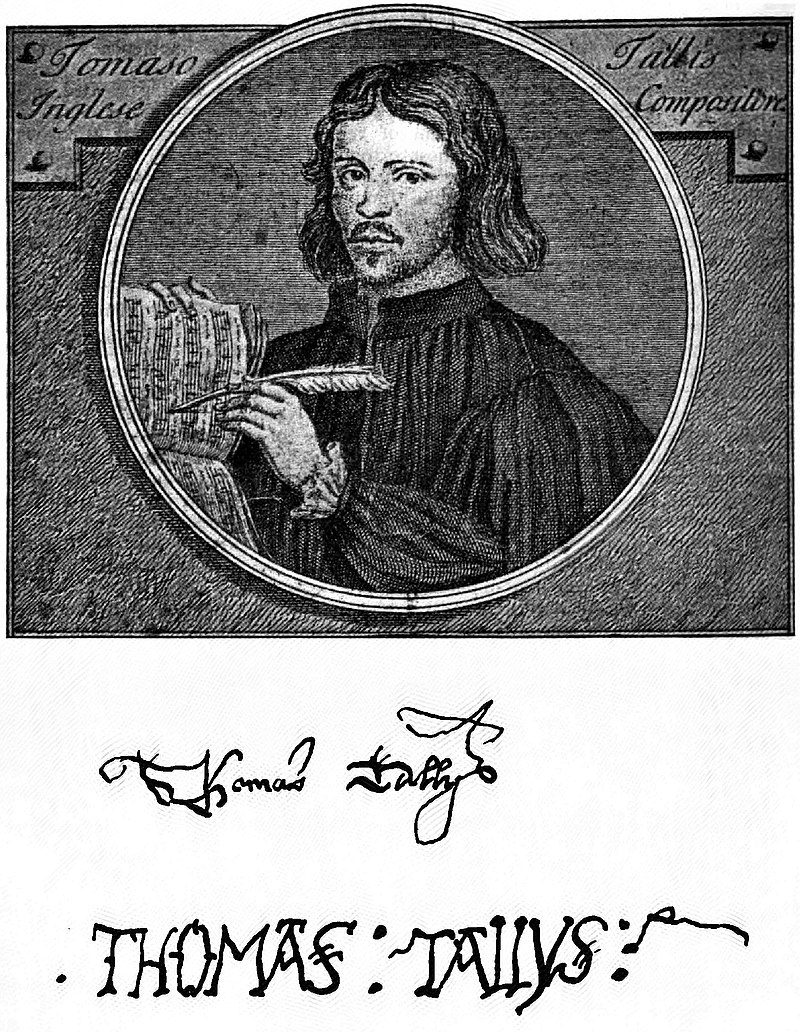
Spem in Alium is Latin for “hope in any other” or “hope in another”. A 40-part Renaissance Motet, it was composed in 1570 (thereabouts) by Thomas Tallis (Tallys). Written for eight choirs of five voices each, meaning there are 40 separate voices singing individual lines of music, it is considered to be Tallis’s greatest achievement and, possibly, one of the finest compositions of all time.
Information on where it was first performed is scarce. There appears to be some confusion regarding where it took place, as two locations…Nonsuch Palace, a royal Tudor palace in Surrey built by Henry VIII (not to be confused with Nonsuch Mansion) and Arundel House, a London townhouse originally for the Bishops of Bath & Wells…were both owned by Henry Fitzalan, the 12th/19th Earl of Arundel at one time. Most of what I have read leans towards Arundel House but, truly, I don’t think anyone really knows. It’s all a big guess. And, it is pure speculation as to why he wrote it. Some suggestions include a challenge due to an Italian composer doing same, Elizabeth’s 40th birthday or, perhaps for Mary as he was Catholic. Again, no one really knows.
The music, below, is soul stirring. ~Vic
Artist: Wenceslaus Hollar Arundel House
Image Credit: wikipedia.org & wikimedia.org
Spem in alium nunquam habui
Praeter in te, Deus Israel
Qui irasceris et propitius eris
et omnia peccata hominum
in tribulatione dimittis
Domine Deus
Creator caeli et terrae
respice humilitatem nostram
Artist: Georg Hoefnagel 1568
Watercolour of the south frontage of Nonsuch Palace
Image Credit: wikipedia.org & wikimedia.org
English Translation:
I have never put my hope in any other
but in Thee, God of Israel
who canst show both wrath and graciousness,
and who absolves all the sins
of man in suffering
Lord God,
Creator of Heaven and Earth
Regard our humility
It is 1937 and newly qualified vet James Herriot travels to Yorkshire to apply for the post of assistant in Siegfried Farnon’s practice. He soon learns the facts of country life but, struggles to overcome the prejudices of the Darrowby locals who are skeptical of the novice vet’s ability. In between cases, Herriot courts pretty farmer’s daughter Helen Alderson and finally marries her.
A gentle, episodic account of author Herriot’s apprenticeship in the mid-1930s to an eccentric rural English veterinarian and his awkward courtship of a farmer’s daughter.
The story of a young veterinarian’s apprenticeship to a somewhat eccentric, older vet in the English countryside and the young man’s hesitating courtship of the daughter of a local farmer.
Trivia Bits:
♦ Although born in Sunderland, England, James Herriot spent the first twenty-three years of his life in Glasgow, Scotland and never lost the accent, as can be heard in television interviews. Simon Ward however, plays him as a Londoner.
♦ Known to the cast and crew as “All Creatures Grunt and Smell”.
[…] shot by inventor and film pioneer William Friese-Greene on celluloid film using his ‘machine’ camera, the 20 feet of film […] was shot […] at Apsley Gate, Hyde Park, London. [It] was claimed to be the first motion picture [but] Louis Le Prince successfully shot on glass plate before 18 August 1887 and on paper negative in October 1888. It may, nonetheless, be the first moving picture film on celluloid and the first shot in London.
It is now considered a lost film with no known surviving prints and only one possible still image extant.
Image Credit: wikipedia.org
An article in This Is Bristol UK from December 17, 2009, (via The Wayback Machine) has an interview with David Friese-Greene, the great-grandson. From the article:
My great-grandfather was an idealist and a brilliant inventor, with 71 patents to his name but, he was a dreadful businessman. He died without ever having made a penny out of his inventions. He married his first wife Helena Friese when he was just 19 and incorporated her surname with his, because he felt it sounded more impressive. Tragically, Helena died at the age of 21 […].
It was during the late 1880s, shortly after Helena’s death, that Friese-Greene first began to experiment with the idea of creating moving pictures. […] in 1890, he patented [a] new device, which he dubbed the chronophotographic camera. Unfortunately, he was so pleased with his creation that, he wrote to the great American inventor, Thomas Edison, telling him what he had come up with and, even, included plans and designs […]. William never heard back from the inventor of the electric light bulb, though, the following year, Edison patented his own version of a movie camera and went down in many history books as the inventor of cinema.
In fact, William died a pauper but, [was] still passionate about his most famous creation. He was at a cinema industry meeting in London, which had been called to discuss the poor state of the British film industry in 1921. He had got to his feet to speak about his vision of how film could be used to create educational documentaries when he fell down dead. It is said he had just 21 pence in his pockets when he died.
[…] it was the first Beatles record to be made using four-track equipment. It was also the group’s first American number one, entering the Billboard Hot 100 chart on 18 January 1964 at number forty-five and starting the British Invasion of the American music industry.
“A telegram came through to Brian from Capitol Records of America. He came running in to the room saying, ‘Hey, look. You are number one in America!’ I Want To Hold Your Hand had gone to number one. Well, I can’t describe our response. We all tried to climb onto Big Mal’s back to go round the hotel suite: ‘Wey-hey!’ And that was it, we didn’t come down for a week.”
“It was such a buzz to find that it had gone to number one. We went out to dinner that evening with Brian and George Martin. George took us to a place which was a vault, with huge barrels of wine around. It was a restaurant and its theme was… well, the bread rolls were shaped like penises, the soup was served out of chamber pots and the chocolate ice cream was like a big turd. And, the waiter came ’round and tied garters on all the girls’ legs. I’ve seen some pictures of us. There is a photograph around of Brian with the pot on his head. It was a great feeling because we were booked to go to America directly after the Paris trip, so it was handy to have a number one. We’d already been hired by Ed Sullivan so, if it had been a number two or number ten we’d have gone anyway but, it was nice to have a number one. We did have three records out in America before this one. The others were on two different labels. It was only after all the publicity and the Beatlemania in Europe that Capitol Records decided, ‘Oh, we will have them.’ They put out I Want To Hold Your Hand as our first single but, in fact, it was our fourth.”
Will We All Become Beatle Nuts?
Here’s What the Reviewers Say…
“Anyone who is not a teenage girl obviously is unqualified to comment on the sight of The Beatles in action. Heaven knows we’ve heard them enough. It has been impossible to get a radio weather bulletin or time signal without running into “I Want To Hold Your Hand.” And now, having seen the four performers on Ed Sullivan’s show Sunday night, Beatlemania is even more of a mystery to an elderly viewer.”
~Cynthia Lowry (Associated Press)
“It is now clear why President de Gaulle has been giving England such a hard time about the Common Market. He undoubtedly saw The Beatles and decided nothing doing. As you certainly know, America saw the four-member rock’n’roll British group live on television last night. Pandemonium reigned. Vive La France.”
~Rick DuBrow (United Press International)
“”You can tell right away its The Beatles and not anyone else,” is the opinion of a 15-year-old specialist on the topic who saw them on the Ed Sullivan show. The age of 15 (or 16, or 14 or 13) is essential in Beatle experts. And, so, taking the above axiom as gospel, an attempt was made to find out just what is musically unique about the English group that is now visiting our shores.”
~Theodore Strongin (The New York Times)
“It seems The Beatles came, sang and conquered…all that is but, the TV reviewers. Most of the time, these reviewers have real troubles finding something to write about. Ask them… When Elvis Presley first appeared on the popular musical scene and made his TV début, did they praise him? No. In fact, most beat singers who come under the TV reviewer’s eagle eye rarely receive a word of praise. It seems obvious the reviewers came to bury the teenage favorites and not to praise them. Again, the teenage taste has been mocked. As long as this superior feeling is put across, the younger generation will continue to make their idols…and won’t give a darn who likes them.”
[…] it was the first Beatles record to be made using four-track equipment. It was also the group’s first American number one, entering the Billboard Hot 100 chart on 18 January 1964 at number forty-five and starting the British Invasion of the American music industry.
“A telegram came through to Brian from Capitol Records of America. He came running in to the room saying, ‘Hey, look. You are number one in America!’ I Want To Hold Your Hand had gone to number one. Well, I can’t describe our response. We all tried to climb onto Big Mal’s back to go round the hotel suite: ‘Wey-hey!’ And that was it, we didn’t come down for a week.”
“It was such a buzz to find that it had gone to number one. We went out to dinner that evening with Brian and George Martin. George took us to a place which was a vault, with huge barrels of wine around. It was a restaurant and its theme was… well, the bread rolls were shaped like penises, the soup was served out of chamber pots and the chocolate ice cream was like a big turd. And, the waiter came ’round and tied garters on all the girls’ legs. I’ve seen some pictures of us. There is a photograph around of Brian with the pot on his head. It was a great feeling because we were booked to go to America directly after the Paris trip, so it was handy to have a number one. We’d already been hired by Ed Sullivan so, if it had been a number two or number ten we’d have gone anyway but, it was nice to have a number one. We did have three records out in America before this one. The others were on two different labels. It was only after all the publicity and the Beatlemania in Europe that Capitol Records decided, ‘Oh, we will have them.’ They put out I Want To Hold Your Hand as our first single but, in fact, it was our fourth.
Will We All Become Beatle Nuts?
Here’s What the Reviewers Say…
“Anyone who is not a teenage girl obviously is unqualified to comment on the sight of The Beatles in action. Heaven knows we’ve heard them enough. It has been impossible to get a radio weather bulletin or time signal without running into “I Want To Hold Your Hand.” And now, having seen the four performers on Ed Sullivan’s show Sunday night, Beatlemania is even more of a mystery to an elderly viewer.”
~Cynthia Lowry (Associated Press)
“It is now clear why President de Gaulle has been giving England such a hard time about the Common Market. He undoubtedly saw The Beatles and decided nothing doing. As you certainly know, America saw the four-member rock’n’roll British group live on television last night. Pandemonium reigned. Vive La France.”
~Rick DuBrow (United Press International)
“”You can tell right away its The Beatles and not anyone else,” is the opinion of a 15-year-old specialist on the topic who saw them on the Ed Sullivan show. The age of 15 (or 16, or 14 or 13) is essential in Beatle experts. And, so, taking the above axiom as gospel, an attempt was made to find out just what is musically unique about the English group that is now visiting our shores.”
~Theodore Strongin (The New York Times)
“It seems The Beatles came, sang and conquered…all that is but, the TV reviewers. Most of the time, these reviewers have real troubles finding something to write about. Ask them… When Elvis Presley first appeared on the popular musical scene and made his TV début, did they praise him? No. In fact, most beat singers who come under the TV reviewer’s eagle eye rarely receive a word of praise. It seems obvious the reviewers came to bury the teenage favorites and not to praise them. Again, the teenage taste has been mocked. As long as this superior feeling is put across, the younger generation will continue to make their idols…and won’t give a darn who likes them.”
Lyrics: Oh yeah, I’ll tell you something,
I think you’ll understand,
Then I’ll say that something,
I wanna hold your hand,
I wanna hold your hand,
I wanna hold your hand.
Oh please say to me
You’ll let me be your man,
And please say to me,
You’ll let me hold your hand,
Now let me hold your hand,
I wanna hold your hand.
And when I touch you
I feel happy inside,
It’s such a feeling
That my love I can’t hide,
I can’t hide, I can’t hide.
Yeah, you got that something,
I think you’ll understand,
When I feel that something,
I wanna hold your hand,
I wanna hold your hand,
I wanna hold your hand.
And when I touch you
I feel happy inside,
It’s such a feeling
That my love I can’t hide,
I can’t hide, I can’t hide.
Yeah, you got that something,
I think you’ll understand,
When I feel that something,
I wanna hold your hand,
I wanna hold your hand,
I wanna hold your hand.
The court ruled in favor of the defense stating that musical arrangements were not copyrightable, as style could not be protested under the law. The case opened the door for cover versions. Supreme went bankrupt shortly afterwards and Paula Watson went to work for Decca.











 Cosmic-Observation