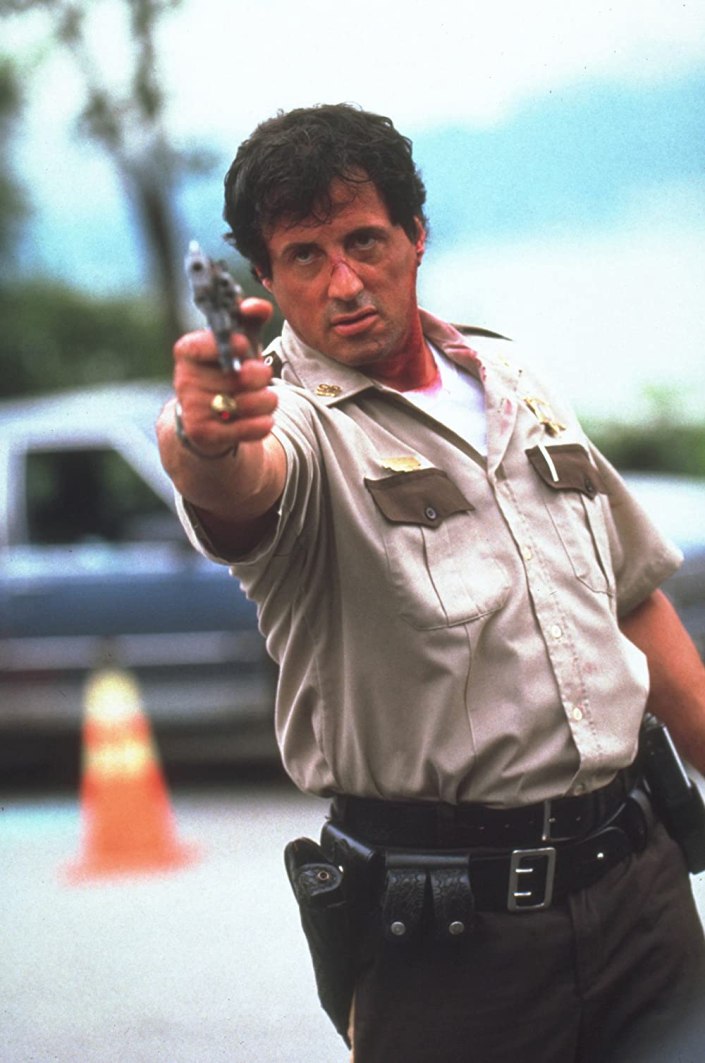
Sylvester Stallone put on 40 pounds to play Nowheresville, N.J., sheriff Freddy Heflin in Cop Land […]. His town is run by Ray Donlan (Keitel) and the other New York cops who have settled there with their families. He wears blinders when it comes to their lawbreaking and mob dealings. Moe Tilden (De Niro), the internal-affairs officer out to get the goods on Cop Land, correctly pegs Freddy as “a man looking for something to do.” Keitel’s [Donlan] exudes dangerous energy. He cares for his own as long as they don’t cross him […]. Robert Patrick brings sly menace to Rucker […]. Ray Liotta […], as Gary Figgis, [is] a tainted cop who sides with Freddy.
Mangold […] has a rare talent for finding the human drama in ordinary lives.
Writer-director James Mangold […] wrangles an impressive cast […] and spins a compelling tale of cancerous corruption among a secretive group of New York’s finest who have settled in the fictional New Jersey burg of Garrison. [Stallone] indeed looks chunky and plays the sleepy, docile Sheriff […] with sluggishness to spare in a largely commendable performance as a half-deaf small-town dreamer. [He] is not given much in the way of memorable dialogue but, he makes the character work […]. [Having] yet to replace his LP of The River with a CD, [he] carries a torch for the local Jersey girl (Sciorra) he saved from drowning…the reason for his loss of hearing in one ear…[he] once longed to be a big-city cop but, had to settle for policing them.
Freddy gradually realizes that he doesn’t like how the town has turned out.
I saw this at the theater when it came out and caught it, again, a few nights ago. I was born and raised in law enforcement and, worked in it, too (non-sworn). I’ve known good cops and I’ve known some really bad ones. I love a well written cop movie and this was an unusual one in that Stallone wasn’t playing a bad ass like Rambo, Cobra, Tango, John Spartan (though I do love that movie) or Ray Quick. This character was different…subdued. His scenes with Annabella Sciorra have Springsteen playing in the background which adds depth and texture to the mood. This is clearly a period piece as all the vehicles, hair cuts and clothing styles are, effectively, early 80s. The River came out in 1980 and music from the Director’s Cut, like Blue Oyster Cult‘s Burnin’ For You came out in 1981. This also manages to cover the Crime category via IMDb and the Film Noir category, simultaneously, via Historical Dictionary of Film Noir (2010). ~Vic
Mississippi: “[…] My name is Alan Bourdillion Traherne.” Cole: “Lord Almighty…”
Sheriff Harrah: “Who is he?” Cole: “Tell him your name, Mississippi.” Mississippi: [sigh] “Alan Bourdillion Traherne.” Sheriff Harrah: “Well, no wonder he carries a knife.”
Mississippi: “Always make you mad, don’t I?” Cole: “Mostly.”
Cole Thornton (Wayne) is a gunslinger for hire and land owner Bart Jason (Asner) has offered him a job. J. P. Harrah (Mitchum) is a Sheriff and an old friend of Cole’s. When Harrah informs Cole of Jason’s intention to use him to push the MacDonald family off of their land for water rights, Cole refuses the job. After shooting the youngest MacDonald son, unintentionally, during a volley of gunfire, Cole is wounded by the MacDonald daughter (Carey), in return, after he brings the deceased boy back home. Cole suffers intermittent paralysis on his right side throughout the rest of the movie. With the help of a gambler (Caan) he crosses paths with and the Sheriff’s deputy (Hunnicutt), Cole straightens out the drunken Sheriff, tangles with another gunslinger (George), derails Jason’s takeover and just might stop his previous ways for his lady, Maudie (Holt).
Mississippi repeats parts of the Edgar Allen Poepoem (except the second stanza) during the film, aggravating Cole somewhat (Caan had trouble with the word “boldly”, slurring it to sound like either “bowlie” or “bodie”). He’s also terrible with a gun and couldn’t hit the broadside of a barn (but, I love that hat!). Cole gets him a shotgun and later regrets it as he has scatter shot in his leg at the end of the movie.
This is my favorite John Wayne movie even though it is an ensemble cast. A close second is The Quiet Man where Wayne played another “Thornton” character. ~Vic
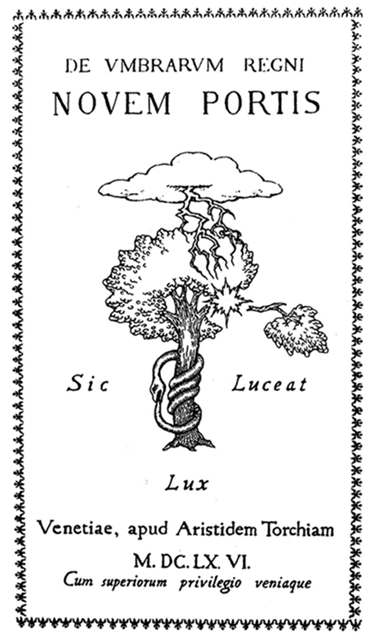
Dean Corso is a bit of a sleazy rare book dealer from New York with questionable ethics. Boris Balkan, a wealthy collector, hires Corso to determine if a book he owns (the book to the left/above) is authentic. The author, supposedly, wrote the book with help from the Devil and only three copies of the book are known to exist after the author was burned at the stake during the Inquisition, along with his works. Corso must find the other two to complete his investigation. Balkan believes that the owner of the book would have the power to summon said Devil. As the skeptical Corso travels and searches, he is followed by a mysterious woman. He eventually becomes obsessed with his task and desires the complete truth. The movie twists and turns to it’s bizarre ending. Depp is a strange cat but, he makes really interesting movies. Visually, Polanski intended for Corso to resemble Philip Marlowe. ~Vic
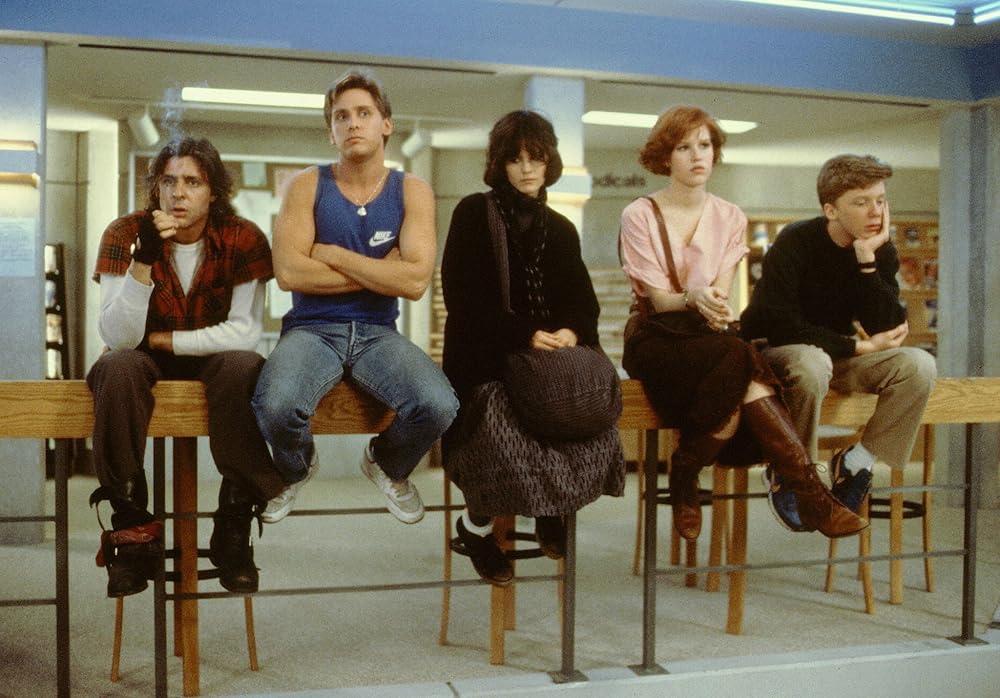
“Saturday, March 24, 1984. Shermer High School, Shermer, Illinois, 60062 (fictional town). […] You see us as you want to see us… […] You see us as a brain, an athlete, a basket case, a princess and a criminal. […] That’s the way we saw each other at 7:00 this morning. We were brainwashed.”
This is my graduating class…the class of 1984 (despite the age of some of the actors). Released February 15, 1985, I was in my freshman year of college and it was a bittersweet revisit. I knew these characters…every single one of them. My high school even had a library that resembled that set. This movie was made with only a one million budget but, brought in $51 million and, in 2016, was selected for preservation with the National Film Registry of the Library of Congress. There is no CGI or special effects. There are no sweeping views of beautiful locations. There are no “shoot-em-up-bang-bang” sequences. There is some action with the cast running through the hallways, dancing while high and Judd Nelson (John Bender/The Criminal) falling through the ceiling tiles. This is, primarily, a study of human nature, parental influence, peer influence, subtle & overt abuse and the struggle to understand. It’s heartbreaking, it’s hilarious and it is so Generation X. ~Vic
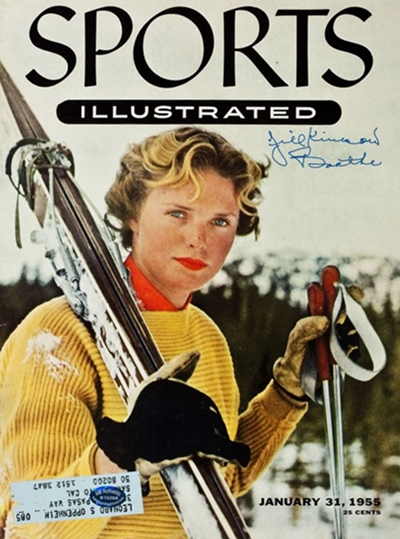
The film spans Jill’s slalom races to her national championship, her best friend’s polio contraction, her accident while attempting to win the Alta, UT, Snow Cup, her hospital stay, her slow rehabilitation, her heartbreak from the losses of two dear men and her triumph at becoming a teacher.
Released July 25, 1975, the film was panned by critics for being too much of a tear-jerker. That may be true but, she did have a really hard time. The sequel was released February 10, 1978 and was panned even worse. I saw them in reverse order. I was only nine years old when the first movie came out so, I didn’t get to see it until I was an adult. I saw Part II, first, when it was released to television. I enjoyed both films despite the bad reviews. Sometimes, bringing someone’s life story to the big screen is handled poorly. Jill passed away February 9, 2012.
I don’t think I need to provide a trailer or to hack out a plot or synopsis on this one but, you might find the trivia interesting. I did my own post back in 2018.
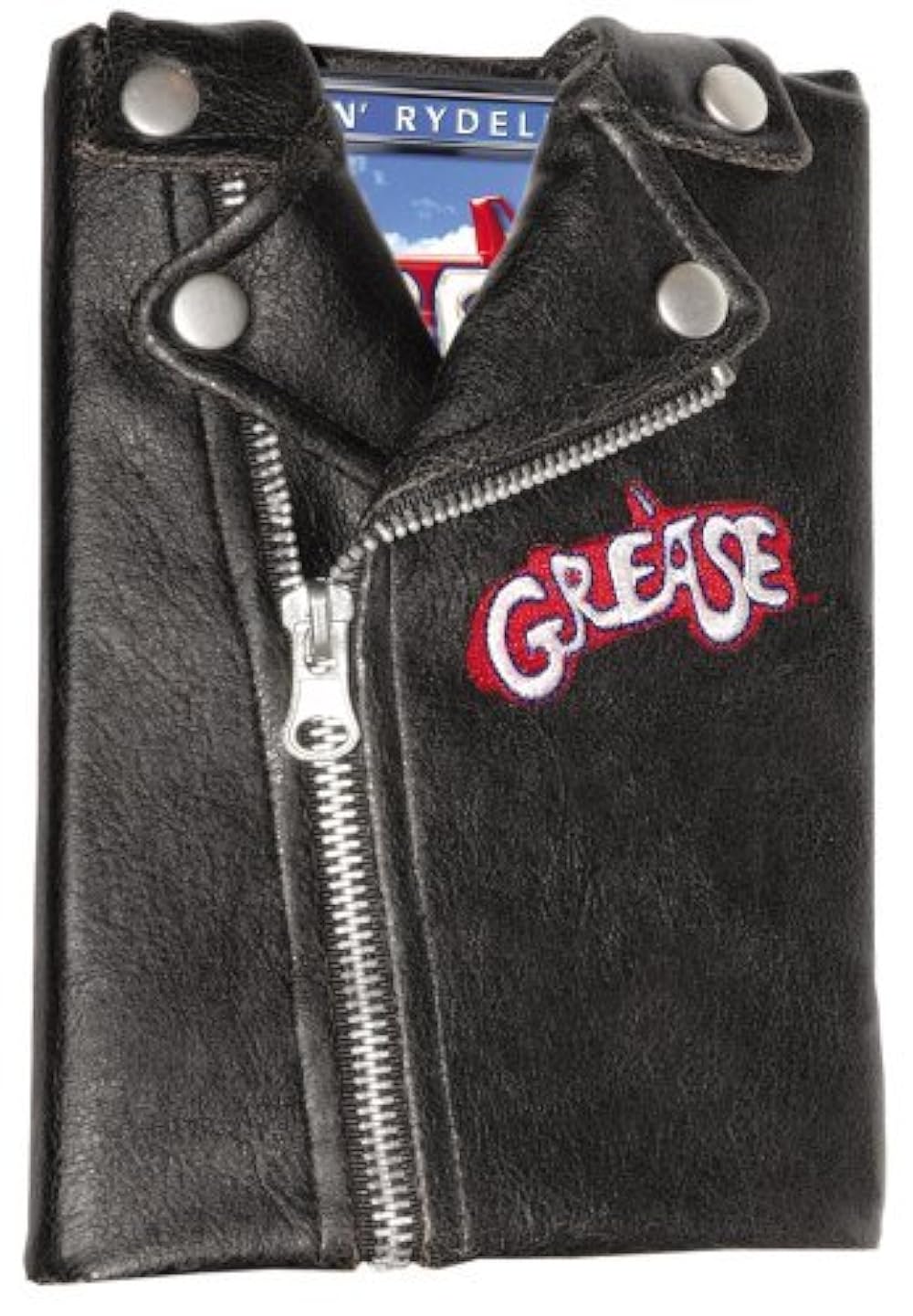
I was 11 years old when it was released. I was such an Olivia Newton-John fan. I begged my mom to buy me the album soundtrack. I nearly wore it out. I still have it to this day. And, I remember those shoes. I was headed to seventh grade that year and ALL the girls had to have a pair of the Candies that Sandy made famous. Can you imagine a bunch of ‘tween girls in the late 70s trying to change classes, going up and down stairs in Sandy’s Candies? Oh, my… ~Vic
Trivia Bits:
♦ Rizzo’s hickeys were real. Stockard Channing said in an interview that Jeff Conaway insisted on applying them himself.
♦ Hopelessly Devoted to You was written and recorded after the movie had wrapped.
♦ Elvis Presley turned down the role of The Guardian Angel in the Beauty School Drop-Out scene.
♦ Due to a zipper breaking, Olivia Newton-John had to be sewn into the trousers she wears in the last sequence (the carnival at Rydell).
♦ Jeff Conaway was so infatuated with Olivia Newton-John, he was tongue-tied whenever she was around. He later married Olivia’s sister, Rona Newton-John.
♦ Danny’s blue windbreaker at the beginning of the film was intended as a nod to Rebel Without a Cause.
♦ Jamie Donnelly had prematurely grey hair, which she dyed black to play Jan. Her hair grew really quickly, so her roots had to be colored in daily with a black crayon.
♦ Rydell High is a reference to teen idol Bobby Rydell who had a million selling hit with Swingin’ School in 1960.
♦ The “blonde pineapple” line was improvised by Barry Pearl.
♦ Olivia Newton-John insisted on a screen test for the role of Sandy. She was concerned that she didn’t have the acting skills and would look too old to be a high school student. The part was originally meant for Susan Dey, who turned it down on her manager’s advice.
The soundtrack was certified 14x Platinum in Australia, Diamond in Canada and 8x Platinum in the UK & the US.
A rare documentary by Scottish folk singer Donovan P. Leitch. Insights into his life with rare recordings from the beginning of his career as a folk singer. Portions of the film was [sic] filmed on St. Ives, Cornwall on Porthminster [B]each in 1966.
It shows Donovan’s life before becoming famous, when he was busking and living in Saint Ives with his friend Gypsy Dave. And, then, when the fame came in with Ready Steady Go! Donovan and his friends are seen smoking marihuana [sic], very shocking for its time. This warned the police to keep him under surveillance and ended up arresting him for drugs [sic] possession in mid-1966.
Born Donovan Philips Leitch in Glasgow, Scotland on May 10, 1946, Donovan was part of the British folk scene and the British music invasion in America. His style was distinctive and incredibly eclectic. As a child, Donovan was vaccinated with the polio vaccine and contracted polio. Though the vaccine was later made safer with the Sabin oral vaccine, the disease and treatment left Donovan with a limp. The public never knew this.
[E]arly on, he was compared with Bob Dylan […]. By 1966, [he] had become one of the first British pop musicians to adopt the flower power image. His music contained many drug references during this time. His recordings were also the first pop music to contain the sound of the sitar, later copied by other famed music groups. [He] was the first high-profile British pop star to be arrested for possession of marijuana. Though Donovan’s drug use appeared to have been moderate, and his drug use was not on the scale of others such as Jimi Hendrix and Brian Jones who later died from overdoses, his use of LSD is referred to in many of his lyrics. Public attention was drawn to his drug use by [the] TV documentary, A Boy Called Donovan, which was broadcast during that year and newspaper coverage of the drug scene in England.
The Hurdy Gurdy Man of the Psychedelic Sixties: Donovan Leitch Felice Prager
Marie is a French TV journalist that has a near death experience after nearly drowning during a tsunami. George is a psychic medium but, works in a factory and tries to avoid talking to dead people. Twins Jason & Marcus have a drug-addicted, alcoholic mom and, when Jason is killed, accidentally, Marcus is sent to a foster home. Melanie meets George in a cooking class and a psychic reading ends badly. When George is laid off, his brother Billy tries to get him to revive his psychic practice. After an impromptu trip to London, George crosses paths with Marie and Marcus. Death surrounds the three main characters and their reactions to it unfolds, slowly.
Clint Eastwood’s Hereafter considers the idea of an afterlife with tenderness, beauty and a gentle tact. I was surprised to find it enthralling. I don’t believe in woo-woo but, then, neither, I suspect, does Eastwood. This is a film about the afterlife that carefully avoids committing itself on such a possibility. The closest it comes is the idea of consciousness after apparent death. This is plausible. Many near-death survivors report the same memories, of the white light, the waiting figures and a feeling of peace.
I absolutely love this movie. It’s a thoughtful drama, without being over-the-top, with an inherent mystery built into the story line. I’m not a big Damon fan but, I am an Eastwood fan. ~Vic
After [his] military service, Klavs, [the] son of Martins Viksna, is returning to his native village [of kolkhoz]. After [the] war, his father, the collective farm chairman […], was killed by guerrillas. Even after many years, the remote village of the Latvian countryside is still under agitation from those old days events. Klavs meets and falls in love with Bille [but], Bille is [the] daughter of Ance, his father’s first love. Klavs starts work in [the] collective farm but, after a conflict, however, decides to leave the village. After the death of his mother, Klavs [returns] and [remains in the village]. [This] is his real home.
Klāvs, the son of Mārtiņš Vīksna, the first chairman of the kolkhoz, comes out of the service and starts working in his native kolkhoz but, does not understand his colleagues, so he goes to the city. The chairman of the collective farm agrees that he will eat his hat if Klav does not return. Klava’s mother Ilze dies in the hay meadow and the chairman offers the boy to come in her place as a foreman. Bille is waiting for Klava in Ilze’s house, whose mother, milkman Ance, once loved Klava’s father.
In World War II, while serving as a United States Army Air Forces officer, famed World War I pilot Eddie Rickenbacker (Fred MacMurray) is assigned to tour South Pacific bases. On October 21, 1942, his Boeing B-17 Flying Fortress has to ditch at sea, forcing Rickenbacker, pilot Lt. James Whittaker (Lloyd Nolan), co-pilot Capt. Bill Cherry (Richard Crane) and other crew members to survive for 19 days on a tiny rubber raft. While awaiting their rescue, Rickenbacker recalls his other adventures that have highlighted a remarkable life.
It seems as though someone is kidding…kidding in more ways than one. For Captain Eddie, which came yesterday to the Roxy, is not the story it promises to be of Capt. Eddie Rickenbacker, ace of World War I and commercial airline executive who holds some rather rigid social views. Nor is it precisely the saga of the middle-aged flier who was lost at sea two years ago in the South Pacific and spent three harrowing weeks on a raft. It is just another sentimental comedy about a kid who jumped off the barn in his youthful passion for flying and courted his girl in a merry Oldsmobile. [This] is not the story of Rickenbacker…not the significant story, anyhow.
Trivia Bits:
♦ Crash survivor Lt. James Whittaker was […] temporarily assigned to the production to serve as a technical advisor.
♦ The film’s premiere was held in Rickenbacker’s hometown of Columbus, Ohio. In attendance were politicians and celebrities, including Carole Landis, as well as family members.
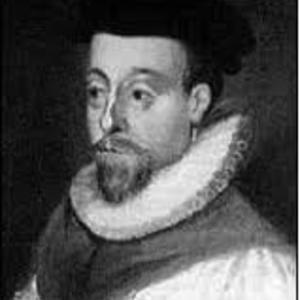
Thomas Morley was an English composer, theorist, singer and organist of the Renaissance. He was one of the foremost members of the English Madrigal School. Living in London at the same time as Shakespeare, Morley was the most famous composer of secular music in Elizabethan England. [He] was active in church music as a singer, composer and organist at St Paul’s Cathedral [and] was involved in music publishing. [He] lived for a time in the same parish as Shakespeare and, a connection between the two has been long speculated but, never proven. In addition to his madrigals, [he] wrote instrumental music, including keyboard music […].
Now Is The Month of Maying is one of the most famous of the English ballets […]. It is based on the canzonetSo Ben Mi Chi Ha Bon Tempo used by Orazio Vecchi […]. It was printed in […] Morley’s First Book of Ballets to Five Voyces [in] 1595. The song delights in bawdy double-entendre. It is, apparently, about spring dancing but, this is a metaphor for making love/sex. For example, a barley-break would have suggested outdoor sexual activity (rather like […] a roll in the hay). The use of such imagery and puns increased during the Renaissance.
Lyrics:
Now is the month of maying,
When merry lads are playing,
Fa la la la la la la la la,
Fa la la, etc…
Each with his bonny lass
Upon the greeny grass.
Fa la la, etc…
The Spring, clad all in gladness,
Doth laugh at Winter’s sadness,
Fa la la, etc…
And to the bagpipe’s sound
The nymphs tread out their ground.
Fa la la, etc…
Fie then! Why sit we musing,
Youth’s sweet delight refusing?
Fa la la, etc…
Say, dainty nymphs, and speak,
Shall we play barley break?
Fa la la, etc…
Elmer (Roscoe Ates) fixes up a room for his just-married, freeloading brother-in-law and wife. When the newlyweds show up, Henry (Shemp Howard) brings a surprise in the form of stepson Junior. The apartment is now too small so, Henry decides that they’ll buy a lot and build a do-it-yourself home, a disaster in the making when Junior switches the house’s part numbers. It doesn’t help matters that Elmer, Henry and the wives are all incompetent.
In the 1930s, the Vitaphone division of Warner Brothers made a bunch of very uninspired and, often, unfunny comedy shorts. One of them, Why Pay Rent? is a bit like One Week (with Buster Keaton) but, only if the folks building the house were dumber than a pile of bricks. In many ways, this might have worked better as a Three Stooges short, which is interesting because Shemp Howard stars in this one, as well as Roscoe Ates, an incredibly unfunny comedian whose shtick was stuttering…which was annoying rather and cruel.
This film isn’t listed as lost but, I couldn’t find any video clips of it. I did find some stills of Elmer painting himself into a corner on Getty Images. ~Vic
Trivia Bit:
♦ Some of the construction sight gags, including the final scene, were re-done two years later by Moe, Larry and Curly in The Sitter Downers.
Buck Allen, The Cheyenne Kid, has been accused of holding up the payroll car of the Cody Dam Construction Company and is being pursued by U.S. Marshal Utah Kane and, Sheriff Hank Bates but, they lose him. Buck proceeds to the home of Betty Thorpe, where he meets Duke Porter, who is posing as his friend. [Duke], who advised him that, by running away from the law, he can keep out of jail and force the guilty party to confess. Hiding in the barn, he hears a conversation between Gorman and Madge. [H]e leaps to the floor as Gorman runs out. Gorman shoots at him but, hits Madge instead. The Marshal and Sheriff ride up and Buck, knowing that Madge needs medical attention, gives himself up and, is jailed. Marshal Kane believes that Buck is innocent and is on the hunt for the guilty party but, allows the sheriff to believe that Buck is guilty. Kane has the sheriff bring Gorman to the jail and, tells Buck and Gorman of an old Indian legend that, when two people are given one weapon between them, the survivor will be the innocent party. He throws a bull-whip between them and says that is the weapon.
Lady Gwen, the last of the sporting Grayles, falls in love with Donald MacAllan, a bright young medical student far below her station. Gwen’s father, who opposes the match, introduces her to Prince Carlos, who wishes to marry her in order to pay off his creditors.
Photo Credit: imdb.com & amazon.com
Donald enlists during the World War and Carlos continues his courtship. When Donald returns from the fighting, Carlos tells him that he is engaged to Gwen and Donald, therefore, makes no attempt to see her. Gwen mistakes Donald’s seeming indifference for contempt and seeks to forget him by living riotously in several European capitals. Having exhausted her fortune, and ruined her health, Gwen returns to Scotland and goes to live in the same cottage where Donald used to study. She becomes ill and, in delirium, calls for Donald. Her old nurse goes to fetch him at the Grayle estate, which, having become wealthy, he has just bought. Donald rescues Gwen, who has wandered out in a storm, and nurses her back to health.
A Hollywood conception of Scotsmen who wear the kilt but, whose complexions betray nary a sign of the ruddy ruggedness due to Highland rain and wind, is to be seen at the Capitol this week in a picture called “The Sporting Venus” […]. [There] is a question [of] whether the Wallaces, the Bruces, the Watts and the McTavishes will smile with any satisfaction upon it. Not that they are intentionally maligned in this story but, that the men from the land of the heather are portrayed with studio-blanched complexions and, in one or two instances, wearing brocaded silk dressing gowns.
Marshall Neilan, the director of this celluloid effusion, in his desire to depict Lady Grayle (Blanche Sweet) as a plucky person at the eleventh hour of a fast life, shows her ladyship smoking a cigarette before she breathes her last. Ronald Colman is undoubtedly a bonnie actor but, you just know that he never was born to wear a kilt, [though], he does for a few scenes. He impersonates Donald McAllen, frequently alluded to as a commoner.
Donald and the capricious lassie, Lady Gwendolyn, are happy in Scotland until the coming of Prince Carlos […]. This Prince, played by Lew Cody, is a man of many debts and a faithful valet. His creditors see only one way to get back their money and that is to have the oily gentleman marry a wealthy wife. Donald goes to France to fight, and when he returns on leave, [believes] the Prince’s story […] that [he], more or less, is to wed Lady Gwendolyn.
Lady Gwendolyn […] becomes […] a flighty young woman who gambles in millions. The young hero goes back to France, and as a surgeon, makes a great name for himself. He purchases Grayloch, the great estate of the Grayles.
With the background of Scotland, Mr. Neilan ought to have been able to make a production far stronger than this effort, which, at best, is only a mediocre diversion. It is true that it has some beautiful scenery and the settings are quite pleasing.
This film survived but, I can’t find any clips of it. Silent Era states that a premiere took place on May 10, 1925, at the Capitol Theatre in New York City and was released May 17, 1925. AFI disagrees. ~Vic
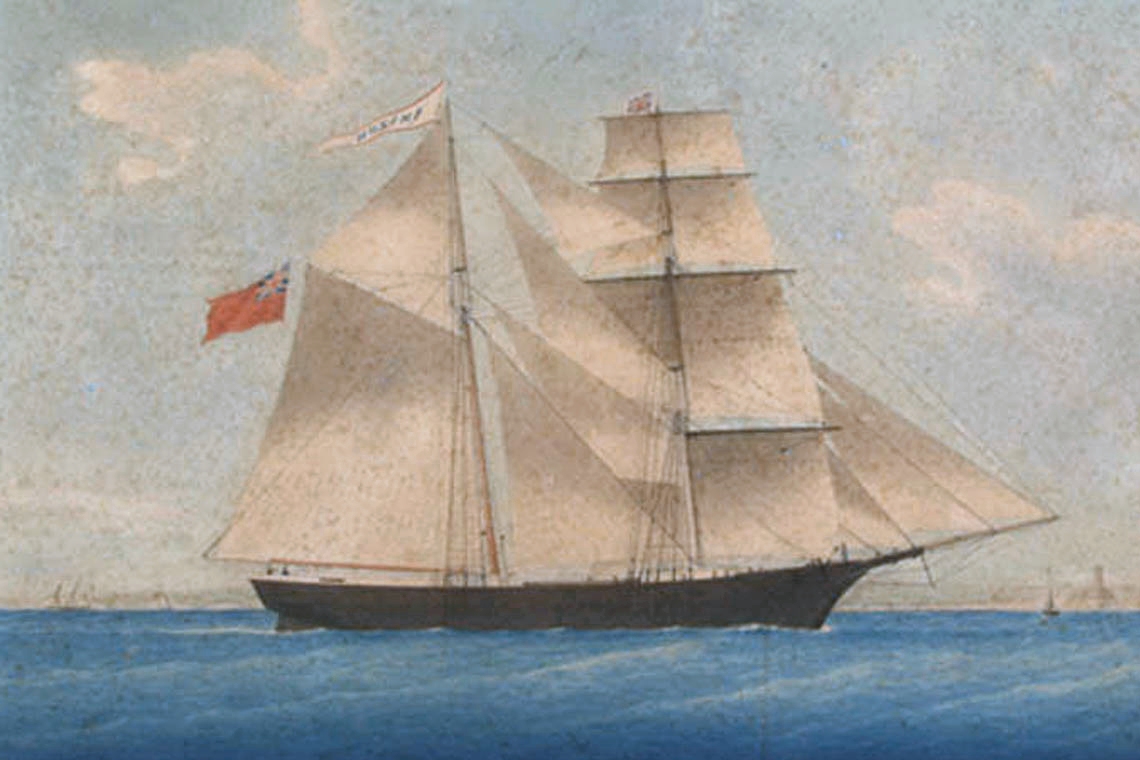
A merchant brigantine, the Mary Celeste was built at Spencer’s Island, Nova Scotia and launched under British registration as Amazon in 1861. She was transferred to American ownership and registration in 1868 when she acquired her new name. Thereafter, she sailed, uneventfully, until her 1872 voyage.
[She was] discovered adrift and deserted in the Atlantic Ocean off the Azores Islands on December 4, 1872. The Canadian brigantine Dei Gratia found her in a disheveled but seaworthy condition under partial sail and with her lifeboat missing. The last entry in her log was dated ten days earlier.
She left New York City for Genoa on November 7 and [the] Dei Gratia departed for Gibraltar on November 15, following the same general route eight days [later]. [She] was still amply provisioned when found. Her cargo of denatured alcohol was intact and, the captain’s and crew’s personal belongings were undisturbed. None of those who had been on board were ever heard from again.
Image Credit: gutenberg.org
At the salvage hearings in Gibraltar following her recovery, the court’s officers considered various possibilities of foul play, including mutiny by Mary Celeste’s crew, piracy by the Dei Gratia crew or others and conspiracy to carry out insurance or salvage fraud. No convincing evidence supported these theories but, unresolved suspicions led to a relatively low salvage award.
The inconclusive nature of the hearings fostered continued speculation as to the nature of the mystery and, the story has repeatedly been complicated by false detail and fantasy. Hypotheses that have been advanced include the effects on the crew of alcohol fumes rising from the cargo, submarine earthquakes (seaquakes), waterspouts, attack by a giant squid and paranormal intervention. The story of her 1872 abandonment has been recounted and dramatized many times in documentaries, novels, plays and films and, the name of the ship has become a byword for unexplained desertion.
[Were] it not for Dr. Arthur Conan Doyle, struggling to establish himself as a writer prior to creating Sherlock Holmes, perhaps the world would not have ever known or cared [about the ship]. Conan Doyle’s short story about the ‘Marie Celeste‘ (he changed the name from Mary) turned a minor puzzle into one of the most famous legends of the sea. Nevertheless, we should recognise it was fiction, for which his editor paid 30 Pounds, […] a respectable sum in 1884.










 Cosmic-Observation