This is a re-post from March 2019. I needed to update. I didn’t have any watermarks on my work. Part two will be later. ~Vic
Flower garden along the loop. Images from March 12, 2019That was a big tree.Entry bridge.Tiny Dunnagan CemeteryCatharine Link Dunnagan
03-07-1826 to 01-06-1914Sun setting over the Eno River.I had to climb over that rock formation to the right.
We were on a two-mile hike.
I have not done a National or Celebration Day since July 2020. I routinely do well-known Holidays but, I am putting these back in rotation. Enjoy! ~Vic
Ever wish there was more than one day a year where you could take all the conventions of proper dress and throw them out the window? Wish no more! Wear Something Gaudy allows you to let all your best examples of excruciatingly bad taste hang out for the world to see. Obviously, the best way is to choose something that is utterly without taste or fashion to wear but, that isn’t the only way. You can find your way to thrift stores to locate out of date fashions that are rarely seen out and about today and, put together an ensemble designed to shock and appall. Even throwing on a eye-searing boa can be a simple way to celebrate or you can just wear colors that clash. Everyone has pieces in their wardrobe that just don’t go, so, get in there and make peoples eyes waggle!
Wear Something Gaudy Day first came into existence through the 1970s sitcom Three’s Company, which was based on a British TV show called Man About the House. In the show, Larry Dallas, played by Richard Kline, is a used car salesman and flashy womanizer who frequently lies about his identity. True to his character, he proposed Wear Something Gaudy Day as a way to celebrate outlandish fashion. The holiday didn’t catch on immediately but, over time, California natives began celebrating it in their tackiest outfits.
[Contrary] to popular belief, the term gaudy does not come from the Spanish architect Antoni Gaudi. Etymologists have traced the usage of the word to the 16th century, well before Gaudi’s time. At that time, the word was used to refer trickery.
Have you ever wondered why dress shirts or jackets have sleeves on their cuffs? It’s actually because of Napoleon. He got tired of watching his soldiers wipe their noses on their sleeves, so he had their jackets equipped with buttons.
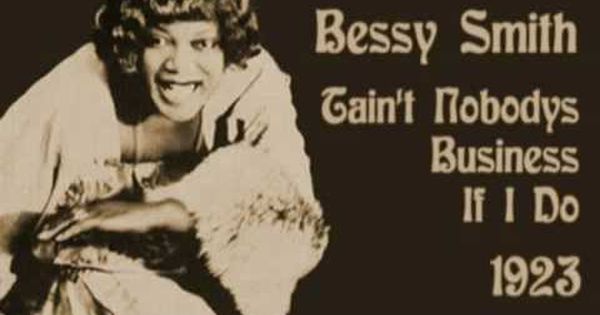
The most popular of the classic blues singers was Tennessee-born Bessie Smith, who first recorded in 1923. Known as the Empress of the Blues, she possessed a large voice. Smith had toured on the T.O.B.A. circuit since 1912, originally as a chorus girl. By 1918, she was appearing in her own revue in Atlantic City, New Jersey. She struggled, initially, to be recorded. Three companies turned her down before she was signed by Columbia. She eventually became the highest-paid black artist of the 1920s and recorded over 160 songs. Inducted into the Rock and Roll Hall of Fame in 1989, she is often regarded as one of the greatest singers of her era and was a major influence on fellow blues singers, as well as jazz vocalists.
Wikipedia Summaries
With a theme of freedom of choice, some of the lyrics are pretty tough. Per Tsort, this was the top song for a week per US Billboard 9, October 1923. In 1928, guitarist Frank Stokes recorded a country blues version. In 1947, jump blues singer Jimmy Witherspoon did a version titled Ain’t Nobody’s Business, reviving the song and it was the best selling record of 1949. Hank Williams, Jr. recorded his own version of the song for his 1990 album Lone Wolf, peaking at #15 on Billboard’s Hot Country Singles & Tracks chart. In 1996, a version by H2O, featuring Billie Piper got to #19 on the UK Singles chart. ~Vic
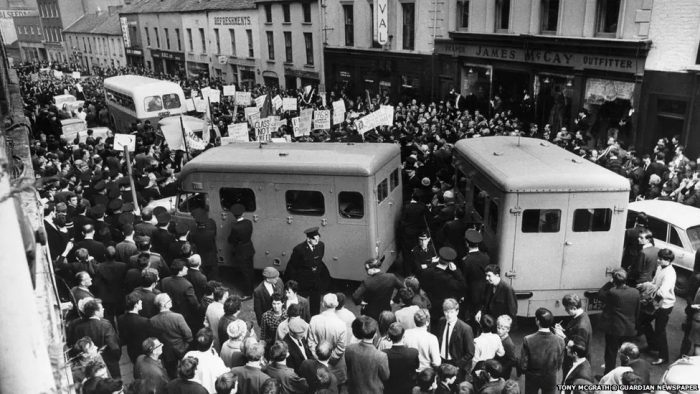
Police have used batons and water cannons to break up a civil rights march in Londonderry, Northern Ireland. At least 30 people, including MP Gerard Fitt and some children, have been injured. Reports say police tried to disperse the protesters by using their batons indiscriminately and spraying water from hoses on armoured trucks. The demonstrators retaliated with petrol bombs. A number of bonfires were lit in the Bogside area and when a fire engine arrived, the crowd turned on it and threatened to set it alight.
“These were stormtrooper tactics at their worst.”
MP Gerard Fitt
The march, organised with the support of the Northern Ireland Civil Rights Association (NICRA), was held in protest at alleged discrimination against the majority Nationalist (and mainly catholic) population in Londonderry by the mainly Protestant Unionist-controlled local authority. The trouble began when the march headed for Duke Street, a road declared out of bounds by the Northern Ireland Minister of Home Affairs, William Craig.
When the protesters turned into the street they were confronted by a barricade of police officers, in rows three deep, all armed with batons. Loudspeakers urged the crowds to disperse but the calls went unheeded. Violent skirmishes broke out and very quickly the street was filled with police wielding batons against men, women and children.
In the chaos the Stormont and Westminster Republican Labour MP for Belfast west, Gerry Fitt, was struck down by a baton. He was hurried to a police car with blood pouring from his head and taken to hospital, where he later received stitches.
Mr. Fitt told reporters: “I was a marked man before the march started. These were stormtrooper tactics at their worst. They hit me once, but that wasn’t enough – they had to have another go, and this was the cause of the wound which had to be stitched.”
Mr Craig has said he is satisfied there was no unnecessary brutality. He rejected suggestions that police had used their batons improperly. NICRA formed in February 1967 to call for a number of reforms, including an end to the perceived discrimination against Catholics in the allocation of council housing and public sector jobs.
It wants the introduction of one man-one vote, rather than one vote per household, which was also seen as discriminatory against Catholic homes with multiple occupancy and an an end to gerrymandering electoral boundaries which in Nationalist areas like Londonderry has led to the return of Unionist-led authorities. And, it wants the repeal of the Special Powers Act, which was aimed at suppressing the IRA and gave police the power to search any property, and was therefore seen as discriminatory against Catholics.
The Leaning Tower of Pisa (torre pendente di Pisa…in Italian) is the campanile or freestanding bell tower of Pisa Cathedral. It is known for its nearly four-degree lean, the result of an unstable foundation. The tower is one of three structures in the Pisa’sCathedral Square, which includes the cathedral and Pisa Baptistry. The tower has 296 or 294 steps. [The] seventh floor has two fewer steps on the north-facing staircase.
The tower began to lean during construction in the 12th century, due to soft ground, which could not properly support the structure’s weight. It worsened through the completion of construction in the 14th century. By 1990, the tilt had reached 5.5 degrees. The structure was stabilized by remedial work between 1993 and 2001, which reduced the tilt to 3.97 degrees.
Construction of the tower occurred in three stages over 199 years. On January 5, 1172, Donna Berta di Bernardo, a widow and resident of the house of dell’Opera di Santa Maria, bequeathed sixty soldi to the Opera Campanilis petrarum Sancte Marie. The sum was then used toward the purchase of a few stones which still form the base of the bell tower. On August 9, 1173, the foundations of the tower were laid. Work on the ground floor of the white marble campanile began on August 14 of the same year, during a period of military success and prosperity.
The tower began to sink after construction had progressed to the second floor in 1178. This was due to a mere three-meter foundation, set in weak, unstable subsoil, a design that was flawed from the beginning. Construction was subsequently halted for the better part of a century, as the Republic of Pisa was almost continually engaged in battles with Genoa, Lucca and Florence. This allowed time for the underlying soil to settle […], [otherwise], the tower would almost certainly have toppled.
There has been controversy surrounding the identity of the architect […]. For many years, the design was attributed to Guglielmo and Bonanno Pisano […]. A 2001 study seems to indicate Diotisalvi was the original architect, due to the time of construction and affinity with other Diotisalvi works, notably the bell tower of San Nicola and the Baptistery, both in Pisa.
Between 1589 and 1592, Galileo Galilei, who lived in Pisa at the time, is said to have dropped two cannonballs of different masses from the tower to demonstrate that their speed of descent was independent of their mass, in keeping with the law of free fall.
During World War II, the Allies suspected that the Germans were using the tower as an observation post. Leon Weckstein, a U.S. Army sergeant sent to confirm the presence of German troops in the tower, was impressed by the beauty of the cathedral, and its campanile and […] refrained from ordering an artillery strike, sparing it from destruction.
The tower has survived at least four strong earthquakes since 1280. A 2018 engineering investigation concluded that the tower withstood the tremors because of dynamic soil-structure interaction. [The] height and stiffness of the tower, combined with the softness of the foundation soil, influences the tower’s vibrational characteristics in such a way that it does not resonate with earthquake ground motion. The same soft soil, that caused the leaning and brought the tower to the verge of collapse, helped it survive.
Wikipedia Summary
***The ceremony, for the 850th anniversary of the foundation of the Tower of Pisa, was started, today and runs all year to August 9, 2024.
The song tells the story of a child attempting to call her father in No Man’s Land. She is unable to reach him over the telephone because her father has been killed fighting on the Western Front.
Wikipedia Summary
There is very little else written about this song. When I have gone to the Tsort charts, with these older pieces, I have usually chosen whatever was at the top of the particular chart, for the particular year. This time, I looked, specifically, for this month in 1918. According to (old) US Billboard 1, this song was on the chart for eight weeks. ~Vic
Returning to my Samsung playlist, submitted for your approval…
“I’ll be coming home, wait for me…”
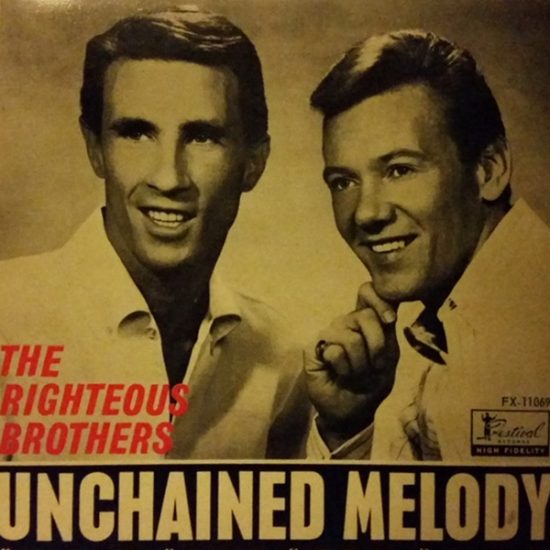
This song is older than I am. My dad liked the Righteous Brothers and their music was in my house, growing up. This is one of my favorites. It has an interesting background. Composed by Alex North in 1955 (a song he’d written in the 1930s), the lyrics were written by Hy Zaret. It was the theme to the movie Unchained, a film about a convict in a medium-security prison, wanting desperately to escape and go home to his wife. This was the movie’s “Melody.” Todd Duncan was the singer for the soundtrack.
There are over 1,500 recordings of this song, with the most notable being the Righteous Brothers’ version. Recorded by the duo in 1965 for Philles Records, Bobby Hatfield won a coin toss to sing it solo on their fifth albumJust Once In My Life, according to Bill Medley. [Note: According to the Encyclopedia of Great Popular Song Recordings (Google Books), Just Once In My Life is listed as their fourth album. This reflects, otherwise.] Hatfield changed the song a bit during recordings. He decided to sing “I need your love…” in the final verse much higher than previous singers.
Ken Sharp: “Bobby’s vocals on Unchained Melody […] are stunning. Did he recognize his gift?”
Medley: “I don’t think he knew how good he was. I don’t think either one of us were thinking…are we good or not? I think we were just saying…thank God people enjoy what we’re doing. We admired so many other people and we certainly didn’t feel we were above anyone but, Bobby was sensational.
I happened to produce Unchained Melody. I know a lot of people think Phil (Spector) did it but, I produced and arranged it. I had the arrangement all done and, Bobby came in, sang it twice and that was it. I played piano and sang vocal background on it. [If] I knew that it was gonna be a hit, I certainly would have brought in a better piano player [laughing].”
Recorded on the “B” side of the single Hung On You from the album Back To Back, radio DJs weren’t interested in it and flipped the record over. Per Medley, producer Phil Spector was so pissed off, he began calling the radio stations to make them stop playing the wrong song. Thankfully, he was unsuccessful and the song made it to #4 on Billboard’s Hot 100, the week of September 4, 1965. It re-appeared in the Billboard charts in 1990 when the movie Ghost was released July 13. Two versions of the song wound up in the charts at the same time, the original 1965 version and a new recording by Hatfield. [They] became the first act to have two versions of the same song in the Top 20 at the same time.
You’ve probably heard of ChatGPT, a computer program that is trained to follow your instruction and provide a variety of wide ranging responses. As someone that has spent some time actually using the AI, I have to say, the results it produces can be eerily human but, did you know that computer scientists have been working alongside chatbots as early as the 1960s?
It was the late 1960’s and Joseph Weizenbaum, an MIT computer scientist, had just completed work on his revolutionary chatbot ELIZA. Weizenbaum was born in Berlin, Germany, in 1923 and fled the country with his family in 1935 to escape the political turmoil. Weizenbaum came to the United States where his road to computer science would ultimately begin. After time spent in the Air Force, Weizenbaum would go on to study as a computer scientist and eventually work in the industry. You have to remember, computers at that time were not portable devices that could fit in our pockets. In fact, they often barely fit into a room! As an associate Professor at MIT, Weizenbaum became obsessed with the way computers could directly interact with humans through language. It was this early through line between computers and human language that would work to lay the foundation for his own chatbot and eventually lay the groundwork for the AI development of programs such as ChatGPT, Siri and Alexa.
Eliza was completed in 1966 and Weizenbaum offered MIT students the opportunity to interact with the chatbot. This process consisted of messages typed into the computer by students and, responses would then be provided by ELIZA, […] routed to an electronic typewriter and printer. Weizenbaum was initially happy with the response that was garnered from users’ experience with ELIZA but, there was one thing he did begin to notice that he viewed as considerably concerning. Overtime, Weizenbaum made note of users starting to divulge deep personal information, looking for help similar to that of a therapy session. This observation ended up pushing Weizenbaum to advocate for caution when relying too heavily on computers for human thought…
“There are aspects to human life that a computer cannot understand—cannot. It’s necessary to be a human being. Love and loneliness have to do with the deepest consequences of our biological constitution. That kind of understanding is in principle impossible for the computer.”
Shortly after midnight on July 12, 1973, a fire was reported at the National Personnel Records Center’sMilitary Personnel Records Building, [a branch of the NPRC], in St. Louis County, Missouri. The fire burned out of control for 22 hours and it took two days before firefighters were able to re-enter the building. Due to the extensive damage, investigators were never able to determine the source of the fire.
The National Archives focused its immediate attention on salvaging as much as possible and quickly resuming operations at the facility. Even before the final flames were out, staff at the NPRC had begun work towards these efforts, as vital records were removed from the burning building for safekeeping.
“In terms of loss to the cultural heritage of our nation, the 1973 NPRC fire was an unparalleled disaster. In the aftermath of the blaze, recovery and reconstruction efforts took place at an unprecedented level. Thanks to such recovery efforts and, the use of alternate sources to reconstruct files, today’s NPRC is able to continue its primary mission of serving our country’s military and civil servants.”
The estimated loss of Army personnel records, for those discharged from November 1, 1912, to January 1, 1950, was about 80 percent. In addition, approximately 75 percent of Air Force personnel records, for those discharged from September 25, 1947, through January 1, 1964, were also destroyed in the catastrophe [all records after the last name Hubbard].
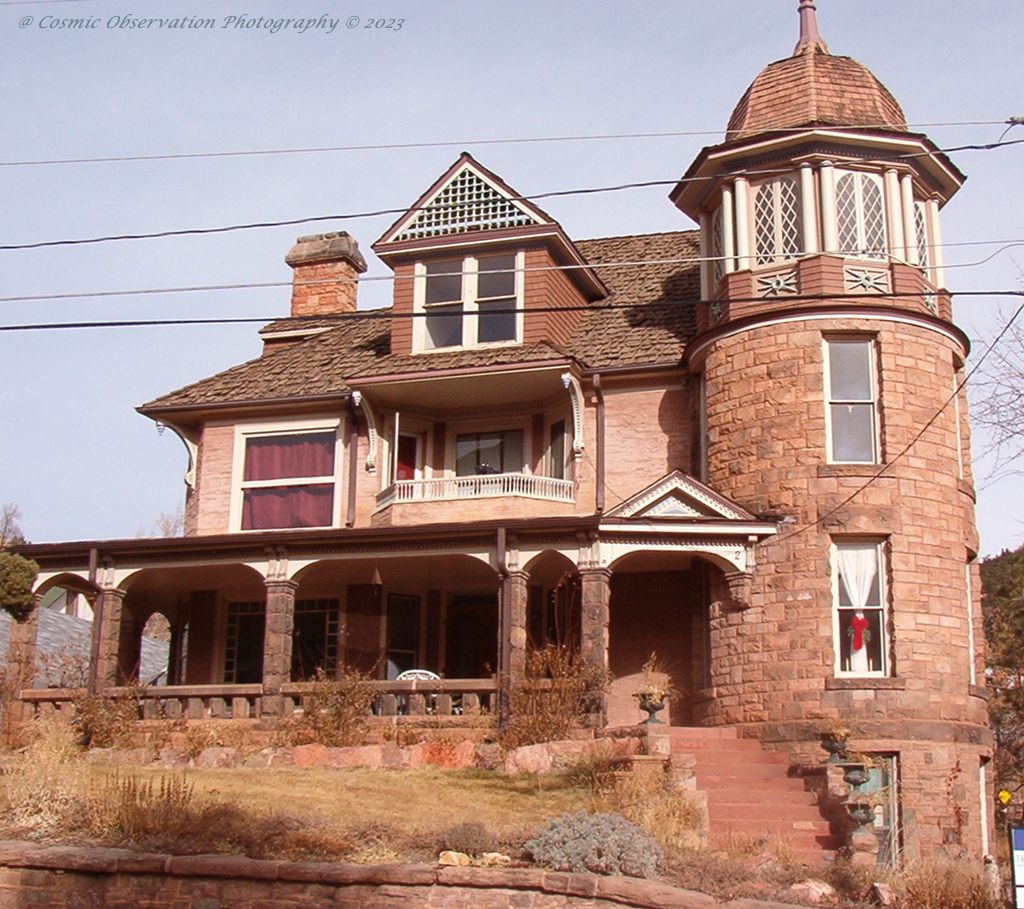
Nolon House
2008
Click for a larger view.Christmas wreaths in the window.
Click for a larger view.Information Station
Click for a larger view.Beautiful sun prism. Sun dog?
Click for a larger view.Out driving.
Click for a larger view.Beautiful landscape.
Click for a larger view.
When Irish Eyes Are Smiling is a lighthearted song in tribute to Ireland and was very popular in June 1913. Its lyrics were written by Chauncey Olcott and George Graff, Jr., set to music composed by Ernest Ball, for Olcott’s production of The Isle O’ Dreams and, Olcott sang the song in the show. It was first published in 1912, at a time when songs in tribute to a romanticised Ireland were very numerous […], both in Britain and the United States. During the First World War, the famous tenor John McCormack recorded the song.
The song continued to be a familiar standard for generations. Decades later, it was used as the opening song on the radio show Duffy’s Tavern. The song has been recorded on over 200 singles and albums, by many famous singers, including Bing Crosby, Connie Francis and Roger Whittaker.
Wikipedia Summary
As I have stated in previous posts, Billboard’s charting abilities, in the early 20th Century, is difficult to navigate. My first stop, for these early pieces, is the Tsort site. Playback FM is very helpful, too. Digging around in the Wayback Machine can be a complete rat maze. The data is there but, how much time do you devote to searching for it.
There was a Shamrock Summit in March 1985, apparently, in Canada (which I don’t remember). Starting on St. Patrick’s Day, Prime Minister Brian Mulroney and President Ronald Reagan met & talked for two days. Remember the Acid Rain Scare back then? It was seen as a Turning Point in U.S.-Canada Relations (both Trudeaus don’t play well with others?) and the closing ceremonies were televised, with the men & their wives singing the song (Mulroney & Reagan are Irish surnames). I find the meeting in Quebec City and the singing of an Irish song, ironic and amusing. ~ Vic
An old Simon’s Cat video from 2007, that I just found on my laptop. I had a little trouble uploading this to YouTube. I re-formatted it and, so far, so good. If it gets snatched down, like YouTube likes to do, I will re-upload another way. ~Vic
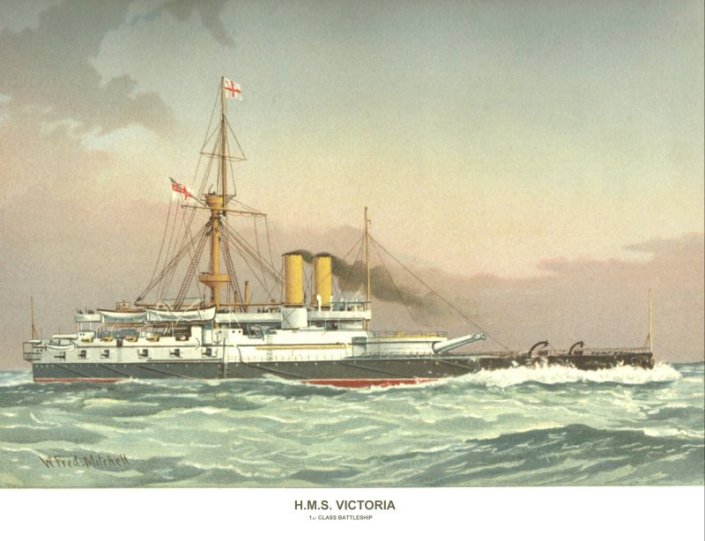
Victoria was constructed at a time of innovation and rapid development in ship design. Her name was originally to be Renown but, this was changed to Victoria while still under construction to celebrate Queen Victoria‘s Golden Jubilee, which took place the year the ship was launched. Her arrival was accompanied by considerable publicity. She was the largest, fastest and most powerful ironclad afloat, with the heaviest guns. Despite the ship’s many impressive features, compromises in the design meant that she proved less than successful in service.
Scale Model As Launched In Elswick 1887
Discovery Museum
Newcastle-Upon-Tyne
Image Credit: Hammersfan
May 18, 2015
A detailed model of the ship was exhibited at the Royal Navy exhibition in 1892 and another in silver was given to Queen Victoria by the officers of the Royal Navy and Royal Marines as a Jubilee gift.
The ship was nicknamed The Slipper (or when with her sister ship, [the] HMS Sans Pareil […] The Pair of Slippers) because of a tendency for her low fore-deck to disappear from view, in even slight seas, especially as a result of the low forward deck and raised aft superstructure…the two ships [had a] humorously perceived resemblance to the indoor footwear.
HMS Camperdown’s Bow Damage
Source: Royal Navy
1893
Image Credit: Wikimedia
The officer in command, Vice Admiral Sir George Tryon, was a fearsome martinet with a reputation as a master of complicated ship handling. He had an elaborate plan for bringing his fleet to anchor, providing onlookers a spectacle of precision maneuvering. [Ten] battleships of the Mediterranean fleet were drawn up in two parallel columns, 1200 yards apart, heading directly away from port out to sea. Tryon then ordered a crash 180-degree turn in succession. The intention, apparently, was for each pair of ships…in order…to turn inwards and create a breathtaking view of the ships’ wakes fanning out, while the ships came about, only 400 yards from each other, [then proceeding] in the opposite direction from their original course, heading towards the land. Then, the ships were to turn 90 degrees to form one column and anchor in unison.
[The] Victoria capsized just 13 minutes after the collision, rotating to starboard with a terrible crash, as her boats and anything, free fell to the side and, as water, entering the funnels, caused explosions when it reached the boilers. With her keel uppermost, she slipped down into the water, bow first, propellers still rotating and threatening anyone near them. Most of the crew managed to abandon ship, although those in the engine room never received orders to leave their posts and were drowned. Those who escaped had to contend with the suction from the sinking ship. A circular wave spread out from it which repeatedly drew down those in the water. All manner of items broke loose from the ship as it sank and came shooting up among the men. Onlookers watched as the number of live men in the water steadily reduced.
[On August 22, 2004], the wreck of the Victoria was discovered by Lebanese-Austrian diver Christian Francis, aided by British diver Mark Ellyatt. She was found in [460 feet] of water off the coast near Tripoli […] and was located using sonar. The most amazing aspect of the wreck is that, unlike all others, she sits vertically with about two thirds of her above the sea bed. The upright position is assumed to have been caused by the huge weight of her fore guns, which would have dragged her down, bow first. The wreck has already been declared a war grave and an exclusion zone has been imposed around her, while the English and Lebanese authorities determine her legal status.
















 Cosmic-Observation