You’ve probably heard of ChatGPT, a computer program that is trained to follow your instruction and provide a variety of wide ranging responses. As someone that has spent some time actually using the AI, I have to say, the results it produces can be eerily human but, did you know that computer scientists have been working alongside chatbots as early as the 1960s?
It was the late 1960’s and Joseph Weizenbaum, an MIT computer scientist, had just completed work on his revolutionary chatbot ELIZA. Weizenbaum was born in Berlin, Germany, in 1923 and fled the country with his family in 1935 to escape the political turmoil. Weizenbaum came to the United States where his road to computer science would ultimately begin. After time spent in the Air Force, Weizenbaum would go on to study as a computer scientist and eventually work in the industry. You have to remember, computers at that time were not portable devices that could fit in our pockets. In fact, they often barely fit into a room! As an associate Professor at MIT, Weizenbaum became obsessed with the way computers could directly interact with humans through language. It was this early through line between computers and human language that would work to lay the foundation for his own chatbot and eventually lay the groundwork for the AI development of programs such as ChatGPT, Siri and Alexa.
Eliza was completed in 1966 and Weizenbaum offered MIT students the opportunity to interact with the chatbot. This process consisted of messages typed into the computer by students and, responses would then be provided by ELIZA, […] routed to an electronic typewriter and printer. Weizenbaum was initially happy with the response that was garnered from users’ experience with ELIZA but, there was one thing he did begin to notice that he viewed as considerably concerning. Overtime, Weizenbaum made note of users starting to divulge deep personal information, looking for help similar to that of a therapy session. This observation ended up pushing Weizenbaum to advocate for caution when relying too heavily on computers for human thought…
“There are aspects to human life that a computer cannot understand—cannot. It’s necessary to be a human being. Love and loneliness have to do with the deepest consequences of our biological constitution. That kind of understanding is in principle impossible for the computer.”
During Nixon’s Christmas bombing, Operation Linebacker II, on December 22, 1972, American bombs struck the hospital, obliterating the building, […] killing 28 hospital staff members and an unconfirmed number of patients.
On the 22nd, a wing of the Bach Mai Hospital, located in the southern suburbs of Hanoi, was struck by a stick of bombs from a B-52. The US military claimed that the hospital “frequently housed anti-aircraft positions.” The civilian deaths were criticized by the North Vietnamese and U.S. peace activists. The hospital sat one kilometer from the runway of [the] Bach Mai Airfield and a major fuel storage facility was only 180 metres (200 yds) away. While the patients of the hospital wing had been evacuated from the city, 28 doctors, nurses and pharmacists were killed.
A Pentagon spokesman confirmed today for the first time reports of damage to the Bach Mai Hospital and Gia Lam Airport in Hanoi during heavy air raids last month over North Vietnam but, he denied that the damage was either massive or intentional. Jerry W. Friedheim, Pentagon spokesman, said at a morning news briefing:
“It appears that some limited accidental damage has occurred to some facilities at Gia Lam Airport and at a hospital the enemy calls Bach Mai. The exact extent of this damage is uncertain, as is its cause. Our information does not square with Hanoi’s propaganda claims of massive destruction at these sites.”
Report of Damage to Hanoi Hospital Confirmed By U.S. New York Times
Anthony Ripley January 2, 1973
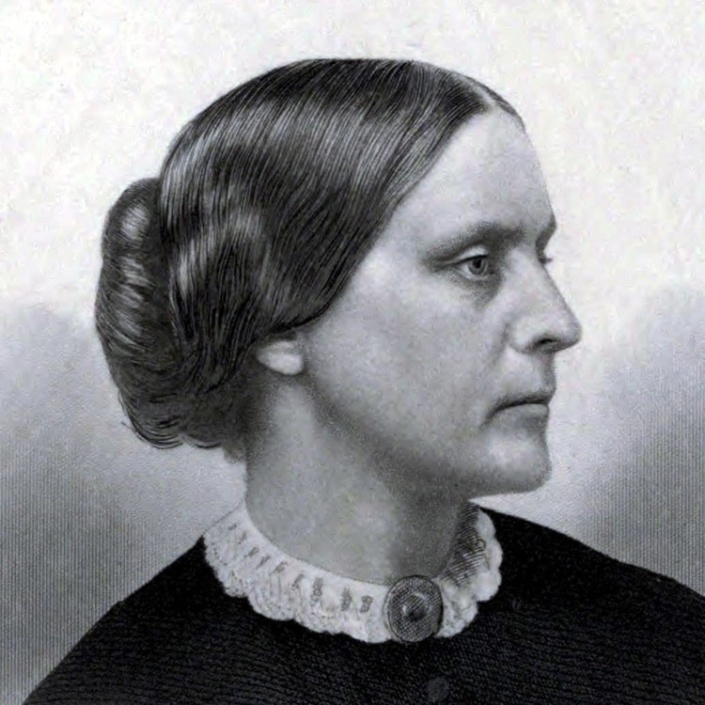
Champion of temperance, abolition, the rights of labor and equal pay for equal work, Susan Brownell Anthony became one of the most visible leaders of the women’s suffrage movement. Along with Elizabeth Cady Stanton, she traveled around the country delivering speeches in favor of women’s suffrage.
[She] was born on February 15, 1820 in Adams, Massachusetts. Her father, Daniel, was a farmer and, later, a cotton mill owner and manager, […] raised as a Quaker. Her mother, Lucy, came from a family that fought in the American Revolution and served in the Massachusetts state government. From an early age, Anthony was inspired by the Quaker belief that everyone was equal under God. That idea guided her throughout her life.
National Women’s History Museum Susan B. Anthony
Nancy Hayward
2018
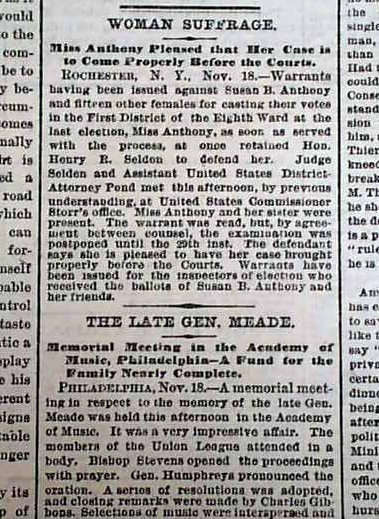
On November 1, 1872, Susan B. Anthony and [three] other women attempted to register to vote in the U.S. presidential election. When registrars hesitated, Anthony overwhelmed them with legal arguments and the men relented. On Election Day, November 5, Anthony voted for Ulysses S. Grant. She was one of fifteen women from her Rochester ward to cast a ballot. Attempting to vote was actually a common tactic among suffrage activists. Anthony’s action commanded outsized attention because she and her colleagues actually voted.
Anthony was arrested on November 18, 1872, for violating the federal Enforcement Act of 1870 […].
Nine days after the election, U.S. Commissioner William C. Storrs, an officer of the federal courts, issued warrants for the arrest of Anthony and the fourteen other women who voted in Rochester. Three days later […] a deputy federal marshal called on Anthony. He asked her to accompany him downtown to see the commissioner.
Anthony’s trial began in Canandaigua, New York, on June 17, 1873. Before pronouncing the sentence for her crime, Justice [Ward] Hunt asked Anthony if she had anything to say. She did. In the most famous speech in the history of the agitation for [women’s] suffrage, she condemned [the] proceeding that had “trampled under foot every vital principle of our government.” She had not received justice under “forms of law all made by men…” “…failing, even, to get a trial by a jury not of my peers.” Sentenced to pay a fine of $100 and the costs of the prosecution, she swore to “never pay a dollar of your unjust penalty.” Justice Hunt said Anthony would not be held in custody awaiting payment of her fine.
A month after the trial, a deputy federal marshal was dispatched to collect Anthony’s fine. He reported that a careful search had failed to find any property that could be seized to pay the fine. The court took no further action.
Hanspostcard has a song draft challenge. This is my Round Eight pick.
I remember when I heard Possession on the radio the first time. I was driving home from work and I was immediately in love. The music was stunning, her voice was stunning and I was captivated. Who is she, I thought to myself (I had no idea that Sarah McLachlan had two previous albums). I found the Fumbling Towards Ecstasy CD as fast as I could. It is a fantastic album. There is not a bad song on it.
When Surfacing came out in July 1997, I snatched it, too. It was released to coincide with the Lilith Fair. Though Fumbling Towards Ecstasy remains my favorite of her albums, Witness is my favorite single. The sixth track, it was never released as a single, has no chart information what-so-ever and it remains in the shadow of Building A Mystery, Sweet Surrender, Adia and, in particular, Angel. The album is one of two that reached #2 on the Billboard 200. It was the #1 album on Billboard’s Canadian Albums chart on August 2, 1997 and on Canada’s RPM Top Albums/CDs chart on July 28, 1997.
This song speaks to me on so many levels. It’s a beautiful piece with beautiful lyrics… ~Vic
Image Credit: YouTube
Make me a witness
Take me out
Out of darkness
Out of doubt
I won’t weigh you down
With good intention
Won’t make fire out of clay
Or other inventions
Will we burn in heaven
Like we do down here
Will the change come
While we’re waiting
Everyone is waiting
And, when we’re done
Soul searching
As we carried the weight
And died for the cause
Is misery made beautiful
Right before our eyes
Will mercy be revealed
Or blind us where we stand
Image Credit: Weird Universe
San Francisco Examiner
10-27-1968
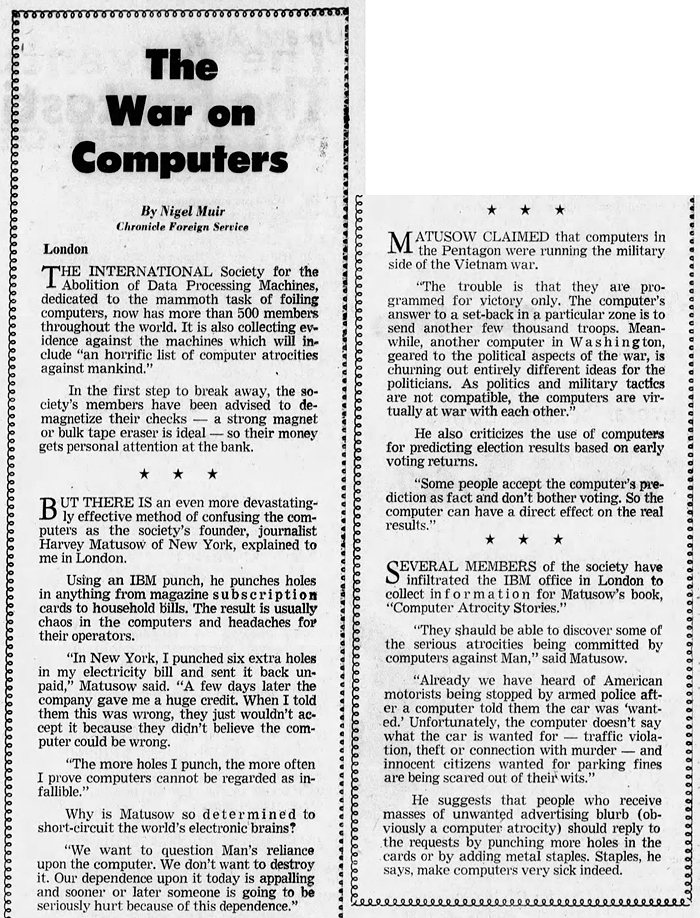
The International Society for the Abolition of Data-Processing Machines […] was founded by Harvey Matusow in the late 1960s. Its aim was “to conduct guerrilla warfare against the computer by such means as sending a penny too much or too little when paying a utility bill.”
Matusow also authored The Beast of Business, which was supposed to serve as a manual for the guerrilla warfare against the computer. I wonder if any of the techniques he detailed would still work today?
However, Matusow is best known for giving evidence in court against individuals during the McCarthy era. Later, he claimed that the FBI had paid him to give false testimony and he detailed these allegations in his book False Witness.
Gore Vidal: […on Truman’s voice…] “To the lucky person who has never heard it, I can only say…imagine what a brussel sprout would sound like, if a brussel sprout could talk.”
Truman Capote: […on Smith & Hickock…] “When you’re talking to them, they seem like perfectly nice boys. To be frank, I’m much more concerned for my safety around Norman Mailer.”
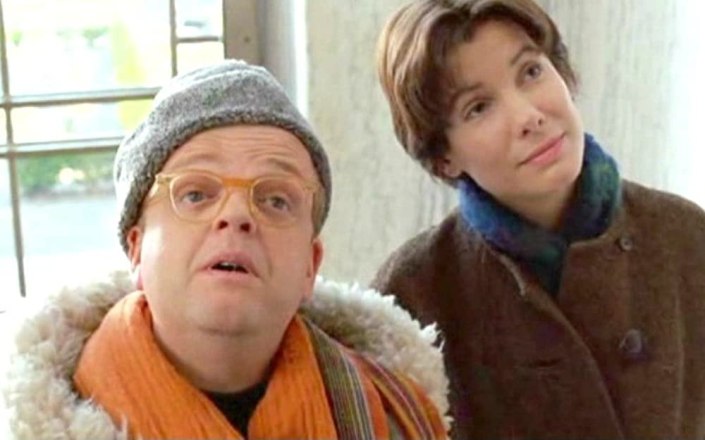
This is the second movie on Truman Capote regarding his foray into the Clutter Family murders. Released August 31, 2006, at the Venice Film Festival and widely on October 13, 2006, this film stood in the shadow of Philip Seymour Hoffman‘s Capote and his Academy Award for Best Actor. Unlike its predecessor, this film, with its $13 million budget, lost money. That being said, despite Hoffman’s turn, Toby Jones is no slouch and his interpretation has its own unique depth. Jones was awarded the London Critics’ Circle Film Award for British Actor of the Year. I found this film to be fascinating and quite entertaining, with parts difficult to watch. Bubbly Sandra Bullock brings forth the subdued, Southern To Kill A Mockingbird novelist Harper Lee. Much of the storytelling is done in mock interviews with the actors, in character, talking about their interactions with Truman. I seem to have a thing for underdog/obscure movies. ~Vic
“Why shouldn’t there be a fizzy, comedic take on the naughty adventures of the Park Avenue gadabout as he fashioned In Cold Blood […]? Why not a movie that concentrates on the contrast between the writer’s frivolous party-boy side and the brutal murders in Kansas, the exotic and colorful tropical specimen who becomes a fish-out-of water when he jumps from his luxurious high-rise swan pond into the Midwestern plains?
[A]fter In Cold Blood, [Capote] never published another major work. Out of career desperation as much as anything else, he sold out his friendships with these […] people, publishing gossipy stories about them in an Esquire excerpt from Answered Prayers in 1976 and was banished from their lives.
[T]he movie centers on the symbiotic relationship between Truman and Perry, pondering the extent of the seduction and, who seduced whom.
Toby Jones inhabits Truman as if he were to the character born, a livelier and more perversely ebullient man than Phillip Seymour Hoffman‘s version in Capote (2005).”
Dean Corso is a bit of a sleazy rare book dealer from New York with questionable ethics. Boris Balkan, a wealthy collector, hires Corso to determine if a book he owns (the book to the left/above) is authentic. The author, supposedly, wrote the book with help from the Devil and only three copies of the book are known to exist after the author was burned at the stake during the Inquisition, along with his works. Corso must find the other two to complete his investigation. Balkan believes that the owner of the book would have the power to summon said Devil. As the skeptical Corso travels and searches, he is followed by a mysterious woman. He eventually becomes obsessed with his task and desires the complete truth. The movie twists and turns to it’s bizarre ending. Depp is a strange cat but, he makes really interesting movies. Visually, Polanski intended for Corso to resemble Philip Marlowe. ~Vic
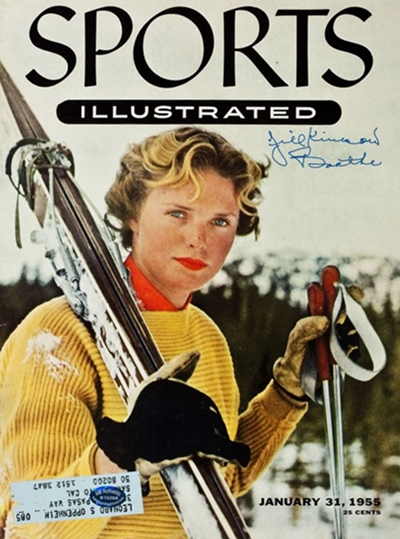
The film spans Jill’s slalom races to her national championship, her best friend’s polio contraction, her accident while attempting to win the Alta, UT, Snow Cup, her hospital stay, her slow rehabilitation, her heartbreak from the losses of two dear men and her triumph at becoming a teacher.
Released July 25, 1975, the film was panned by critics for being too much of a tear-jerker. That may be true but, she did have a really hard time. The sequel was released February 10, 1978 and was panned even worse. I saw them in reverse order. I was only nine years old when the first movie came out so, I didn’t get to see it until I was an adult. I saw Part II, first, when it was released to television. I enjoyed both films despite the bad reviews. Sometimes, bringing someone’s life story to the big screen is handled poorly. Jill passed away February 9, 2012.
In World War II, while serving as a United States Army Air Forces officer, famed World War I pilot Eddie Rickenbacker (Fred MacMurray) is assigned to tour South Pacific bases. On October 21, 1942, his Boeing B-17 Flying Fortress has to ditch at sea, forcing Rickenbacker, pilot Lt. James Whittaker (Lloyd Nolan), co-pilot Capt. Bill Cherry (Richard Crane) and other crew members to survive for 19 days on a tiny rubber raft. While awaiting their rescue, Rickenbacker recalls his other adventures that have highlighted a remarkable life.
It seems as though someone is kidding…kidding in more ways than one. For Captain Eddie, which came yesterday to the Roxy, is not the story it promises to be of Capt. Eddie Rickenbacker, ace of World War I and commercial airline executive who holds some rather rigid social views. Nor is it precisely the saga of the middle-aged flier who was lost at sea two years ago in the South Pacific and spent three harrowing weeks on a raft. It is just another sentimental comedy about a kid who jumped off the barn in his youthful passion for flying and courted his girl in a merry Oldsmobile. [This] is not the story of Rickenbacker…not the significant story, anyhow.
Trivia Bits:
♦ Crash survivor Lt. James Whittaker was […] temporarily assigned to the production to serve as a technical advisor.
♦ The film’s premiere was held in Rickenbacker’s hometown of Columbus, Ohio. In attendance were politicians and celebrities, including Carole Landis, as well as family members.
*************
[The USS Pawnee was] dispatched to Norfolk to secure the ships and stores of the Gosport Navy Yard. Arriving at Norfolk the night of [April 20], she found that all ships, save [the] USS Cumberland, had been scuttled […]. [So], an attempt was made to destroy the Naval stores and the dry dock. Their efforts were largely unsuccessful but, she took Cumberland in tow and saved the frigate.
*************
On Saturday evening, at 9 o’clock, the Pawnee arrived from Washington with 200 volunteers, and 100 marines, besides her own crew […]. [At] once, the officers and crew of the Pawnee and Cumberland went to the Navy yard and, spiked and disabled the guns, [plus], threw the shot and small arms into the river. At 10 o’clock, the marines, who had been quartered in the barracks, fired them and came on board the Pawnee. A party of officers, [in the] meantime, were going through the different buildings and ships, distributing waste and turpentine, and laying a train, so as to blow up the dry dock. At this time, the scene was indescribably magnificent, all the buildings being in a blaze, and explosions, here and there, scattering the cinders in all directions.
The Government vessels had been scuttled in the afternoon before the Pawnee arrived, to prevent their being seized by the Secessionists, who had been in arms in both Norfolk and Portsmouth.
The Merrimack Conversion
Image Credit: M. W. Robbins Collection &
The Virginian-Pilot
pilotonline.com
The Confederate forces did, in fact, take over the shipyard and did so without armed conflict through an elaborate ruse orchestrated by civilian railroad builder William Mahone (then President of the Norfolk and Petersburg Railroad and soon to become a famous Confederate officer). He bluffed the Federal troops into abandoning the shipyard in Portsmouth by running a single passenger train into Norfolk with great noise and whistle-blowing […]. [T]hen, much more quietly, [he sent] it back west […]. [He returned] the same train, again, creating the illusion of large numbers of arriving troops [with] the Federals listening in Portsmouth across the Elizabeth River (and just barely out of sight).
*************
[In] July, Confederate shipyard workers begin converting the unburned underbelly of the USS Merrimack into the ironclad CSS Virginia in Drydock 1.
Lady Gwen, the last of the sporting Grayles, falls in love with Donald MacAllan, a bright young medical student far below her station. Gwen’s father, who opposes the match, introduces her to Prince Carlos, who wishes to marry her in order to pay off his creditors.
Photo Credit: imdb.com & amazon.com
Donald enlists during the World War and Carlos continues his courtship. When Donald returns from the fighting, Carlos tells him that he is engaged to Gwen and Donald, therefore, makes no attempt to see her. Gwen mistakes Donald’s seeming indifference for contempt and seeks to forget him by living riotously in several European capitals. Having exhausted her fortune, and ruined her health, Gwen returns to Scotland and goes to live in the same cottage where Donald used to study. She becomes ill and, in delirium, calls for Donald. Her old nurse goes to fetch him at the Grayle estate, which, having become wealthy, he has just bought. Donald rescues Gwen, who has wandered out in a storm, and nurses her back to health.
A Hollywood conception of Scotsmen who wear the kilt but, whose complexions betray nary a sign of the ruddy ruggedness due to Highland rain and wind, is to be seen at the Capitol this week in a picture called “The Sporting Venus” […]. [There] is a question [of] whether the Wallaces, the Bruces, the Watts and the McTavishes will smile with any satisfaction upon it. Not that they are intentionally maligned in this story but, that the men from the land of the heather are portrayed with studio-blanched complexions and, in one or two instances, wearing brocaded silk dressing gowns.
Marshall Neilan, the director of this celluloid effusion, in his desire to depict Lady Grayle (Blanche Sweet) as a plucky person at the eleventh hour of a fast life, shows her ladyship smoking a cigarette before she breathes her last. Ronald Colman is undoubtedly a bonnie actor but, you just know that he never was born to wear a kilt, [though], he does for a few scenes. He impersonates Donald McAllen, frequently alluded to as a commoner.
Donald and the capricious lassie, Lady Gwendolyn, are happy in Scotland until the coming of Prince Carlos […]. This Prince, played by Lew Cody, is a man of many debts and a faithful valet. His creditors see only one way to get back their money and that is to have the oily gentleman marry a wealthy wife. Donald goes to France to fight, and when he returns on leave, [believes] the Prince’s story […] that [he], more or less, is to wed Lady Gwendolyn.
Lady Gwendolyn […] becomes […] a flighty young woman who gambles in millions. The young hero goes back to France, and as a surgeon, makes a great name for himself. He purchases Grayloch, the great estate of the Grayles.
With the background of Scotland, Mr. Neilan ought to have been able to make a production far stronger than this effort, which, at best, is only a mediocre diversion. It is true that it has some beautiful scenery and the settings are quite pleasing.
This film survived but, I can’t find any clips of it. Silent Era states that a premiere took place on May 10, 1925, at the Capitol Theatre in New York City and was released May 17, 1925. AFI disagrees. ~Vic
[Note: I originally posted this, yesterday, just before midnight. In researching the data, I stumbled across Bill Owens, a photographer that was at Altamont. He was hired by the Associated Press to cover the concert. I emailed him, reference the two photos of his I posted. I hit ‘publish’ before I found his contact page and statement about photos for sale. In my haste to get this up while it was still Friday, I jumped the gun and quickly made the post private. I asked Bill what the price would be to use two of his pictures. As a photographer myself, I understand copyright issues but, I also recognize the gray area that many a blogger operate in, in the blogosphere….Fair Use (link on that, below). Anyway, this very kind gentleman has allowed my one-time use for this 50th anniversary post. He also provided me with a copy of an interview, conducted by Tony D’Souza in April 2019, covering his Altamont experience and other questions regarding his career. I will post an excerpt and attach the full interview, below. ~Vic]
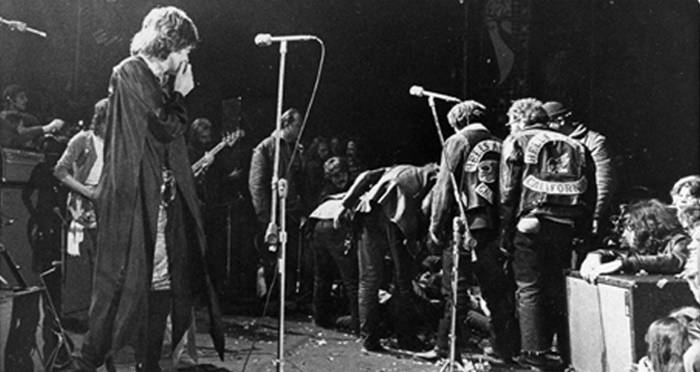
[It’s] not every day that a rock and roll band’s performance, let alone the Rolling Stones’, is accompanied by a knifing, stomping murder within a scream of the stage.
“The violence,” Keith Richard told the London Evening Standard, “just in front of the stage was incredible. Looking back, I don’t think it was a good idea to have [Hells] Angels there. But, we had them at the suggestion of the Grateful Dead. The trouble is, it’s a problem for us either way. If you don’t have them to work for you as stewards, they come, anyway and cause trouble. But, to be fair, out of the whole 300 Angels working as stewards, the vast majority did what they were supposed to do, which was to regulate the crowds as much as possible without causing any trouble. But, there were about ten or twenty who were completely out of their minds…trying to drive their motorcycles through the middle of the crowds.”
The Maysles Brothers, the film company which had shot the whole Stones’ tour, complete with its violent climax at Altamont, had gotten some remarkable footage of Hunter’s killing.
Robert Hiatt, a medical resident at the Public Health Hospital in San Francisco, was the first doctor to reach 18-year-old Meredith Hunter after the fatal wounds. He was behind the stage and responded to Jagger’s call from the stage for a doctor. When Hiatt got to the scene, people were trying to get Hunter up on the stage, apparently in the hope that the Stones would stop playing and help could get through quicker.
Stones on stage with Hells Angels.
Photo Credit: allthatsinteresting.com
Three others […] died (two in a hit-and-run accident, another by drowning) and, countless more were injured and wounded during the course of this daylong “free” concert. It was such a bad trip that it was almost perfect. All it lacked was mass rioting and the murder of one or more musicians.
All these things happened, and worse. Altamont was the product of diabolical egotism, hype, ineptitude, money manipulation and, at base, a fundamental lack of concern for humanity.
Bill Owens took iconic photos of the Hells Angels beating concertgoers with pool cue sticks at the Rolling Stones’ performance during the Altamont Speedway Free Festival four months after Woodstock on December 6, 1969. Altamont, which included violence almost all day and one stabbing death, is considered by historians as the end of the Summer of Love and the overall 1960’s youth ethos. This series of photos include panoramas of the massive, unruly crowd, Grace Slick and Carlos Santana on stage with the press of humanity so close in, they’re clearly performing under duress.
Of that day, Owens has written: “I got a call from a friend, she said the Associated Press wanted to hire me for a day to cover a rock and roll concert. I road my motorcycle to the event. I had two Nikons, three lenses, thirteen rolls of film, a sandwich, and a jar of water.”
Owens was so fearful of retribution by the Hells Angels that he published the photos under pseudonyms. Some of the negatives were later stolen…Owens believes by the Angels. He continues to have conflicted feelings about Altamont. He had no interest in violence and took no pride in photographing it.
In 1972, Owens released a book of black and white photography called Suburbia, also, now, an American icon. Irascible, stubborn, funny, grouchy, ornery and deeply rooted in small town life, Owens is built like a middleweight puncher and wears his hair as though he was a Marine. Indeed, Owens was never a hippie but, a clean-cut newspaper photographer, husband and father, who joined the Peace Corps to serve his country and “do good.” Turning 80 this September, Owens has also had noted careers as a craft beer brewer and pub owner, a magazine publisher many times over and, is now a distiller. His books include Suburbia, Working, Leisure and many others. He is the recipient of a Guggenheim and two NEAs. His work is collected in leading museums the world over, including the Smithsonian. Recent coverage of Owens includes an April retrospective in the New York Times (link above) of his Altamont photos for the event’s impending 50th anniversary. The photos are available for viewing at Owens’ website (link above and below).
I first met Owens at the defunct Rostel Gallery in remote and far northern Dunsmuir, CA, in late August or early September of 2008 (I remember because my daughter had just been born and the event was the first outing of her life), where they were showing images from Suburbia. These are images of people embarking on a new, modern way of life that they look excited by, but also confused, as though technology and the modish styles of the time were costumes they were still getting comfortable in. Owens’ photograph of a young suburban boy wearing cowboy boots, carrying a toy rifle and riding a Big Wheel, “Ritchie,” has always haunted me, though I couldn’t say precisely why.
Twenty-five years ago, this week (November 19/25, 1994), the song Spin the Black Circle by Pearl Jamdebuted on the Billboard Mainstream Rock chart (Page 79/ called Album Rock Tracks in 1994), entering at #16 (also its peak). Released November 8, it was the first single from their third album Vitalogy. Produced by Brendan O’ Brien, it was written by Eddie Vedder and Stone Gossard.
The most [Vedder] will do is proselytize against the extinction of the LP, as he does in “Spin the Black Circle,” one of the few songs from Seattle in which a needle has nothing to do with heroin.
Vitalogy has a number of gripping songs that match the soaring anthems of Ten. The first three tracks are a promising start: “Last Exit,” “Not for You” and especially “Spin the Black Circle,” a revvedup thrash tribute to vinyl, rock harder than anything Pearl Jam have ever done.
Pearl Jam still hasn’t developed an individual style to match that of its profoundly uptight singer, Eddie Vedder. Guitarists Stone Gossard and Mike McCready continue to play sloppy, characterless riffs. [T]heir punk song, ”Spin the Black Circle,” is a little flabby, like dinosaur rockers trying to prove they’re into Green Day.
The song peaked at #18 November 26 on the Billboard Hot 100 and was the first Pearl Jam single to enter this chart. It also peaked at #11 on the Billboard Alternative chart (called Modern Rock Tracks in 1994). It peaked in the top five in Australia, New Zealand and Norway.
I don’t know what this means. I don’t think it means anything.
Lyrics (From LyricFind) See this needle
Oh see my hand
Drop, drop, dropping it down
oh so gently
here it comes
touch the flame
Turn me up
won’t turn you away
Spin, spin
spin the black circle
Spin, spin
spin the black, spin the black
Spin, spin
spin the black circle
Spin, spin
whoa
Pull it out
a paper sleeve
Oh my joy
only you deserve conceit
Oh I’m so big
and my whole world
I’d rather you
rather you, than her
Spin, spin
spin the black circle
Spin, spin
spin the black, spin the black
Spin, spin
spin the black circle
Spin, spin
whoa
Oh you’re so warm
oh, the ritual
as I lay down your crooked arm
Spin, spin
spin the black circle
Spin, spin
spin the black, spin the black
Spin, spin
spin the black circle
Spin, spin
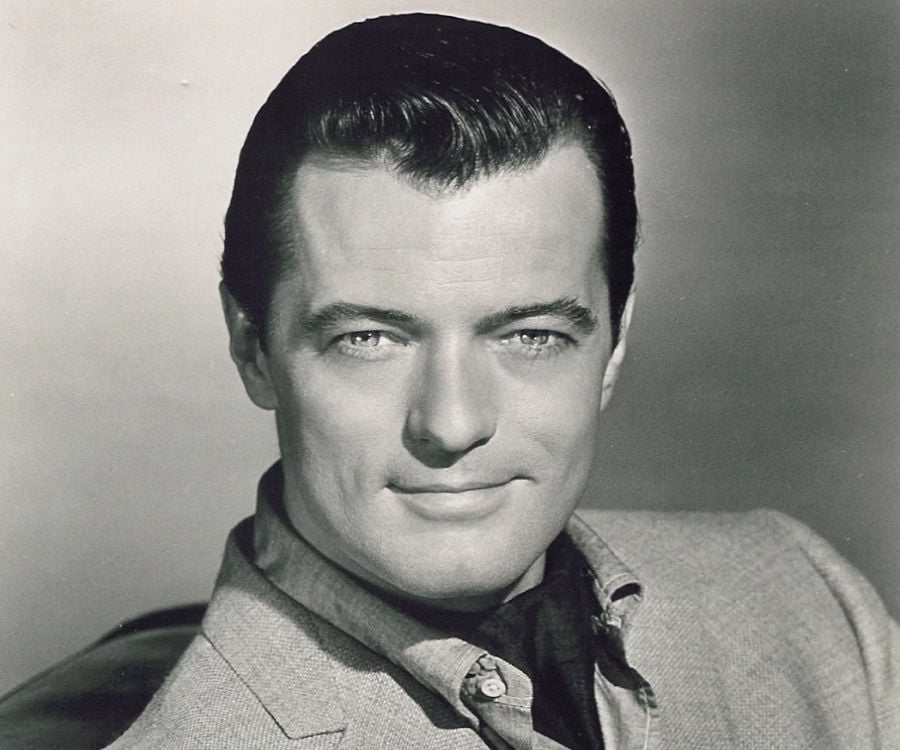
There is very little written about this special, save a New York Times Article, written the next day (No writer credited):
ONE of the tiredest gimmicks of variety shows was coupled last night with a fresh idea on “The Robert Goulet Hour.” When the tenor turned his profile toward the sun on a southern California beach and a light wind ruffled his perfectly groomed hair as he sang “Lost in the Stars,” his program consciously aimed for the creative touch. Few singers are willing to compete with the Pacific Ocean.
But when Mr. Goulet was on the sound stage of C.B.S. Television City in Hollywood, he was engulfed in that shopworn gag of pretending to be rehearsing a musical special for TV. Leslie Caron joined him in “Call Me Irresponsible” and then said “no,” she simply would not sing on his show. Peter Gennaro demonstrated a possible dance step and Fredd Wynne [sic] agonized over material for Mr. Goulet and sketches for Miss Caron. Even the ad‐libs were planned.
Visiting the University of California at Los Angeles, Mr. Goulet and company held a press conference for tanned Tammys and Gidgets, who watched Terry‐Thomas mug shamelessly as a fine arty professor. The atypical students acted like graduates of the Hollywood Professional School.
When the script permitted Mr. Goulet to forget the script, his show had possibilities. Still, the evening’s honors must go to Miss Caron, who, impersbnating [sic] Marlene Dietrich as the Blue Angel, tackled a chair with the finesse of an Olympic champion.
IMDB states that it was filmed at the Wilshire Boulevard Brown Derby. The second video, below, appears to be from a Robert Goulet channel that was set up by his widow, Vera Novak. Written below the video:
Robert Goulet Live From Sahara Hotel In Las Vegas was filmed as part of “An Hour With Robert Goulet” TV special in 1964 and produced by our company Rogo Productions, Inc. This is a rare gem and wonderful historical footage of a remarkable entertainer showcasing live entertainment in Las Vegas during 1960s. In this clip, Robert sings a “Medley Of Old Songs” written by Jerry Bresler and Lyn Duddy, which was also recorded in 1963 on Columbia Records “Robert Goulet in Person“.
Twenty-five years ago, this week, the song Creep by TLCdebuted on the Billboard Hot 100, entering the chart at #71. Written and produced by Dallas Austin, it was the first single released from their second studio album CrazySexyCool. It is based on member Tionne “T-Boz” Watkins‘s experience with infidelity. The lyrics portray the singers as women who cheat on their unfaithful lovers for attention.
You’re with a guy and he’s not showing you attention, so another guy comes along and you’re like, “Hey, if you were where you were supposed to be, he couldn’t be showing me attention right now!” I was in the middle of this drama, because the other guy was [my boyfriend’s] friend and my boyfriend was just not getting it together.
[I have to confess that I have never heard this song. The middle 90s was the time I stopped listening to Top 40 and moved to Alternative Rock stations. ~Vic]
The twenty second of loneliness
And we’ve been through so many things.
I love my man with all honesty,
But I know he’s cheating on me.
Look him in the eyes,
But all he tells me is lies to keep me near.
I’ll never leave him down though I might mess around.
It’s only ’cause I need some affection, oh.
So I creep, yeah, just creepin’ on,
On the down low, ‘cept nobody is supposed to know.
So I creep yeah, ’cause he doesn’t know what I do
And no attention goes to show oh.
So I creep.
The twenty third of loneliness
And we don’t talk, like we used to do.
Now this is pretty strange,
But I’m not buggin’ ’cause I still feel the same.
I Keep giving loving till the day he pushes me away.
Never go a stray.
If he knew the things I did, he couldn’t handle me.
And I choose to keep him protected, oh.
So I creep, yeah, just creepin’ on,
But I’ll know. ‘cept nobody is supposed to know.
So I creep, yeah, ’cause he doesn’t know what I do,
And no attention goes to show oh.
So I creep, yeah, just creepin’ on,
But I’ll know. ‘cept nobody is supposed to know.
So I creep, yeah, ’cause he doesn’t know what I do,
And no attention goes to show.
So I creep, oh ah, oh ah, oh ah yeah
So I creep, oh ah, oh ah, oh ah yeah
So I creep, oh ah, oh ah, oh ah yeah
Baby, oh ah, oh ah, oh ah yeah
So I creep, yeah, just creepin’ on,
But I’ll know.
So I creep, yeah, ’cause he doesn’t know what I do,
And no attention goes to show.
So I creep, yeah, just creepin’ on,
But I’ll know.
So I creep, yeah, ’cause he doesn’t know what I do,
So I creep, ‘cept nobody is supposed to know.












 Cosmic-Observation