Photo Credit: monash.edu CTIE
Wikipedia & Wikimedia
One-hundred, ten years ago, today…
The Duigan […] biplane was an early aircraft which made the first powered flight by an Australian-designed and built machine when it flew in Victoria in 1910. The aircraft was constructed by John Duigan, with help from his brother Reginald, on their family farm at Mia Mia. The effort was especially significant in that the brothers built the aircraft almost entirely by themselves and without input from the pioneering aviation community. [A] photo-postcard of the Wright Flyer inspired the design and Sir Hiram Maxim‘s book Artificial and Natural Flight provided the theoretical basis. The only components not built by the Duigans themselves were the engine, made by the J. E. Tilley Engineering Company of Melbourne and the propeller. However, both of these components were extensively modified by John before they could be used.
Photo Credit: Memorial near Mia Mia Dolphin 51
Wikipedia & Wikimedia
The aircraft flew for the first time on July 16, 1910, taking off under its own power and flying [24 feet] (7 meters). Within two months, this had been extended to [300 feet] (90 meters) and, soon thereafter, to [590 feet with an altitude of 12 feet] (180 meters [with] an altitude of 3.5 meters). By the end of the year, Duigan had made a flight of [nearly a mile] (1 km) at an altitude of [100 feet] (30 meters).
Duigan informed the Department of Defence of his achievements, hoping to claim a £5,000 prize that had been offered in September 1909 for the construction of an aircraft suitable for military purposes. Duigan was ineligible for the prize, which had expired at the end of March 1910 but, was asked to demonstrate his aircraft for the military anyway. He also flew it in a public demonstration in front of a crowd of 1,000 spectators at Bendigo Racecourse in January 1911. In 1920, Duigan donated the aircraft to the Industrial and Technological Museum of Victoria, which was later absorbed into Museum Victoria.
Museum Victoria also preserves a flying replica of the Duigan biplane built by Ronald Lewis and flown in 1990. It was donated to the museum in 2000.
Image Credit: meantone.altervista.org
Wikipedia & Wikimedia
Coming to 1635…
Fiori musicali (Musical Flowers) is a collection of liturgical organ music by Girolamo Frescobaldi, first published in 1635. It contains three organ masses and two secularcapriccios. Generally acknowledged as one of Frescobaldi’s best works, Fiori Musicali influenced composers during at least two centuries. Johann Sebastian Bach was among its admirers and parts of it were included in the celebrated Gradus ad Parnassum, a highly influential 1725 treatise by Johann Joseph Fux which was in use even in the 19th century.
Fiori Musicali was first published in Venice in 1635, when Frescobaldi was working as [the] organist of St. Peter’s Basilica in Rome, under the patronage of Pope Urban VIII and his nephew Cardinal Francesco Barberini. It may have been conceived as music for St. Mark’s Basilica or a similarly important church. The collection was printed by Giacomo Vincenti (a celebrated publisher who had previously published reprints of Frescobaldi’s capriccios) and dedicated to Cardinal Antonio Barberini, Francesco‘s younger brother.
The full title of Frescobaldi’s work is Fiori musicali di diverse compositioni, toccate, kyrie, canzoni, capricci, e recercari, in partitura. Before Fiori musicali, Frescobaldi seldom published liturgical music. The organ mass was still in its infancy and composers seldom published such music. [It] is one of the most influential collections of music in European history. Frescobaldi’s collection was studied by Henry Purcell and Johann Sebastian Bach (the latter copied the entire work for his own use).
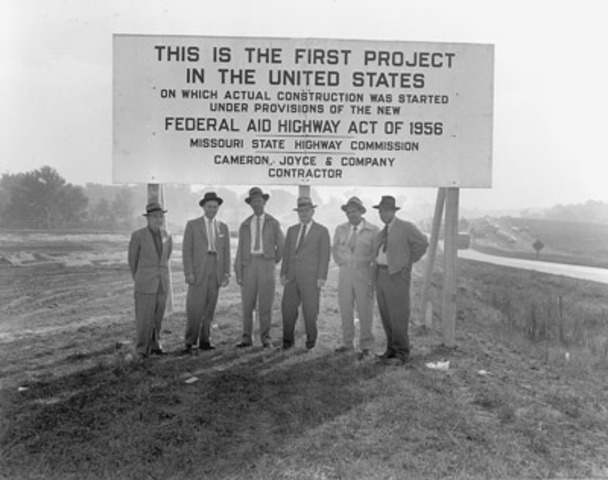
Also known as the Federal Aid Highway Act of 1956 (Public Law 84-627), [it] was enacted on June 29, 1956, when President Dwight D. Eisenhower signed the bill into law. With an original authorization of $25 billion for the construction of 41,000 miles (66,000 km) of the Interstate Highway System, supposedly over a 10-year period, it was the largest public works project in American history [at] that time.
The addition of the term defense in the act’s title was for two reasons. First, some of the original cost was diverted from defense funds. Secondly, most U.S. Air Force bases have a direct link to the system. One of the stated purposes was to provide access in order to defend the United States during a conventional or nuclear war with the Soviet Union and its communist allies. All of these links were in the original plans, [though] some, such as Wright Patterson AFB, were not connected […] in the 1950s but, [were] later.
Photo Credit: Timetoast
The money for the Interstate […] and Defense Highways was [drawn from] a Highway Trust Fund that paid for 90% of highway construction costs, with the states required to pay the remaining [10%]. It was expected that the money would be generated through new taxes on fuel, automobiles, trucks and tires. As a matter of practice, the federal portion of the cost of the Interstate Highway System has been paid for by taxes on gasoline and diesel fuel.
Eisenhower‘s support of the Federal Aid Highway Act of 1956 can be directly attributed to his experiences in 1919 as a participant in the U.S. Army’s first Transcontinental Motor Convoy across the United States on the historic Lincoln Highway, which was the first road across America. The convoy was memorable enough for a young Army officer, 28-year-old Lieutenant Colonel Dwight David Eisenhower, to include a chapter about the trip, titled Through Darkest America With Truck and Tank in his book At Ease: Stories I Tell to Friends (Doubleday and Company, Inc., 1967).
Following completion of the highways, the cross-country journey that took the convoy two months in 1919 was cut down to five days.
Photo Credit: Paul Durham (the blond)
June 1998
Wikipedia
“Somehow I see, there are ships in her eyes…”
This Sunday’s playlist submission was never released as a single and it never charted…anywhere. It’s the last track, number 12, on the original 1997 debut release of Your Body Above Me by Black Lab. An alternative rock band founded in San Franciso, CA, in 1995 by Paul Durham, the band’s name is an amalgam of band names Black Sabbath and Stereolab. The album did have two hits, one of which peaked at #6 on the BillboardMainstream Rock chart.
There is not a bad song on this album and I nearly wore out my CD. I took notice of them when an alternative rock station showcased their first track (the #6 hit). I love Paul Durham‘s voice and, the band has had many songs used in movies and television, most notably Spider-Man (2002), Blade: Trinity and Transformers.
In the crystal clear waters of Shark Bay in Western Australia, scientists have noticed bottlenose dolphins engaging in an unusual behavior. They guide fish into the empty shells of giant snails, bring the shells to the surface and, then, shake them vigorously to dislodge the prey into their open mouths like a person polishing off a bag of popcorn. That extra effort, known as shelling, gets them a guaranteed meal.
Because the dolphins […] use the shells as a trap, this is the second known case of these marine mammals using tools. The first was reported in [1984] when researchers found that bottlenose dolphins wear marine sponges like protective gloves over their beaks to forage for fish on the sea floor. Now, researchers have shown that the dolphins of Shark Bay learn shelling from their friends. It’s the first time social learning involving a tool has been discovered in these mammals and a rare example of such learning in the animal kingdom.
Though scientists noticed the shelling behavior more than 10 years ago, it became more frequent following an unusual marine heat wave (PDF) off Western Australia in 2011. The high temperatures roiled Shark Bay’s ecosystem and many gastropods, including sea snails, are believed to have died. “We think the dolphins took advantage of this die-off,” says Sonja Wild, a behavioral ecologist at the Max Planck Institute of Animal Behavior. “The next season,” she says, “there was an incredible increase in shelling”, which made it possible for her to tease out how young adult dolphins learn to do it.
Wild says shelling starts among the adults [but], the more time a young dolphin spends around an accomplished sheller […], “the more likely it is to learn” the technique and pass it on to others later. Still, because dolphin calves spend more than 30,000 hours with their mothers, it’s possible that some learned the trick from their moms, [states] Janet Mann, a dolphin expert at Georgetown University. It’s considered more cognitively demanding to learn a skill like shelling from an unrelated individual because both learner and demonstrator must be socially tolerant, especially while hunting.
In World War II, while serving as a United States Army Air Forces officer, famed World War I pilot Eddie Rickenbacker (Fred MacMurray) is assigned to tour South Pacific bases. On October 21, 1942, his Boeing B-17 Flying Fortress has to ditch at sea, forcing Rickenbacker, pilot Lt. James Whittaker (Lloyd Nolan), co-pilot Capt. Bill Cherry (Richard Crane) and other crew members to survive for 19 days on a tiny rubber raft. While awaiting their rescue, Rickenbacker recalls his other adventures that have highlighted a remarkable life.
It seems as though someone is kidding…kidding in more ways than one. For Captain Eddie, which came yesterday to the Roxy, is not the story it promises to be of Capt. Eddie Rickenbacker, ace of World War I and commercial airline executive who holds some rather rigid social views. Nor is it precisely the saga of the middle-aged flier who was lost at sea two years ago in the South Pacific and spent three harrowing weeks on a raft. It is just another sentimental comedy about a kid who jumped off the barn in his youthful passion for flying and courted his girl in a merry Oldsmobile. [This] is not the story of Rickenbacker…not the significant story, anyhow.
Trivia Bits:
♦ Crash survivor Lt. James Whittaker was […] temporarily assigned to the production to serve as a technical advisor.
♦ The film’s premiere was held in Rickenbacker’s hometown of Columbus, Ohio. In attendance were politicians and celebrities, including Carole Landis, as well as family members.
Anonymous Artist Vlad III
Image Credit: Wikipedia & Wikimedia
The conflict initially started with Vlad‘s refusal to pay the jizya (tax on non-Muslims subjects charged at 2.5%) to the sultan and [it] intensified when Vlad invaded Bulgaria. In response, Mehmed raised a great army with the objective to conquer Wallachia and annex it to his empire. The two leaders fought a series of skirmishes, the most notable one being the Night Attack where Vlad attacked the Turkish camp in the night in an attempt to kill Mehmed. The assassination attempt failed and Mehmed marched to the Wallachian capital of Târgoviște, where he found a few men with cannons. After leaving the capital, Mehmed discovered 23,844 impaled Turks whom Vlad had killed during his invasion of Bulgaria. The number is mentioned by Vlad himself in a letter to Matthias Corvinus (Matthias I). The sultan, and his troops, then sailed to Brăila and burned it to the ground before retreating to Adrianople. Both sides claimed victory in the campaign and Mehmed’s forces returned home with many captured slaves, horses and cattle.
There are two extant ballads […], both of which narrate the same story. As ballads existed within oral tradition[s] before being written down, other versions of this once popular song also may have existed. Moreover, other ballads used its tune without necessarily referring to [this particular ballad].
This ballad was entered in the Stationers’ Register in 1624. The title is alternatively spelled Chevy Chace. The ballad is generally thought to describe the Battle of Otterburn. Some of the verses correspond to that battle but, not all. The Battle of Otterburn took place in 1388. At that [b]attle, Henry Percy (Hotspur) was captured, not killed. He was killed in 1403 in an uprising against Henry IV.
The death of Earl Douglas
Author: John Frederick Tayler
Image Credit: All Posters & Wikimedia
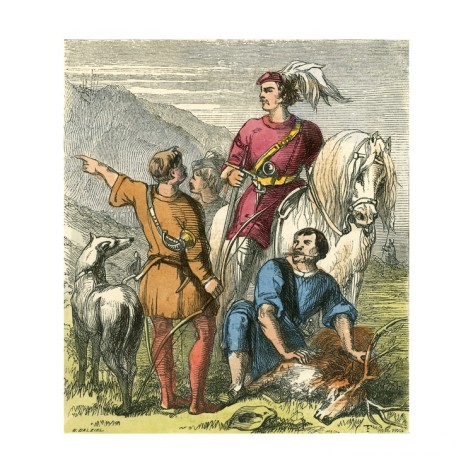
[A]nother possibility [was] border warfare between a Percy and a Douglas in 1435 or 1436. Henry Percy of Northumberland made a raid into Scotland with 4,000 men. He was met by William Douglas, Earl of Angus at Piperden. There were great losses on each side but, the Scots prevailed.
Over time, and the various evolutions of the ballad, events and personages have gotten confused.
The famous fairy tale is musicalized and given a modern 1940s spin with the principal characters (Cinderella, Prince Charming and the Wicked Step Sisters) all played by children.
Trivia Bit:
♦ This short was produced toward the tail end of Shirley Temple‘s reign as Hollywood’s #1 box office star and it’s reasonable to assume it was made to showcase young talent that Warner Brothers may have thought had a shot at replicating Temple’s success.
I’d never heard of Mazzy Star or heard this song when it originally came out. I am late to the party finding this, just discovering them a few years ago. Sadly, David Robackpassed away February 24, 2020, from cancer.
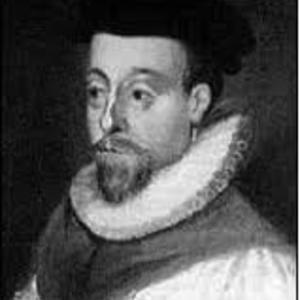
Thomas Morley was an English composer, theorist, singer and organist of the Renaissance. He was one of the foremost members of the English Madrigal School. Living in London at the same time as Shakespeare, Morley was the most famous composer of secular music in Elizabethan England. [He] was active in church music as a singer, composer and organist at St Paul’s Cathedral [and] was involved in music publishing. [He] lived for a time in the same parish as Shakespeare and, a connection between the two has been long speculated but, never proven. In addition to his madrigals, [he] wrote instrumental music, including keyboard music […].
Now Is The Month of Maying is one of the most famous of the English ballets […]. It is based on the canzonetSo Ben Mi Chi Ha Bon Tempo used by Orazio Vecchi […]. It was printed in […] Morley’s First Book of Ballets to Five Voyces [in] 1595. The song delights in bawdy double-entendre. It is, apparently, about spring dancing but, this is a metaphor for making love/sex. For example, a barley-break would have suggested outdoor sexual activity (rather like […] a roll in the hay). The use of such imagery and puns increased during the Renaissance.
Lyrics:
Now is the month of maying,
When merry lads are playing,
Fa la la la la la la la la,
Fa la la, etc…
Each with his bonny lass
Upon the greeny grass.
Fa la la, etc…
The Spring, clad all in gladness,
Doth laugh at Winter’s sadness,
Fa la la, etc…
And to the bagpipe’s sound
The nymphs tread out their ground.
Fa la la, etc…
Fie then! Why sit we musing,
Youth’s sweet delight refusing?
Fa la la, etc…
Say, dainty nymphs, and speak,
Shall we play barley break?
Fa la la, etc…
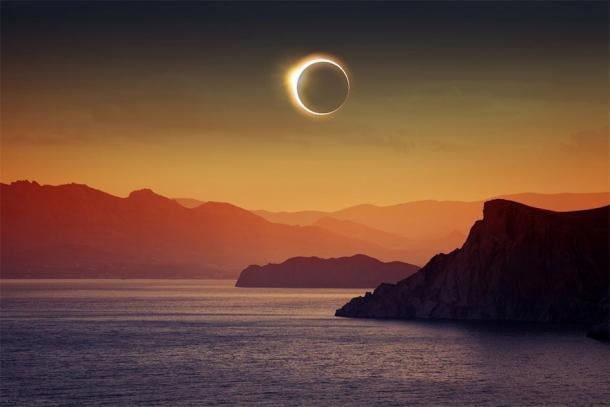
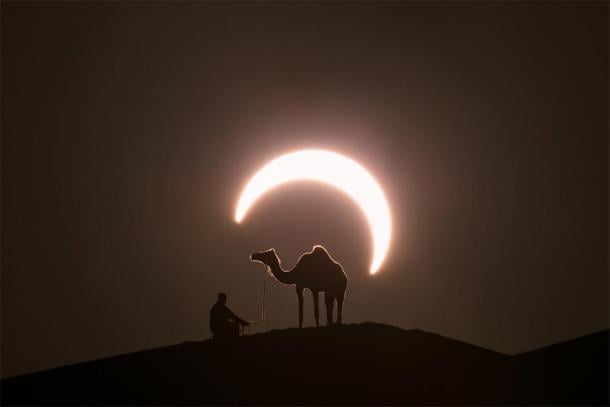
According to Herodotus, the appearance of the eclipse was interpreted as an omen and, interrupted a battle in a long-standing war between the Medes and the Lydians. The fighting immediately stopped and they agreed to a truce. Because astronomers can calculate the dates of historical eclipses, Isaac Asimov described this battle as the earliest historical event whose date is known with precision to the day and described the prediction as the birth of science.
Photo Credit: Ancient Origins
The Mechanics of a Monumentally Difficult Prediction
The reason this astronomical event is thought of as being so important is that predicting a solar eclipse, compared with a lunar eclipse, is exceptionally difficult. The astronomer must not only calculate when it will occur but, where on Earth’s surface it will be visible […]. [In] a lunar eclipse, the moon passes through the Earth’s sun shadow and the phenomena is visible on the whole side of the Earth that is in night-time […]. [They] often last longer than an hour. In solar eclipses, however, the moon’s shadow falls across the Earth in a comparatively narrow path, with a maximum duration, at any given location, of about 7 1/2 minutes.
[What] makes Thales’ prediction [an] historical mystery is that historians know early Greeks, at large, didn’t have this essential lunar data and there are no other records of Greek astronomers in this period accurately predicting any other eclipses. Thus, it is thought by historians that the only place Thales’ advanced astronomical knowledge could have come from was Egypt. [It’s] known [that] Thales studied Egyptian techniques for measuring sections of land with rope […].
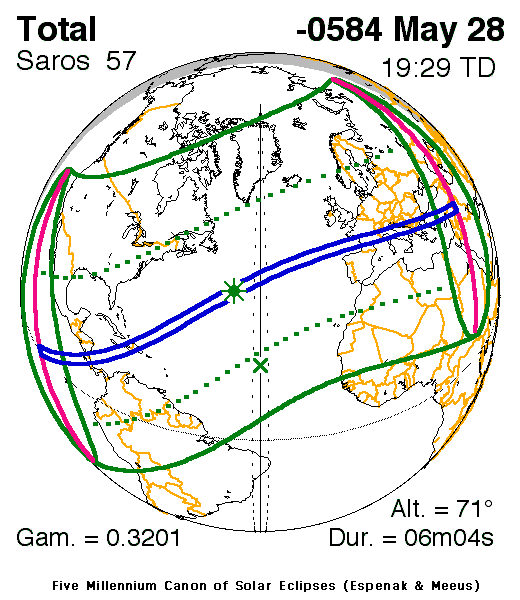
Returning [to] the war (mentioned above), after 15 years of fighting, on May 28, 585 BC, the armies of King Aylattes of Lydia were in battle with the forces of King Cyaxares of Medes (or, possibly, Astyages, his son), near the River Halys in what is, today, central Turkey. Chroniclers noted the heavens darkening and soldiers on both sides laying down their weapons in awe of the spectacle […]. [The] event ended both the battle and the war.
[A] Wired article says this famous astronomical event has been debated by hundreds of scholars for nearly two millennia and that some authorities believe Thales’ eclipse may have occurred 25 years earlier in 610 BC. But, the reason most agree with the 585 BC date is the record of the famous battle in Asia Minor ending when the day was suddenly turned to night.
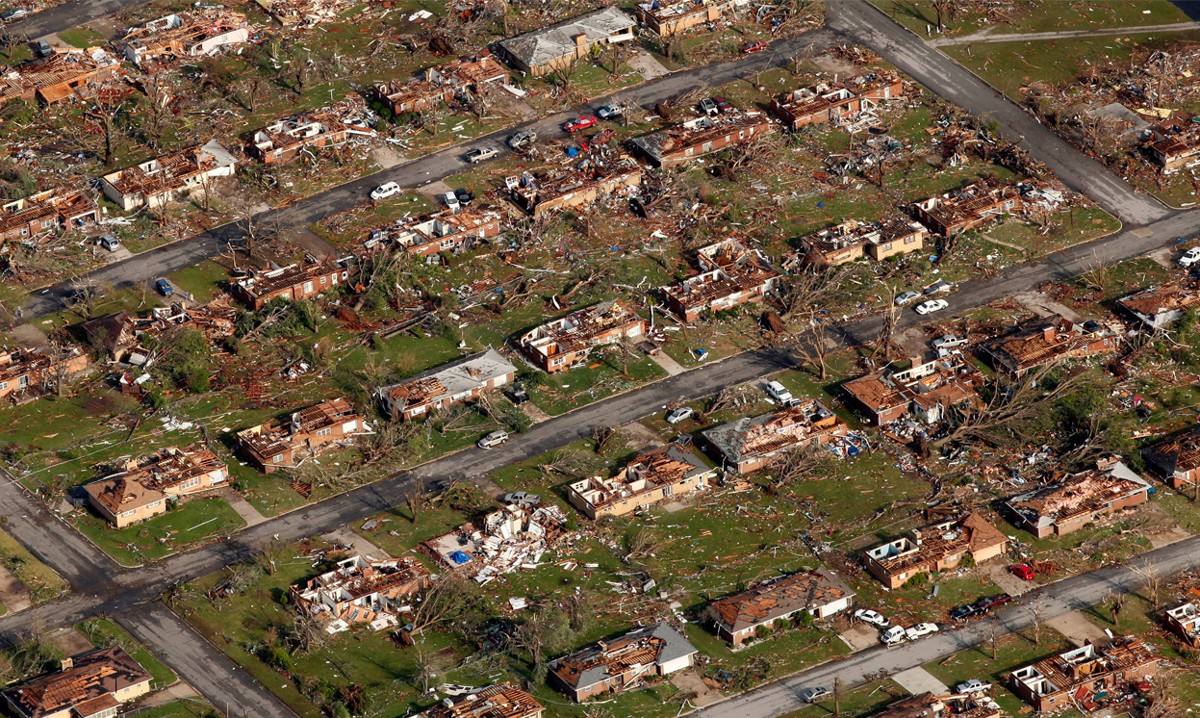
Nine years ago, today, an EF5, multi-vortex tornado slammed into Joplin, Missouri. It formed at 5:34 pm CDT and dissipated at 6:12pm CDT. I remember this one, vividly. I had just moved back to North Carolina from Texas and was, literally, still unpacking. I was shocked at the devastation. ~Vic
[This] was part of a larger, late May tornado outbreak and reached a maximum width of nearly one mile […] during its path through the southern part of the city. This particular tornado was unusual in that it intensified in strength and grew larger in size at a very fast rate. The tornado tracked eastward across the city and, then, continued eastward across Interstate 44 into rural portions of Jasper County and Newton County. It was the third tornado to strike Joplin since May 1971.
Photo Credit: theatlantic.com
[The] tornado killed 158 people (with an additional eight indirect deaths), injured some 1,150 others and caused damages amounting to a total of $2.8 billion. It was the deadliest tornado to strike the United States since the 1947 Glazier–Higgins–Woodward tornadoes, and the seventh-deadliest overall. Along with the Tri-State Tornado and the 1896 St. Louis–East St. Louis tornado, it ranks as one of Missouri’s and America’s deadliest tornadoes […]. It was the first F5/EF5 tornado in Missouri since May 20, 1957 [and] was only the second F5/EF5 tornado in Missouri history dating back to 1950.
It also ranks as the costliest single tornado in U.S. history.
There is a LOT of data on this siege and I’m not re-writing history. This will serve as a highlight, only. I will provide links to more information, below. ~Vic
Four hundred, fifty-five years ago, today, the island of Malta was attacked and nearly invaded by the Ottoman Empire, it’s second attempt.
If it had not taken place, the Great Siege would no doubt have been dreamt up for the screenplay of an epic film. Few other historic episodes rival it for sheer heroism, the bloodshed of war and military strategy. The story of the siege is interwoven with the tale of two adversaries, the ageing Grand MasterJean Parisot de la Valette, and his contemporary, the Barbary CorsairDragut Reis who commanded the fleet of Sultan Suleiman the Magnificent. It is also the story of thousands of lives of Maltese Islanders, men at arms to the Knights of St. John.
The years leading up to the siege saw the Islands under constant threat from the Ottoman Turks […]. The Knights knew they were vulnerable in Malta despite the harbours and their two forts […]. Grand Master La Valette had done his best to build defences and had requested extra forces from the Emperor Charles V, the Pope and the Viceroy of Sicily. But, no help came. In May, 1565, a vast Ottoman fleet, some 40,000 men, lay siege to the Islands.
The Knights were heavily outnumbered with a mere 700 or so men and around 8000 Maltese regular troops. The Islanders took refuge in the fortified towns [..] destroying crops and poisoning wells as they fled.
Image Credit: medievalists.net
The Ottomans first decided to attack isolated Fort St. Elmo […]. Repeated assaults were launched over 36 days but, the small garrison of Knights held on to the fort for far longer than Suleiman‘s men anticipated. After four weeks, they finally overran St. Elmo but, at a heavy price […]. The Turkish commander Dragut was fatally injured during the taking […].
It is the battle for [Fort] St. Angelo which saw some of the bloodiest episodes of this Holy War. It was to [be] the basis of legends for centuries to come. [Some] 10 attacks [were launched] on [its] walls [and], when a huge part of the defences were breached, the Ottomans failed to take the Fort.
At one point in the battle, the Ottomans floated the headless corpses of captured Knights across Grand Harbour. The act was returned in kind [as] Valette ordered all Ottoman prisoners to be executed and their heads used as ‘cannon balls’ to fire back toward their compatriots in St. Elmo.
[Valette]’s long-awaited relief forces [finally] appeared […] and took control of high ground inland. [The] Ottoman troops retreated […].
The Turks fled to their ships, and from the islands, on September 13 (almost four months had passed). Malta had survived the Turkish assault, and throughout Europe, people celebrated what would turn out to be the last epic battle involving Crusader Knights.
Malta’s magnificent capital, Valletta, was founded by and named after Grand Master Jean de la Valette. Valette, himself, was buried in the city some three years later.













 Cosmic-Observation