youtube
Shutterbug Saturday: Beach Shots
We are fifteen days out from the Winter Solstice, the shortest day of the year. It’s already cold and dark before the six o’clock news comes on. For some warmth, here are some shots from a beach trip I took back in 2011. ~Vic
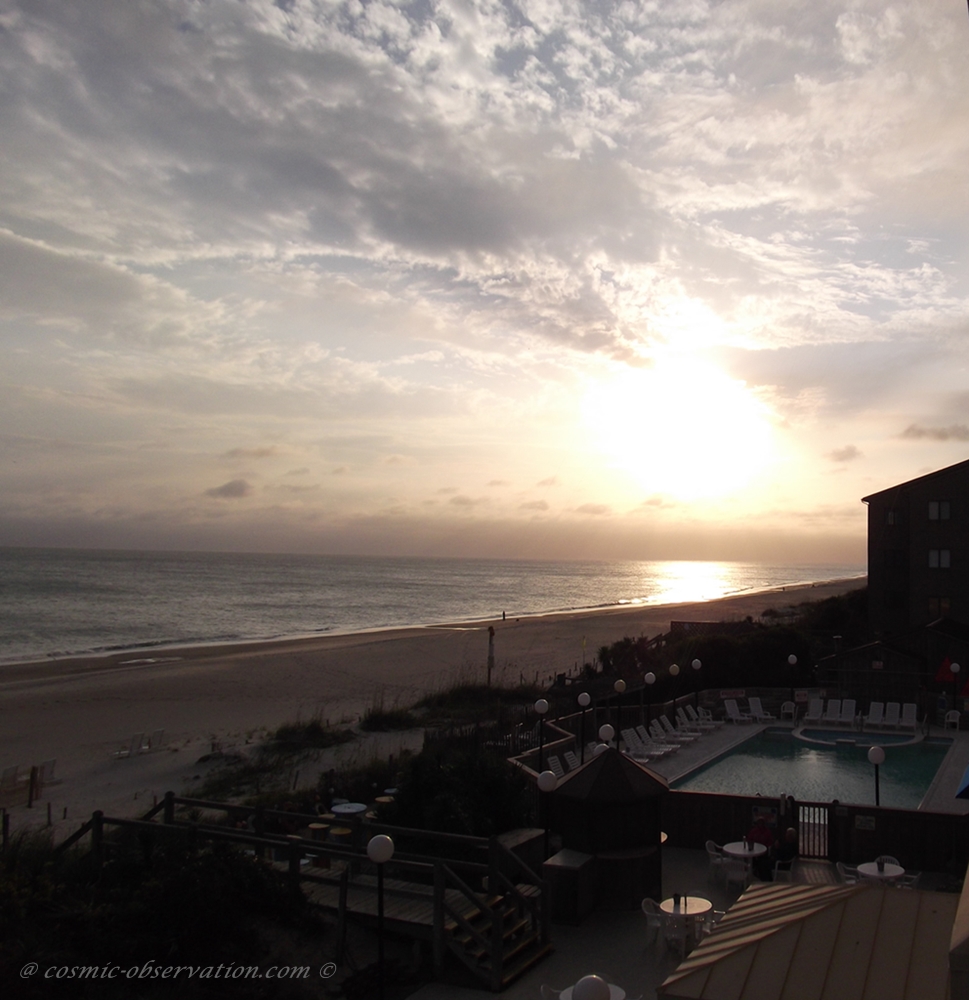
Pine Knoll Shores
History
10-28-2011
Click for a larger view.

Click for a larger view.

10-29-2011
Click for a larger view.

Visit NC
Click for a larger view.
Flashback Friday: Macy’s Thanksgiving Day Parade 1924
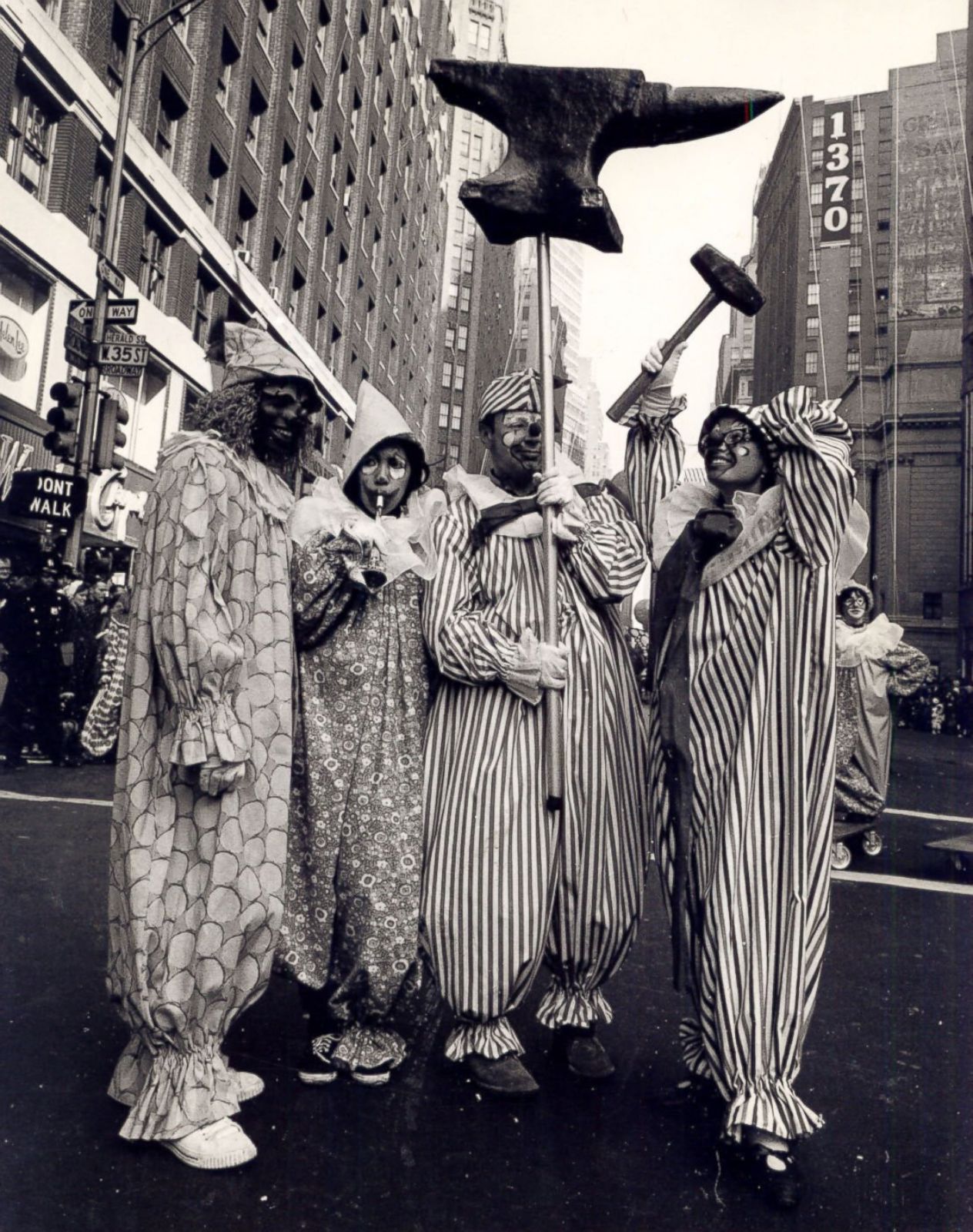
Ninety-six years ago, today, the very first Macy’s Thanksgiving Day Parade was held.
From History Channel:
As the United States prospered during the Roaring Twenties, so did New York City’s iconic department store, Macy’s. After going public in 1922, R. H. Macy & Co. started to acquire competitors and open regional locations. Macy’s flagship store in Manhattan’s Herald Square did such a brisk business that it expanded in 1924 to cover an entire city block, stretching from Broadway to Seventh Avenue along 34th Street.
To showcase the opening of the “World’s Largest Store” and its one million square feet of retail space at the start of the busy holiday shopping season, Macy’s decided to throw New York a parade on Thanksgiving morning. In spite of its timing, the parade was not actually about Thanksgiving at all but the next major holiday on the calendar…Christmas. Macy’s hoped its “Christmas Parade” would whet the appetites of consumers for a holiday shopping feast.
[Previously], the only Thanksgiving parade that had previously passed through the city’s streets was its peculiar, and to many annoying, tradition of children painting their faces and donning tattered clothes to masquerade as “ragamuffins” who asked “Anything for Thanksgiving?” as they begged door-to-door for pennies, apples and pieces of candy.
At [9:00am EST], on the sunlit morning of November 27, 1924, Macy’s gave the children of New York a particularly special Thanksgiving treat as a police escort led the start of the parade from the intersection of 145th Street and Convent Avenue. Macy’s had promised parade-goers “a marathon of mirth” in its full-page newspaper advertisements. While the parade route may not have extended over 26 miles, its 6-mile length certainly made for a long hike for those marching from Harlem to Herald Square.
Although the parade garnered only two sentences the following day in the New York Herald, […] it proved such a smash that Macy’s announced in a newspaper advertisement the following morning that it would stage the parade, again, the following Thanksgiving. “We did not dare dream its success would be so great.”
Macy’s History (NYC Tourist)
Music Monday: Membra Jesu Nostri 1680

Painting Author: Johannes Voorhout
Collection: Hamburg Museum
Image Credit: Wikipedia & Wikimedia
Three hundred, forty years ago, Danish-German Baroque composer and organist Dieterich Buxtehude composed Membra Jesu Nostri. Considered to be one of the most influential composers in Germany, his style is reflected in the works of Johann Sebastian Bach, one of his students. [More] than 100 compositions of his survive […].
Membra Jesu Nostri [or The limbs of our Jesus], BuxWV 75, is a cycle of seven cantatas composed by Dieterich Buxtehude in 1680 and dedicated to Gustaf Düben. The full Latin title Membra Jesu Nostri Patientis Sanctissima translates to “The most holy limbs of our suffering Jesus”. This work is known as the first Lutheran oratorio. The main text are stanzas from the Medieval hymn Salve Mundi Salutare, also known as the Rhythmica Oratio, a poem formerly ascribed to Bernard of Clairvaux but, now thought more likely to have been written by Medieval poet Arnulf of Leuven […]. It is divided into seven parts, each addressed to a different part of Christ’s crucified body: feet, knees, hands, sides, breast, heart and face. In each part, biblical words referring to the limbs frame verses of the poem.
Sources:
Duke Vespers Ensemble (MSR Classics)
Salve Mundi Salutare (New Advent)
Buxtehude Composition List (Wikipedia)
Dieterich Buxtehude (Wikipedia)
Membra Jesu Nostri (Wikipedia)
The International Dieterich Buxtehude Society
Throwback Thursday: Gettysburg Address 1863
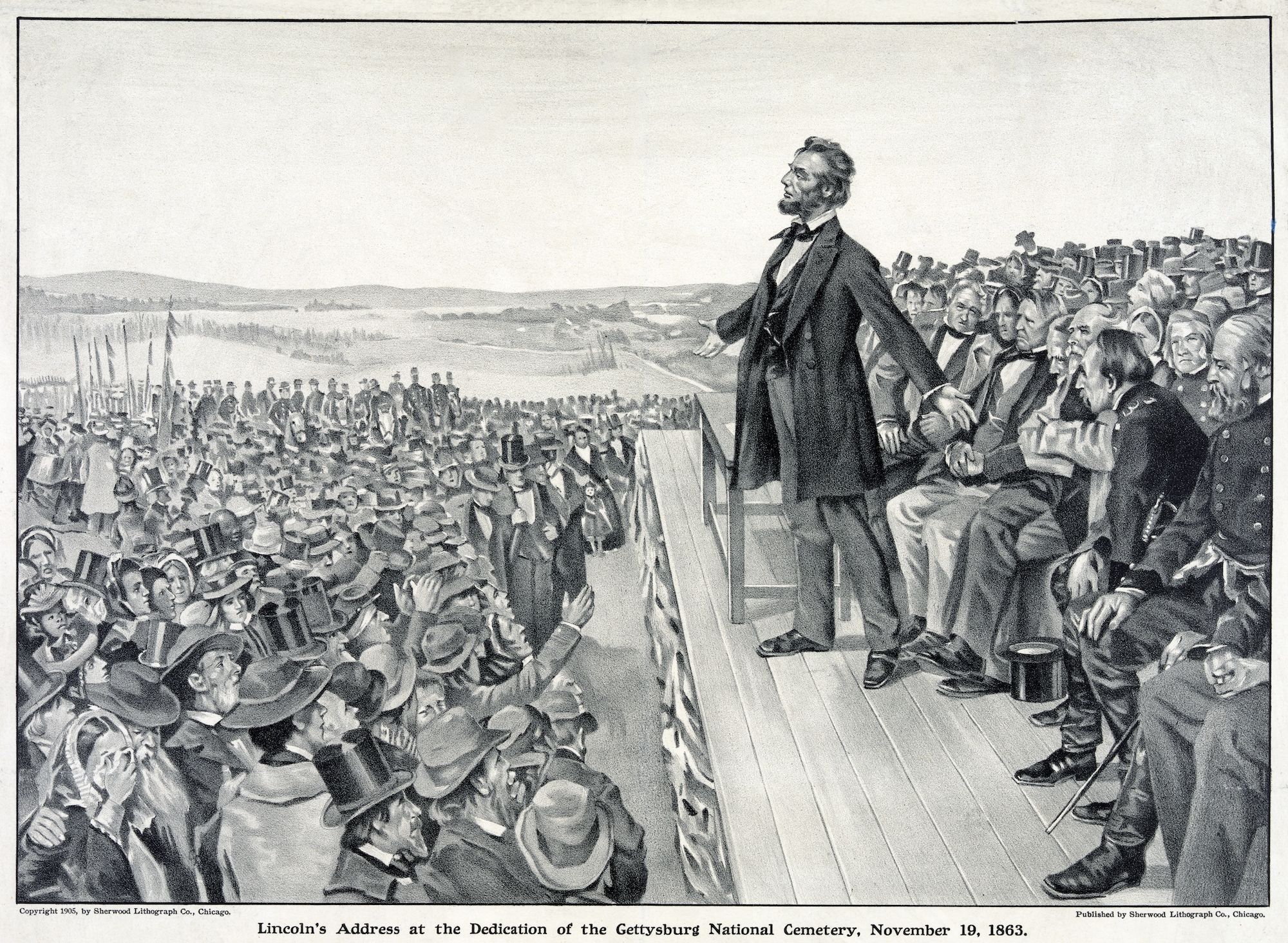
One hundred, fifty-seven years ago, today, President Abraham Lincoln gave his famous speech at the dedication of the Soldier’s National Cemetery in Gettysburg. The Battle of Gettysburg had just been 4 1/2 months prior. Lincoln was in the early stages of a mild case of small pox.

Library of Congress
Photographer: Carol Highsmith 2007
Image Credit: Wikipedia & Wikimedia
Four score and seven years ago our fathers brought forth on this continent, a new nation, conceived in Liberty, and dedicated to the proposition that all men are created equal.
Now we are engaged in a great civil war, testing whether that nation, or any nation so conceived and so dedicated, can long endure. We are met on a great battle-field of that war. We have come to dedicate a portion of that field, as a final resting place for those who here gave their lives that that nation might live. It is altogether fitting and proper that we should do this.
But, in a larger sense, we can not dedicate — we can not consecrate — we can not hallow — this ground. The brave men, living and dead, who struggled here, have consecrated it, far above our poor power to add or detract. The world will little note, nor long remember what we say here, but it can never forget what they did here. It is for us the living, rather, to be dedicated here to the unfinished work which they who fought here have thus far so nobly advanced. It is rather for us to be here dedicated to the great task remaining before us — that from these honored dead we take increased devotion to that cause for which they gave the last full measure of devotion — that we here highly resolve that these dead shall not have died in vain—that this nation, under God, shall have a new birth of freedom — and that government of the people, by the people, for the people, shall not perish from the earth.
Additional Reading:
Speeches & Writings (Abraham Lincoln Online)
Britannica
History Channel
National Geographic
National Park Service
Song Sunday: Keep On Runnin’ (Journey)
:format(jpeg):mode_rgb():quality(90)/discogs-images/R-543205-1365450873-9314.jpeg.jpg)
“Oh, it’s Friday night. Let’s run tonight, ’til the morning light…”
Returning to my Samsung playlist, this Sunday’s submission is Keep On Runnin’ by American rock band Journey, formed in San Francisco in 1973 out of former members of Santana and Frumious Bandersnatch. The fourth track from the album Escape (released in July 1981), it was co-written by Jonathan Cain, Steve Perry and Neal Schon and, was never released as a single, though the album, itself, reached #1 on the Billboard 200 on September 12, 1981. The song does show up in the Journey video game from Bally Midway, that came out in March of 1983, with this tagline (one of three):
“The hottest band in the country is about to take over the planet!”
The album got its own Atari 2600 video game in 1982. This album, and Frontiers after it, is a musical tapestry to my high school years.

July 2006
Co-Headliner Def Leppard
I got to see the band in concert, twice, in Texas and was lucky enough to get to meet them. This is the tour where Journey dropped Steve Augeri and picked up Jeff Scott Soto for a year. Neither could match Perry but, Augeri was close.
I’m on the far left next to Jonathan Cain. My buddy Monica is in between Cain & Neal Schon. My buddy Amy is in between Deen Castronovo & Ross Valory.
It’s a shame the members are embroiled in a lawsuit. ~Vic
Tune Tuesday: The Hills 2015
Switching things up a bit…~Vic
Five years ago, today, the #1 song on the Billboard Hot 100, R&B/Hip-Hop and Canadian Hot 100 charts was The Hills by Canadian singer The Weeknd (Abel Makkonen Tesfaye). Released May 27, it was the 5th track from the album Beauty Behind the Madness and the second single released.
“When a song takes its hook from a horror film, Wes Craven’s 1977 cult classic The Hills Have Eyes, you know there’s bound to be trouble.
Brian Mansfield
USA Today
June 2, 2015
♦ Certified Diamond (RIAA 2019)
♦ The song was featured in an Yves Saint Laurent Black Opium commercial featuring Zoe Kravitz.
♦ The song was used in the TV show Life in Pieces, Season One, Episode 21.
Throwback Thursday: Devil’s Tower 1906

Wikipedia & Wikimedia
07-12-2020
One-hundred, fourteen years ago, today, Devil’s Tower or, Bear Lodge Butte, was established as the first US National Monument by President Theodore Roosevelt. Composed of igneous rock, and possibly laccolithic, it is located in the Bear Lodge Mountains of the Black Hills, near Hulett and Sundance, in Crook County, Wyoming. It is also known as Matȟó Thípila by the Lakota and Daxpitcheeaasáao by the Crow (try to pronounce those). It got it’s religious moniker in 1875 when an interpreter for Colonel Richard Dodge, leading an expedition, misunderstood a native name and thought it meant Bad God’s Tower.
Additional Reading:
Close Encounters of the Third Kind 1977 (AMC’s Filmsite)
The Dakota Peoples (Google Books)
Satellites in the High Country (Google Books)
Devil’s Tower: First 50 Years (National Park Service PDF)
Proposed Name Change (Rapid City Journal June 22, 2015)
Native American Story & Culture (Wikipedia)
Other Native Names (Wikipedia)
Tower Ladder (Wikipedia)
Story Sunday: Ig Nobel Prize Goes For Alligator On Helium

“Alligator sucking on helium wins parody Ig Nobel Prize”
Scientists are answering a question no one is asking. What would it sound like if an alligator sucked up helium? When a team of international researchers wanted to find out whether a gator’s vocalizations relate to its body size, they devised an experiment that would earn them the 2020 Ig Nobel (a wordplay on “Nobel” and “ignoble”) Prize for acoustics. Researchers captured footage of the snorting alligator in a helium-filled tank. In perhaps one of the biggest letdowns in the history of scientific study, it sounded nothing like a cartoon chipmunk. Now in its 30th year, the annual Ig Nobel Prize awards ceremony, usually presented at Harvard University’s Sanders Theatre, was conducted remotely due to pandemic restrictions.
Among this year’s other elite competitors, a study which demonstrated that meticulously groomed eyebrows are a reliable indicator of grandiose narcissism took home the prize in psychology. The prize in economics went to an international team of creeps (presumably) who wanted to know whether the rate of French kissing correlated with national income inequality. Based on data from 13 countries across six continents, they found that where kissing was more frequent, income inequality was also more likely to occur. Go figure. American Richard Vetter took home the prize in entomology for his brave study on spiders (which aren’t technically insects) that revealed most of his peers are, allegedly, arachnophobic. And, the award for materials science went deservedly (because it’s gross) to a collaboration between the US and the UK to study whether frozen human feces could be made into usable knives. Spoiler alert: It certainly cannot.
But, who could forget the most Ig Nobel moment in recent history? The medical education prize went to a roundup of sometimes ill-advised world leaders for showing that “politicians can have a more immediate effect on life and death than scientists and doctors can” during the global coronavirus pandemic.
Hannah Sparks
New York Post
September 18, 2020
Additional:
Researcher Receives Ig Nobel Prize (Lund University/Stephan Reber)
Song Sunday: Jamie’s Cryin’

**Edward Lodewijk Van Halen (January 26, 1955 – October 6, 2020)**
“She saw the look in his eyes, and she knew better…”
This Sunday’s playlist submission is Jamie’s Cryin’ by American rock band Van Halen, formed in 1972 in Pasadena, California. The sixth track from their debut album Van Halen, it was released as a single on May 16, 1978 but, it never charted. Credit for songwriting is the whole band and the album peaked at #19 on the Billboard 200 on May 20, 1978 after its February 10 release. It was certified RIAA Diamond (10x Platinum) in sales on August 7, 1996.
After their 2015 North American Tour, they appear to be on indefinite hiatus. Eddie Van Halen has had some serious health problems.
American rapper Tone Lōc used the opening tom-tom and bass riff from this song on his 1989 hit Wild Thing and wound up settling out of court with Van Halen. He and Eddie Van Halen crossed paths some time afterwards and it wasn’t friendly.
I was in sixth grade when this song came out and I had no clue. I was all into disco back then. I didn’t know who they were until Dance the Night Away came out the following year. I didn’t buy an album of theirs until Diver Down. I have never been to a concert. ~Vic
Tone Lōc Talks About Debut Album & Eddie Van Halen (Billboard January 25, 2019)
America’s Songs III: Rock! Rock! (Google Books)
Van-Halen (Official Site)
Van Halen News Desk (Unofficial Site)
Gene Simmons Talks Lost Seventies Van Halen Demos (Rolling Stone March 22, 2016)
Eddie Van Halen’s Wife’s Positivity (Survivor Net September 8, 2020)
Military Monday: USS Harmon DE-678 Commissioned 1943

Circa August 1943
Image was censored and retouched.
Radar antennas removed.
Pennant added in its place.
Released for publication March 1944
Photo Credit: Naval History & Heritage Command
Wikipedia & Wikimedia
The USS Harmon was a U.S. Navy Buckley class destroyer escort named after Leonard Roy Harmon, a Mess Attendant (Messman) First Class that served aboard the USS San Francisco. It was the first U.S. warship to be named after a Black American. It was launched July 25, 1943, by Bethlehem Steel Company in Quincy, MA, sponsored by Harmon’s mother and, seventy-seven years ago, today, it was commissioned. She spent nearly a year serving as an escort ship near New Caledonia. After a short period at Pearl Harbor, she joined the Luzon Reinforcement Group. By March 1945, she was an escort and an anti-submarine screen off Iwo Jima. She returned to Pearl Harbor for training, then to Mare Island for a weapons upgrade and, when the war was over, she conducted training operations with submarines.

Source: Smithsonian National Portrait Gallery
Photo Credit: Wikipedia & Wikimedia
Decommissioned March 25, 1947, she joined the Atlantic Reserve Fleet. She was stricken August 1, 1965 and sold for scrap January 30, 1967. She received three battle stars for her World War II service.
*************
Leonard Roy Harmon, born in Cuero, Texas, on January 21, 1917, enlisted in the U.S. Navy on June 10, 1939, as a Mess Attendant Third Class. He trained at the Naval Training Station, Naval Operating Base, Norfolk, Virginia and reported to [the] San Francisco (CA-38) on October 28, 1939. On November 12, 1942, [the] San Francisco was covering a force of transports disembarking reinforcements off Guadalcanal when Japanese land attack planes, carrying torpedoes, attacked. [The] enemy aircraft crashed into the ship causing “considerable damage and intense fires” that put the after anti-aircraft director and radar out of commission. One officer and 15 men were either killed outright or died of their injuries. Harmon rushed in to evacuate the wounded. He was then assigned to assist Pharmacist’s Mate Lynford Bondsteel in evacuating and caring for the wounded. While the ship was being raked by enemy gunfire, Harmon deliberately shielded Bondsteel in order to protect his wounded shipmate. Although Bondsteel managed to get his courageous shipmate below, Harmon died of his wounds soon afterward.

Collection: National Archives at College Park
Office of War Information poster from 1943
Photo Credit: Wikipedia & Wikimedia
Harmon was awarded a Purple Heart and, in March 1943, the Navy Cross.
Citation Excerpt:
The President of the United States of America takes pride in presenting the Navy Cross (Posthumously) to Mess Attendant First Class Leonard Roy Harmon (NSN: 3600418), United States Navy, for extraordinary heroism and devotion to duty in action against the enemy while serving on board the Heavy Cruiser U.S.S. San Francisco (CA-38) […]. With persistent disregard of his own personal safety, […] Harmon rendered invaluable assistance in caring for the wounded and assisting them to a dressing station. In addition to displaying unusual loyalty [on] behalf of the injured Executive Officer, he deliberately exposed himself to hostile gunfire in order to protect a shipmate and, as a result of this courageous deed, was killed in action. He gallantly gave his life for his country.
Addition Reading & Sources:
First US Ship Named For An African-American (History & Headlines August 31, 2016)
USN Ships: USS Harmon (DE-678) (Ibiblio Database)
Citation: Leonard Roy Harmon (Military Times)
Modern Ships: USS Harmon DE-678 (Naval History & Heritage Command)
Ship Histories: Harmon (DE-678) (Naval History & Heritage Command)
USS Harmon (DE-678) (Naval Warfare Blogspot)
World War Two: Told In A Museum (New Caledonia Site)
Leonard Harmon (Smithsonian)
Leonard Harmon, USN (USS San Francisco Site)
Leonard Roy Harmon (Wikipedia)
Naval Battle of Guadalcanal (Wikipedia)
USS San Francisco (Wikipedia)
Tune Tuesday: I Will Always Give Thanks 1665
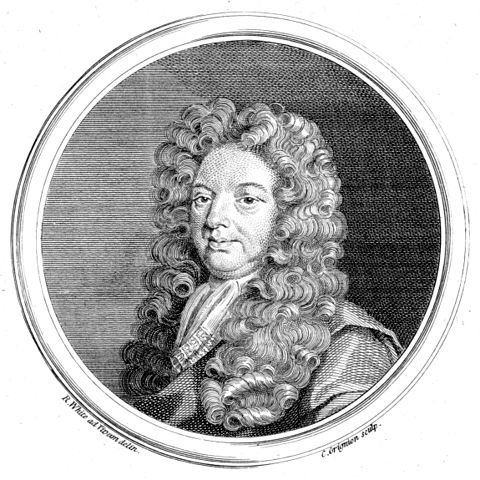
18th Century
Collection: National Library of France
Source: Gallica Digital Library
Photo Credit: Wikipedia & Wikimedia
Three hundred, fifty-five years ago, John Blow, an English Baroque organist, composed the “club anthem” I Will Always Give Thanks, collaborating with Pelham Humfrey and William Turner. There is not a lot written about this song but, there are two suggestions of it either being an honoring of the victory over the Dutch in 1665 or a simple commemoration of the three men working together.
In late 1668, Blow was appointed to Westminster Abbey as its organist and three of his students were William Croft, Jeremiah Clarke and Henry Purcell. In 1685, he became the private musician to King James II. He was the choir-master at St. Paul’s Cathedral in 1687 and became Composer to the Chapel Royal in 1699.
As a side note, 1665 was a bad year. Sounds familiar. ~Vic
Additional Reading & Sources:
Choral Evensong/John Blow Death Anniversary (BBC October 1, 2008)
John Blow Biography (encyclopedia.com)
Tales for Our Time (Mark Steyn Online)
John Blow Anthems (The Gramophone Newsletter Site)
John Blow Commemoration (Westminster Abbey Site)
A Journal of the Plague Year (Wikipedia)
Battle of Lowestoft (Wikipedia)
Great Plague of London (Wikipedia)
Snapshots Sunday: Walsenburg

As a companion piece to the Fort Sumner post, my ex-Marine and I headed north, still on our way to Liar’s Lodge. We headed into snow and landed in Walsenburg, Colorado, in Huerfano County, a town smaller than the one I am living in and, as of 2019, continues to hemorrhage people from a peak of 5,855 in 1940. We arrived after dark and stopped to eat. There’s not much there, back then or now. ~Vic

Click for a larger view.


Click for a larger view.

Click for a larger view.

the diner looks like it’s from 1974.
Alpine Rose Cafe
Click for a larger view.

We had a decent meal.
It’s still there as of 2018.
Click for a larger view.
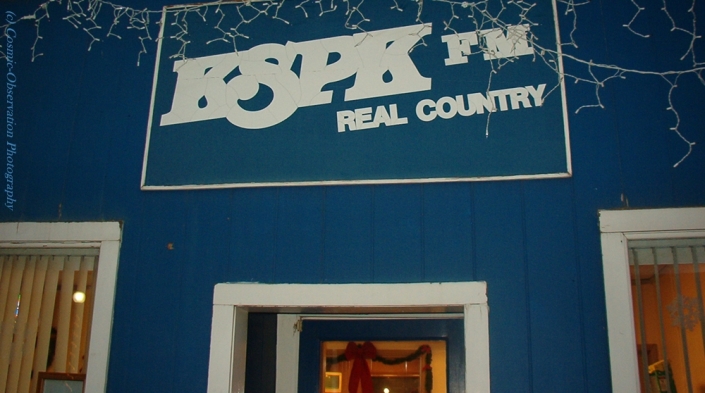
It appears to still be there.
It is the only home of Colorado Rockies Baseball
in Southern Colorado.

The lights in the windows are odd.
Click for a larger view.

while I was attempting another picture.
Additional Reading:
Returning to the Place I’d Never Been (Acts & Tracks/radioronin.wordpress.com)
City of Walsenburg (colorado.gov)
Walsenburg (colorado.com)
Walsenburg (Uncover Colorado)
Movie Monday: To Hell and Back 1955

Sixty-five years ago, today, the war film To Hell and Back was released, originally in San Antonio. Directed by Jesse Hibbs and based on the book of the same name, it starred Audie Murphy, Marshall Thompson, Charles Drake, Jack Kelly, Gregg Palmer, Paul Picerni, David Janssen, Denver Pyle, Brett Halsey (Admiral’s great-nephew) and Gordon Gebert as a young Audie.
Biopic of the wartime exploits of Audie Murphy (played by himself), the most decorated US soldier in World War II. Starting with his boyhood in Texas, where he became the head of his family at a young age, the story follows his enrollment in [the] Army where he was assigned to the 3rd Division. He fought in North Africa, Sicily and Italy, before landing in southern France and, eventually, fighting in Germany. A Medal of Honor recipient, he also received battle honors from the French and Belgian government.
The highly variable Audie Murphy delivers his best screen performance as “himself” in Universal‘s To Hell and Back. Based on the star’s autobiography, this is the story of how Murphy became America’s most-decorated soldier during WW II. After dwelling a bit on Murphy’s hard-scrabble Texas upbringing, the story moves ahead to 1942, when, as a teenager, Audie joined the army. Within a year, he was a member of the 7th Army, serving in North Africa, Italy, France and, ultimately, Germany and Austria. One by one, the members of Murphy’s Company B are killed in the war, until only three men from the original company are left. [The] others appear at the finale as ghostly images […]. The bulk of the film is given over to Murphy’s conspicuous acts of combat bravery and his killing of 240 enemy soldiers. Highlighted by excellent battle sequences, To Hell and Back is a serviceable tribute to a most complex individual.

Photo Author: Fort Detrick
Wikipedia & Wikimedia
Trivia Bits:
♦ Filmed at Fort Lewis, WA, Yakima River, WA, Oak Creek Wildlife Area, WA and Universal Studios.
♦ Audie Murphy originally declined the opportunity to portray himself in the movie, not wanting people to think that he was attempting to cash in on his role as a war hero. Murphy initially suggested his friend Tony Curtis to play him.
♦ Audie Murphy’s war buddy Onclo Airheart was slated to play himself, but he declined due to the fact that the movie was to be shot during planting season.
♦ [Author] David Morell [sic] cites Audie Murphy as the inspiration for the character of John Rambo.
♦ In the movie, […] Murphy does his one-man standoff on top of a medium M-4 Sherman tank. [In] real life it happened on top of an M10 Wolverine tank destroyer.
♦ Audie Murphy’s feats of heroism and his much decorated status have been compared to those of his counterpart during World War I, Sgt. Alvin C. York […].
Murphy […] wrote poetry and songs, and, himself a sufferer, was among the first advocates for Post-Traumatic Stress Disorder. He died on May 28, 1971, when the private airplane in which he was riding crashed.
Additional Reading:
To Hell and Back (American Film Institute)
To Hell and Back (Turner Classic Movies)
Alvin York (Wikipedia)
Audie Murphy (Wikipedia)
Shutterbug Saturday: Old Fort Sumner Museum
I lived in Texas for nearly a decade. My ex-Marine and I did some traveling through the west when we had opportunities. I’ve been digging around in some old stuff and found some photos from a visit to the Old Fort Sumner Museum in New Mexico in December of 2008. We were on our way to Liar’s Lodge. The museum closed in 2017. ~Vic
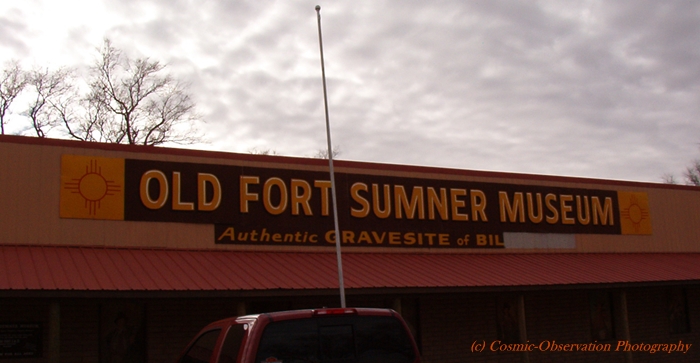
It was so overcast.
It never occurred to me to take pictures inside.
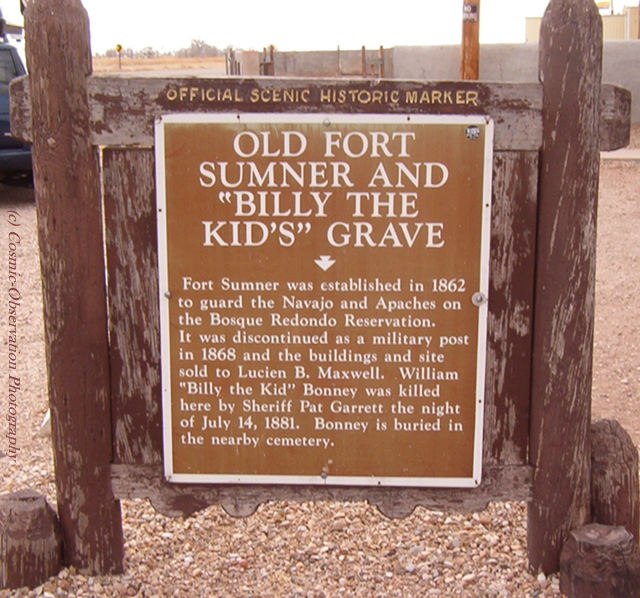
Lucien Maxwell
Fort Sumner
Bosque Redondo
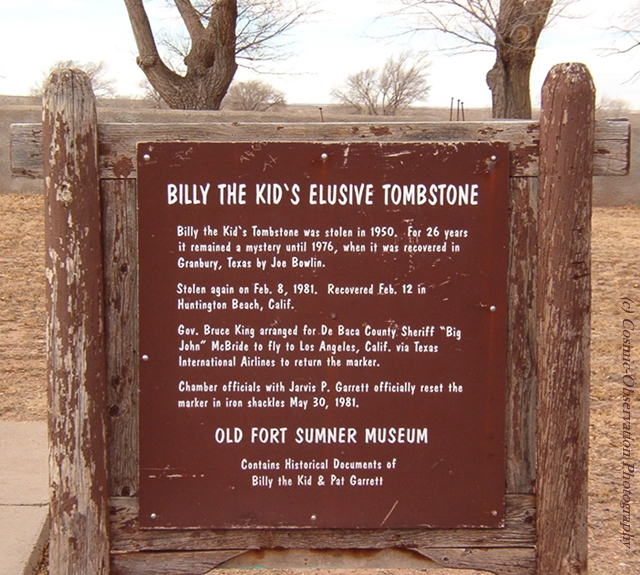
Joe Bowlin
Notice the reference to Texas International Airlines
Jarvis P. Garrett is Pat’s son.
UPI Article on the 1981 Recovery
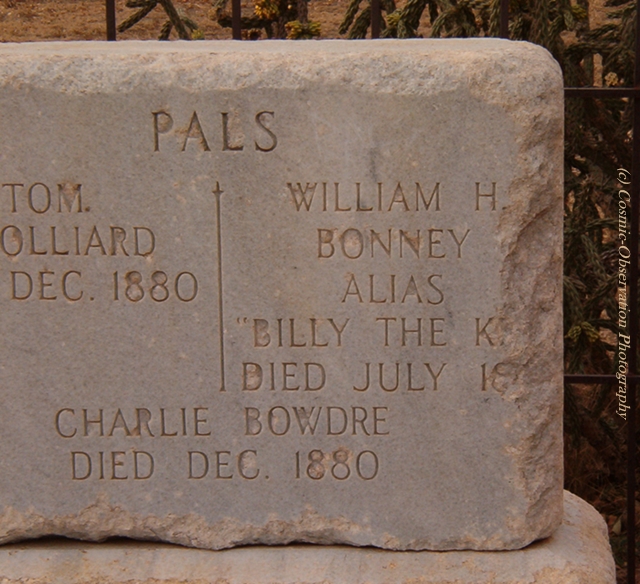
Charlie Bowdre December 23, 1880
Tom O’Folliard December 19, 1880
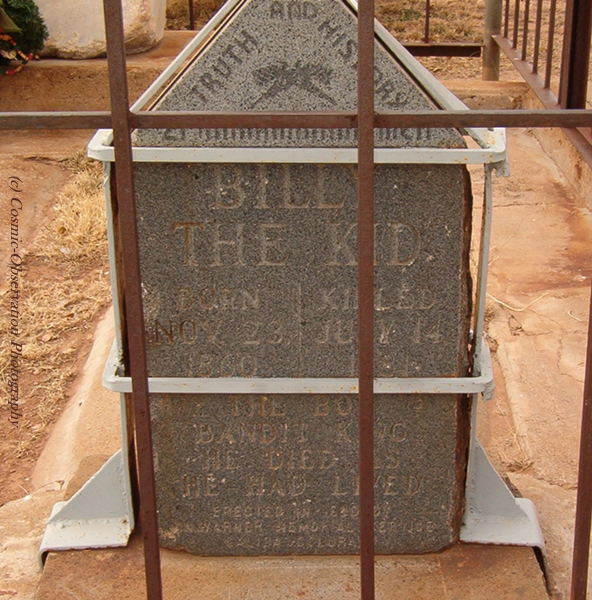
AKA William H. Bonney
AKA Billy The Kid
July 14, 1881
“The boy bandit king,
he died as he lived.”
Late Add:

Photo Credit: Erans World
02-11-2014
Click to view full picture.
Additional Reading:
BTKOG (Billy the Kid Outlaw Gang Site)
Whiskey and the Devil: Taiban, New Mexico (City of Dust Blogspot January 10, 2012)
Billy the Kid’s Two Graves (Roadside America August 15, 2020)
Caught With His Pants Down: Billy the Kid vs Pat Garrett (True West Magazine August 1, 2010)
Brushy Bill Roberts (Wikipedia)
Flick Friday: Vigilante Hideout 1950

Technically, today is also a bust for Flick Friday, just like my July 24 post. There were no movie releases, today, in 1950, either, so I will grab the August 6 release. Seventy years ago, yesterday, the western film Vigilante Hideout was released. Directed by Fred C. Bannon and written by Richard Wormser, it starred Allan Lane, Black Jack (Allan Lane’s horse), Eddie Waller, Roy Barcroft and Virginia Herrick.
Rocky (Lane), a Range Detective, arrives to help Nugget (Waller) with rustlers. When he learns Nugget owns only three cows, he stays on, anyway and, soon, becomes involved in Benson’s attempt to blow open the bank’s safe. When Rocky upsets his plans, Benson (Don Haggerty), supposedly, gets rid of him by having him declared an outlaw, wanted dead or alive. Then, Benson takes a load of explosives into an old mine located directly under the bank vault.
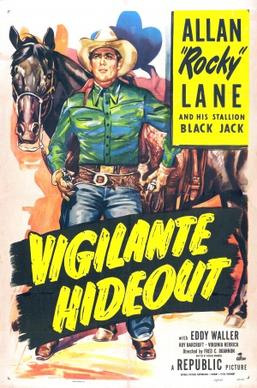
Double-barreled justice catches up with a cold-blooded killer when “Rocky” takes up the chase! Cattle detective, Rocky Lane, arrives in town to investigate cattle disappearances only to realize just three cows, owned by eccentric inventor Nugget Clark, are involved. However, the disappearances lead to a deeper mystery involving dynamite explosions, rampaging cowboys and a water shortage.
Lane and his trusty black stallion are on hand to help old-timer Waller find water for a town which is threatening to fold up due to drought. Some crooked townsfolk don’t want the water to be found because they want to collect on the $25,000 being stashed away for an aqueduct. Lane’s job is to make sure these people don’t pose too much of a problem, while Waller goes about finding the water. The characterization of Waller as a crazed inventor of gadgets is an added attraction to this oater with a realistic bent.
Full Synopsis (Turner Classic Movies)
Additional Reading:
American Film Institute
The Complete Movie
 Cosmic-Observation